
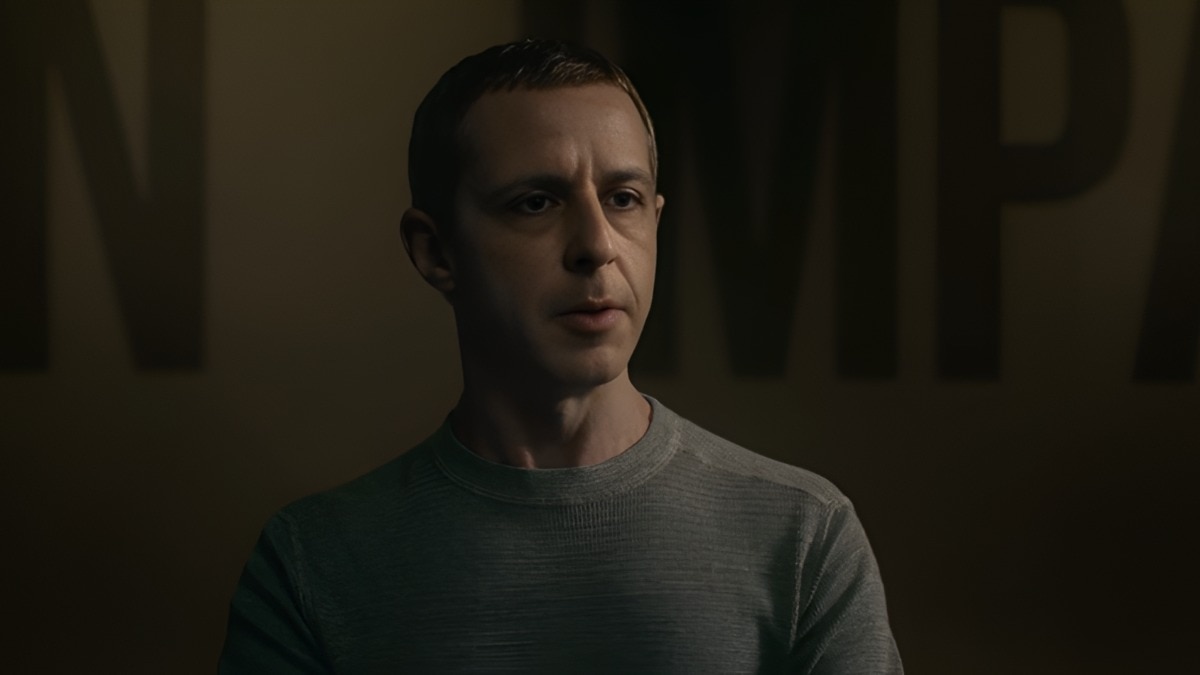
Writer-director Aaron Sorkin knows how to make a room full of people arguing over documents feel more gripping than an action sequence. In The Social Reckoning (2016), the writer-director returns to the world of Facebook, trading the ambition and betrayal of The Social Network (2010) for a more urgent question: what happens when the platform that promised to connect the world becomes a vehicle for division?It is a compelling premise, and Sorkin approaches it with the confidence of someone who still believes in the power of investigative journalism. A whistleblower speaks up, a reporter follows the trail, internal documents expose what a corporation knew, and the truth makes its way into public view. There is something reassuring about this old-school storytelling. The problem is that the world outside the film has become considerably less reassuring.The film follows Frances Haugen (Mikey Madison), the former Facebook employee who exposed internal research, and Wall Street Journal reporter Jeff Horwitz (Jeremy Allen White), whose reporting helped bring the Facebook Files to light in 2021. The disclosures raised questions about the company’s knowledge of the potential harms associated with its products, from the effects of Instagram on young users to the amplification of divisive content.Sorkin makes this material accessible without drowning the audience in technical jargon. His familiar, rapid-fire dialogue gives corporate documents the urgency of a ticking clock, while the reporting process provides the film with its dramatic spine. Madison plays Haugen without turning her into an uncomplicated crusader. There is hesitation, conflict and a gradual recognition that remaining silent has its own consequences. White, meanwhile, brings a dogged, understated quality to Horwitz, making the reporter’s persistence feel like work rather than performance. Actor Jeremy Strong’s Mark Zuckerberg is a different proposition from Jesse Eisenberg’s portrayal in The Social Network. Where Eisenberg’s Zuckerberg was restless and hungry, Strong’s is more insulated, a figure whose distance from the consequences of his company’s decisions becomes part of the character. Yet Zuckerberg is not quite the film’s central villain. The more troubling force is the system itself: an engagement-driven business model in which outrage can be as valuable as interest, and keeping people online can matter more than what they encounter there.This is where The Social Reckoning finds its strongest argument. Social media did not simply make communication easier; it changed the incentives governing what gets seen, shared and believed. Content that provokes anger can travel quickly. Divisive narratives can find audiences at extraordinary speed. And a platform designed to maximise engagement does not necessarily distinguish between connection that brings people together and interaction that pushes them further apart. The trouble is that none of this feels particularly revelatory anymore. The Social Network captured the birth of a company whose consequences were still unfolding. Its successor arrives after years of public scrutiny, congressional hearings, misinformation crises and growing concern about the power of technology companies. Sorkin’s brisk, confident storytelling gives these familiar issues fresh dramatic shape, but the film rarely moves beyond explaining what went wrong. It is less persuasive when it comes to what happens next.That is the gap at the heart of the film. Haugen’s disclosures mattered. Horwitz’s reporting mattered. Making internal information public matters. But exposure and accountability are not the same thing, and neither automatically produces change. The film’s faith in journalism is admirable, yet its neat dramatic architecture makes a messy, ongoing problem feel as though it has reached a satisfying conclusion simply because the evidence is now out in the open.The world outside the newsroom offers a less comforting picture. As wars in Ukraine and Gaza continue to generate competing narratives, propaganda and online hostility, the cost of digital connectivity is difficult to ignore. Social media can inform, mobilise and connect people across borders. It can also accelerate hatred, harden divisions and turn human suffering into another source of content for an audience that is always scrolling. These are not problems a single expos can resolve.This is not to suggest that The Social Reckoning needed to offer solutions. Its limitation is that it places so much faith in the act of revealing the truth that it has little room left to reckon with the public’s apparent ability to absorb that truth and carry on regardless. Sorkin’s characters can make the case, win the argument and publish the story. The larger system keeps moving.As a journalism thriller, the film is sharp, watchable and occasionally stirring. As a follow-up to The Social Network, it lacks the earlier film’s formal precision and unsettling ambiguity. It has the right questions, but its answers feel too tidy for a problem this entrenched.Perhaps the most uncomfortable question is not whether social media has failed us. It is why, knowing what we know, we continue to participate in the same systems that profit from our attention and, at times, our anger. Connection was supposed to bring us closer. If this is what staying connected costs, perhaps it is time to ask whether we need quite so much of it.Stay connected? We’d rather not. The Social Reckoning has released in Indian theatres on October 9, 2026.- Ends
The Social Reckoning review: A sharp and occasionally stirring journalism thriller
Full Article
Original Source
Read the full article at Indiatoday →KhanList aggregates and links to publicly available news content. We do not host full articles from third-party sources. Always verify important information with original sources.