
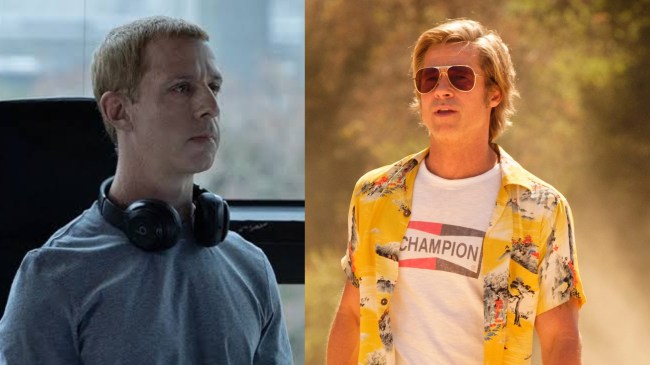
When the “The Social Reckoning” teaser trailer dropped in June, many on film Twitter saw it as confirmation that the sequel was destined to disappoint. After the Yin Yang pairing of screenwriter Aaron Sorkin and director David Fincher produced the masterful “The Social Network,” the trailer fed people’s worst fears of a sentimental Sorkin flying solo without the counterbalance of Fincher’s clinical dissection and cynical eye. Then, in July, when star Mickey Madison was spotted in Vancouver for “The Social Reckoning” reshoots, it was seen as evidence the film was in trouble. Why else would the picture, reportedly aiming for a Venice debut, still be shooting six weeks before a supposed early September festival premiere? There’s a leap of logic here that befuddles me. Considering that the vast majority of great films did some additional photography, ranging from extensive to minor, why are reshoots now a telltale sign of a looming disaster? The mere fact there were reshoots is evidence of nothing except an attempt to improve the film, but if forced to logically try to read these scant “Social Reckoning” tea leaves, it should be interpreted as a potentially positive sign. Sure, there are reshoots that are salvage jobs. The kind that involves significant rewrites and restructuring of the screenplay — which, by the way, can also produce masterful results — but those don’t happen weeks prior to the film’s premiere. What’s not uncommon is films nearing the end of post-production grabbing the final shots to tighten the finished product — an added expense studios are willing to take on, even encourage, when they think they’ve got a hit on their hands. And IndieWire can report “The Social Reckoning” reshoots, supported by Sony Chairman Tom Rothman, were indeed minimal: two to three days, involving an assortment of pickup shots, and reshooting one scene featuring Madison, who plays Facebook whistleblower Frances Haugen, to make a section of the complex, time-jumping narrative clearer. Its structure is similar to “The Social Network.” ‘The Social Reckoning’©Columbia Pictures/Courtesy Everett Collection I understand the reservations of a Fincher-less “Social Network” sequel, and we’ll soon find out if those fears were justified, but it will be based on what’s on screen. The part of this story — and a trend we are seeing with alarming frequency, especially with potential awards titles — is how select, often leaked, details about a production are spun into evidence to back preconceived narratives of why an upcoming film is good or bad, or worse, about the competency and character of the filmmaker themselves. It’s often based on incomplete reporting or bad faith Oscar campaigning, which becomes social media fodder that people who follow the entertainment business should ignore. Right in the headline of a recent behind-the-scenes report on Luca Guadagnino’s OpenAI movie “Artificial” is a quote that the film went through “‘All Sorts of Disasters’ at Amazon.” The piece goes on to report that the film went over budget, required extensive reshoots, and shifted directions, becoming far darker in tone than what Guadagnino originally pitched. I’m not doubting the accuracy of these broad strokes about the production, but I am questioning why they emerged now and what they actually indicate about the quality of “Artificial.” It is an obvious attempt to disparage the film and Guadagnino at a time when Amazon was attempting to save face for dumping “Artificial” for pennies on the dollar after “Melania” architect Jeff Bezos refused to distribute it, which many in the industry believe was a result of Amazon striking a multiyear strategic partnership with OpenAI that involved a $50 billion investment. Money not merit seems like the real culprit here. Regardless, are a film going over budget, reshoots, and the director’s artistic vision evolving actually “disasters,” and are they indications the film itself will be a disappointment? Making a film is a near-impossible, stressful endeavor involving hundreds of people working around the clock for months at a time. Directors are not always on the same page with their stars, screenwriter, department heads, producers (all 25 of them), financiers, and studio execs — all of whom are stakeholders on a large cargo ship trying to navigate an unexpectedly curving and increasingly narrow passage, led by a captain who is redrawing the map as they steer. Every week, I speak to people working on new films and TV projects, and hear near-constant stories of conflicts, communication breakdowns, and personal gripes. It has been my experience that the volume of those grumblings (which 99.9% of the time stay internal) rarely corresponds to the quality of the finished product, and will inevitably be whitewashed a year later during the publicity tour where everyone is now a “dream collaborator.” Back in 2022 the Daily Beast reported on such complaints about creator Sam Levinson on the “Euphoria” Season 2 set, that was said to be “plagued” by delays, reshoots, “grueling” 15-17 hour days, extensive night shoots, and Levinson “changing things on the fly in order to accommodate his young stars’ ideas,” failing to shot list, and rewriting scenes on set that weren’t working during rehearsal. When the article came out, I remember talking to veteran New York crew who found the much-read story humorous, pointing out how a different HBO production, Martin Scorsese’s “Boardwalk Empire” pilot, made “Euphoria” seem tame, with the loyal crew threatening to throw in the towel and the unions having to get involved, as the production pushed too hard, too late, and adjusted on a dime way too frequently. The difference is one of perception. The anecdotes from Levinson’s shoots were clunkily included to feed a larger narrative of the “Euphoria” creator being problematic (based on other factors, namely the content of his series and disagreements over Barbie Ferreira’s character), while we all celebrate how the highly attuned Scorsese, squeezing the most out of studio resources, adjusts to what is happening on set (based on everyone’s love for the infallible 83-year-old Pope of Cinema). One reason these stories of Guadagnino, Levinson, and Sorkin resonate is because of our Hitchcockian concept of directing that film school has instilled in our cultural understanding of how movies are supposed to be made. We’re taught that Alfred Hitchcock storyboarded every frame and cut, having made the film entirely in his head, which made production a boring affair for the master of suspense. The accuracy of this narrative, which the maestro himself carefully crafted, is something some now question. Regardless, it’s not a particularly useful framework to understand modern filmmaking, something Steven Soderbergh’s brilliant new interactive app “Production 02074” brings to life by walking readers through the hellish production of “Jaws.” Steven Spielberg on the set of ‘Jaws’Courtesy Everett Collection Soderbergh worked for two decades on a book to share his insights on directing, and originally thought that analyzing director Steven Spielberg’s formal choices in telling the story of “Jaws” would provide the perfect spine for it. Over the years of working on the project, Soderbergh realized that highlighting Spielberg’s incredible use of framing, staging, and editing captured only part of the job, since these decisions weren’t made in a vacuum. Digging through the annotated shooting script and camera reports showed how, as the “Jaws” crew moved from land to sea, disaster set in, and everything that could go wrong did. Taking the time to walk his readers through this brings to life how Spielberg used the tools of cinema to problem-solve. All directors have a vision; how one maintains it by adjusting to the realities on set is often the difference between good and bad directing. The post-script of “Production 02074” is that Spielberg became his generation’s greatest on-set problem solver and that the troubled “Jaws” shoot resulted in the most successful (at that time) movie ever made. Without that hindsight, and with what was in the water around Hollywood at the time, it’s easy to imagine how the narrative could’ve been that this Spielberg kid, all of 30 years old while shooting “Jaws,” was in over his head, inexperienced, and lacking a comprehensive vision for how to make a film with a mechanical shark. It’s a POV that could’ve been backed up by mountains of circumstantial evidence. Last awards season, three of the year’s best films, receiving a combined 38 Oscar nominations, emerged from not dissimilar circumstances. “Sinners” was one of the hardest shoots many could remember, and at the time, there was a sense in talking to people working on the film in New Orleans, or those nervously monitoring closely from LA, that the ambitious and technically complicated film was a mess, with way too many major elements still being figured out as the production was commencing. “Marty Supreme” went so over budget, and was feared to be so off-the-rails, that the bond company had to get involved. And the epic ambition of “One Battle After Another” forced Warner Brothers into an uncomfortable position, late in the game, of having to accept a budget approaching $200 million — a number that steadily and significantly shrunk as the production found its groove. Each was a leap of faith, a calculated bet that the visions of Ryan Coogler, Josh Safdie, and Paul Thomas Anderson would ultimately right the ship, but there was also acceptance, based on what was happening on the ground, that Warner Bros. and A24 could be backing disasters, their very own sinking ships. That these three fiercely original films found their footing under difficult circumstances created by their directors’ own ambition is now part of the lore surrounding their instant classic status. And therein lies the real problem: Difficult productions are now used as evidence to both celebrate and take down a filmmaker. No doubt, during Oscar season, we will once again be fed stories of how hard individuals had to work, enduring tremendous mental and physical obstacles that bordered on hardship, and the brilliant artistic fixes that overcame unforeseen movie-destroying problems; while similar details, when given the right spin, will be used to cast aspersions on others, especially if it feeds into the internet’s pre-conceived narrative about the filmmaker. Fincher is the director many feel is the closest we have to a modern-day Hitchcock — precise, particular, with incredible control of the form in narratives that play upon (and sometimes manipulate) humans’ perverse nature. But Fincher’s precision is the product of a distinct process, which he has meticulously created in the digital era to allow him the maximum ability to find, adjust, and dial into it. In a very un-Hitchcock quote, he once told Rolling Stone, “Directing movies is a little like painting a watercolor from three blocks away through a telescope with a walkie-talkie and 90 people holding the brush.” His new film “The Further Mis-Adventures of Cliff Booth” is skipping fall festivals due to reportedly expensive reshoots, which Fincher asked for because he wasn’t pleased with how the film is currently playing. This has led to buzz the film is in trouble and will be (through our Kalashi-lens of reading Hollywood news) less of an awards contender than Netflix hoped for the prequel to “Once Upon a Time in Hollywood,” which received 10 Oscar nominations. Really? Fincher — the guy we like to point out does 89 takes, had Red custom-build his own 8k camera so he can literally reframe and stabilize every shot in post-production, and color grades with a laser pointer — isn’t satisfied? And you are telling me he wants to continue working on the film, which got fast-tracked and then paused for personal reasons, until he is satisfied? My goodness! David Fincher on the set of ‘The Social Network’©Columbia Pictures/Courtesy Everett Collection At some point we should probably pick a lane: either Fincher’s perfectionism is a feature or a bug. And I have to add, I find it charming that cinephiles and those in the awards community have become so concerned with how much money an auteur milks from Netflix, which has a $332 billion market cap. One of the things history teaches us, and I’ve learned over and over again talking to hundreds of filmmakers and visiting editing rooms, is that at various points during its creation, a film’s principals are lost and convinced what they are making will be a failure. From an entertainment journalism standpoint, one of the only good things about such a stretched-out awards season is that it allows for closer examination of the craft and process of how these films are made, and how they problem-solve their way out of such holes. But I have to admit, too often, closer scrutiny of what happens behind the curtain accomplishes the exact opposite. I’ll never forget discussing “Barbie” with a crew member at the end of the shoot in London. The sense I got listening to them is they thought it would either be a masterpiece or a train wreck — Greta Gerwig was taking big swings, experimenting in ways they and the director herself weren’t always sure would work, but she had such a unique vision for the film that there was hope this bonkers project could be special. I eventually asked if they thought it would be good. There was a pause; they weren’t sure: “Gun-to-my-head, it’ll be an interesting failure.” When I asked why, they admitted it was a dumb hunch based on the fact “Barbie” had been such a fun production experience, and the best films on their IMDb page had all been true nightmare shoots. What they said next stuck with me: “If we talked during one of those shoots, I would have been throwing the movie under the bus, and listing off the ways the director was a worthless piece of shit.” Reporting on behind-the-scenes can be incredibly valuable when seen through the lens of what ended up on screen, and it lends to a better understanding and appreciation of the filmmaking process. What we are currently practicing, though, is taking select and incomplete details, without context, that can create an antagonistic environment to introduce a film. The turning point for me on this was when I walked out of Lincoln Center after the press screening of “The Irishman” the morning before its New York Film Festival premiere. I exited with a sense of relief. I’d assumed, like most, based on the stories of its chaotic 120-location, budget-busting, delayed shoot and the Netflix of it all (a far bigger talking point in 2019), handwringing about de-aging, and debates about its running time, that it would be a disappointing, bloated, mess. At that moment, I realized how silly it was that I was pleasantly surprised Scorsese had made a great film. The next morning, I interviewed Francis Ford Coppola, but before delving into his re-editing of “The Cotton Club” he peppered me with questions about “The Irishman.” He was nervous for his friends Scorsese, Pacino, and especially De Niro (for whom he knew adapting Charles Brandt’s “I Heard You Paint Houses” had been a passion project) based on what he’d been reading. After I’d convinced him the film was excellent, and would enjoy raves, he sat back in his chair with a sense of relief. “You know, Marty and I have talked about this; you never know how an audience will receive a movie,” said Coppola, who went on to describe the impossible-to-predict-or-control set of circumstances dictating “the chemistry of how the movie will first hit its audiences,” and how some great movies are initially dismissed, only to be saved by time, while others instantly spark. Coppola had experienced both, and in the extreme. That delicate, chemical reaction between a movie and its first audiences is one we have to be careful not to disrupt unnecessarily, and to Coppola’s point, there was reason to believe what was being written about “The Irishman” could have had that exact detrimental effect. The internet’s interest in details about upcoming releases is hardly a bad thing and reporting on the behind-the-scenes filmmaking can be useful. But if we are creating circumstances that leave the audience assuming the worst of a new Scorsese (or Fincher, Guadagnino, or Sorkin) film, what exactly are we doing here? Let’s withhold judgment until we see what they cooked up on screen.
‘The Social Reckoning,’ ‘Cliff Booth,’ and ‘Artificial’ Had Reshoots. Why Is That a Disaster?
Full Article
Original Source
Read the full article at Indiewire →KhanList aggregates and links to publicly available news content. We do not host full articles from third-party sources. Always verify important information with original sources.