
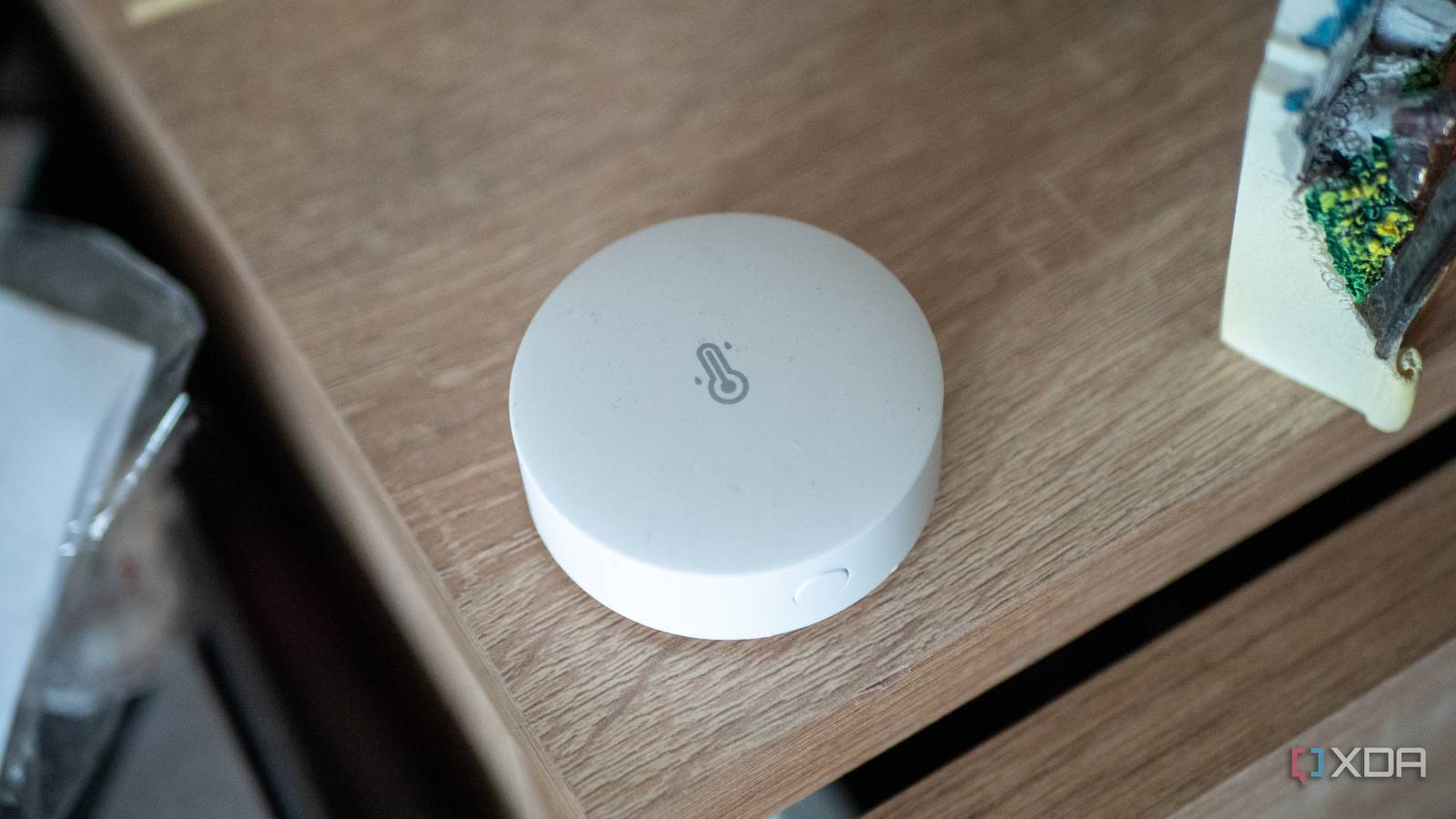
Published Sep 2, 2026, 1:00 PM EDT Jasmine is Software and PC Hardware Author at XDA with years of tech reporting experience ranging from AI chatbots right down to gaming hardware, she's covered just about everything. Whether it's breaking news about the latest AMD NPUs or creating video tutorials on social media platforms, Jasmine has contributed to the world of AI and tech in a variety of ways including interviewing the CEO of Razer, AMD's Director of Product Marketing and the VP of Lenovo. Passionate about gaming and PC technology, she has built countless computers, keyboards and other peripherals - knowing them inside and out. Dotted around my home are almost decade-old, unbranded Zigbee motion sensors with yellowed plastic, yet they've only had two battery changes and are still executing automations in under 20ms every single day. Contrast this to the recent glossy feature-packed AI-powered Wi-Fi cameras, video doorbells, and smart lamps that I've bought in the past 12 months. They're already effectively dead because they're bricked by discontinued cloud services, crippled by a false subscription tier, or abandoned after an app update dropped legacy OS support over the past 10 years. Consumer silicon has become faster, and radio has become more versatile. However, the longevity of consumer IoT hardware has seemingly collapsed. The smart home hasn't suffered from planned hardware obsolescence. It suffered from an architectural shift from hardware as utility to hardware as a service. Devices bought back in 2018 survived because they were built on dumb stateless transport layers that decoupled physical hardware from vendor cloud service. However, modern gear dies prematurely because it's fundamentally an ephemeral cloud client trapped in a fragile microservice web. Older tech prevails Thanks to the lack of cloud involvement Back in 2018, when smart home devices were a bit more niche, the mainstream smart gadgets available largely relied on standard RF layers like Z-Wave and Zigbee or simple local REST/Telnet interfaces. This meant that a 2018 sensor was an embedded finite state machine. When a PIR sensor detects heat movement, it asserts an RF frame containing an unsigned integer payload to a local co-ordinator. It has no operating system to patch, no root TLS certificates to expire, no external IP addresses to register, and no required cloud handshakes. However, as devices have matured, they've seemingly become worse due to the shift to the cloud. Matter, an IoT pivot, has shifted from high-cost to low-cost 2.4 GHz Wi-Fi chipsets like Tuya or vendor-proprietary blobs. This is because Wi-Fi eliminated the need to sell consumers an expensive 60 bridge hub, lowering the barrier to purchase. However, it required hosting cloud brokers to broker commands. Essentially, users were more likely to adopt Wi-Fi-based smart home devices because they seemed easier to incorporate into their homes. However, once the recurring AWS server bill outgrew the one-time $15 hardware profit margin, manufacturers faced three choices: they could shut down servers, paywall features behind subscription tiers, or push firmware updates that intentionally abandon older revisions, rendering their hardware useless. The big three These three issues cause problems for many There are three specific technical mechanisms that slightly break newer gadgets while leaving vintage hardware untouched. These architectural features are not typically implemented in older smart home devices, meaning they continue to last. The first is root TLS certificate expiration. Embedded Linux and Wi-Fi IoT devices ship with hard-coded root CA certificates in their flash memory to talk securely to AWS or Google Cloud. When a root cert expires, which is typically on a three- to five-year life cycle, and the vendor no longer provides firmware maintenance, the device cannot establish a TLS handshake and permanently locks itself out of its own cloud backend. A major issue is also the App Store death spiral, since many of these new devices require companion apps. These apps on iOS and Android must constantly update to target current SDK versions, meet modern Android target API requirements, comply with 64-bit app mandates, and support iOS App Tracking Transparency. The moment an OEM stops dedicating mobile developers to updating a boutique companion app, it essentially gets delisted from the Play Store and App Store, rendering the hardware unconscionable. Server-side API deprecations and acquisitions can cause issues too. There's a large graveyard of hardware that has been bricked by acquisitions or server sunsetting over the years. When the remote endpoint returns a 404 error, the gadget on your wall becomes an inert piece of plastic. It's e-waste just because the manufacturers have decided to end support. Follow these steps to create a long-lasting smart home Your smart home doesn't have to be locked to the cloud There are some actionable steps you can take when buying new devices to ensure that building out your smart home today won't mean you'll have to replace everything you've purchased in a couple of years. By following these rules, you can ensure that your purchases last a decade. The first rule is: never buy Wi-Fi for simple binary controls. Use Wi-Fi instead exclusively for high-bandwidth pipelines like cameras or video doorbells. Everything else, including plugs, switches, and sensors, should belong to an independent mesh. Make sure you are using open-standard payloads. Buy Zigbee 3.0, Z-Wave 800, or even Matter over Thread. If the device cannot pair to an open-source hub under one of these protocols without vendor accounts, then probably skip it and look for an alternative. And lastly, you might benefit from testing the WAN disconnect scenario: Unplug the WAN/fibre cable from your router. If you still can't trigger every single light, blind, and switch using physical remotes and local dashboards, then you don't actually own your hardware. You're just renting it. You don't need monthly subscriptions Local-first products make all the difference The smart home industry has convinced consumers that smart devices need to be continuous software services, but a light switch or a temperature sensor is residential infrastructure. You don't update your plumbing firmware, so you shouldn't rely on a venture-backed startup service to toggle your living room lamps. Stop chasing proprietary cloud features. Instead, invest in local-first protocols, prioritize decoupled hardware, and build a smart home that will still execute automations 10 years from now without issues.
The smart home gear I bought in 2018 has outlasted everything I bought last year, and I think I know why
Full Article
Original Source
Read the full article at Xda-developers →KhanList aggregates and links to publicly available news content. We do not host full articles from third-party sources. Always verify important information with original sources.