
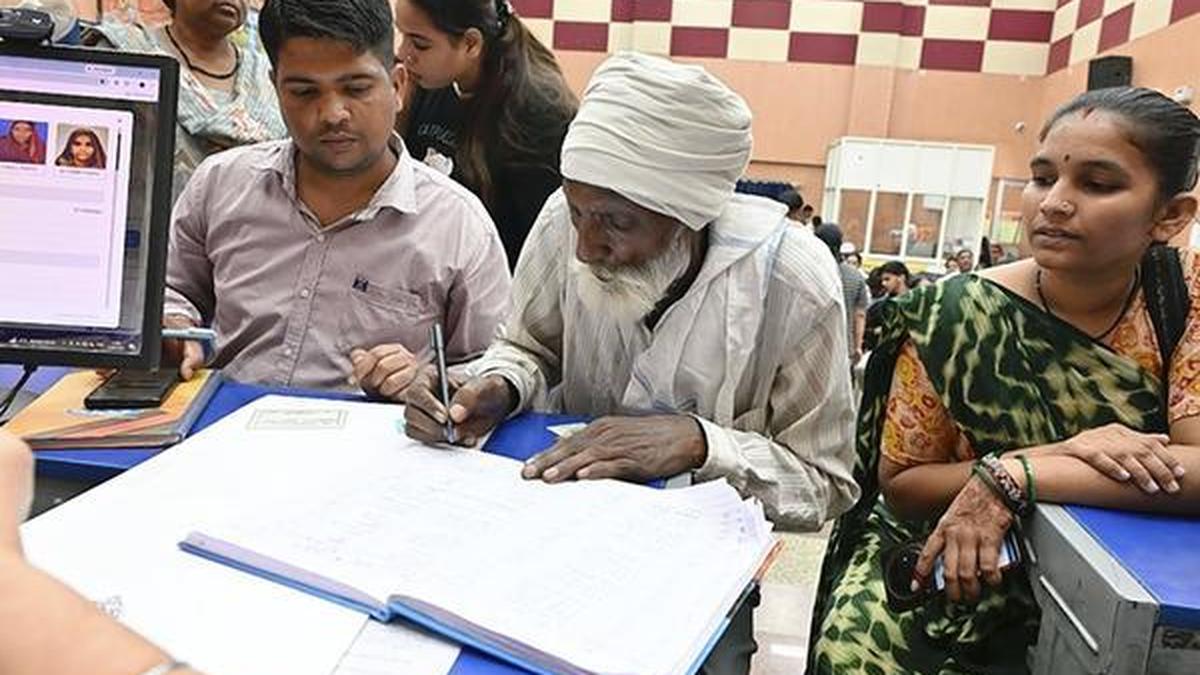
‘India presents itself, with ample reasons to do so, as a leader in digital public infrastructure... Yet when it came to one of the most fundamental processes of any democracy, that is, the revision of electoral rolls, India has failed to utilise that capability’ | Photo Credit: Shiv Kumar Pushpakar Much of the public argument over the Special Intensive Revision (SIR) of India’s electoral rolls is around law, power and politics. The autonomy of the Election Commission of India (ECI), the list of acceptable documents, and the burden placed on voters to prove eligibility are the key focus issues. There is, of course, no doubt that these questions matter. But a quieter, less spoken-about story runs underneath them. The 2025-26 SIR is the first revision of this scale to be run through a centralised digital platform, and the technology itself has become a source of exclusion. Viewed as a nationwide digital transformation project, the SIR fails on several counts that any student of technology would immediately recognise.The irony stares right at us. India presents itself, with ample reasons to do so, as a leader in digital public infrastructure. From the IRCTC’s (Indian Railway Catering and Tourism Corporation) ticketing system and the income tax department’s e-filing to Aadhaar authentication, UPI, DigiLocker etc., India holds up proof, at home and abroad, that it can build technology that works at scale. Published - November 13, 2026 02:28 am IST
The SIR exercise is also a technology failure
Full Article
Original Source
Read the full article at Thehindu →KhanList aggregates and links to publicly available news content. We do not host full articles from third-party sources. Always verify important information with original sources.