
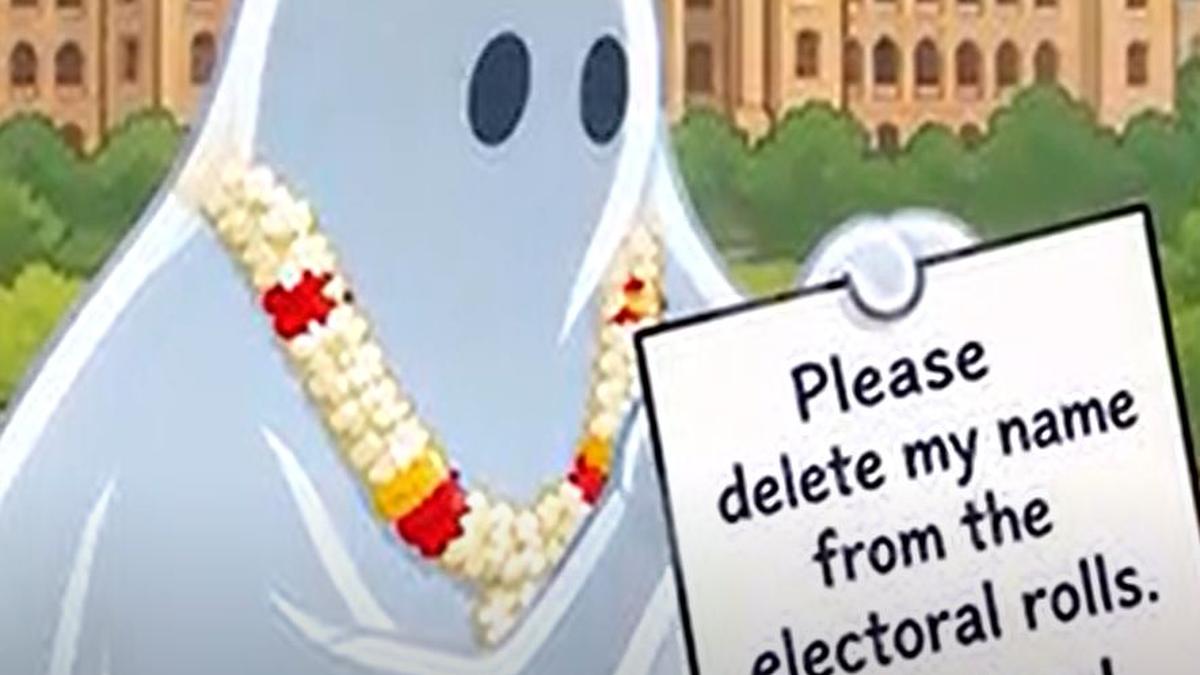
‘The Special Intensive Revision exercise has removed more than 13 crore names from the rolls since June 2025. Over a quarter were claimed dead or duplicated, while most were marked as absent or shifted’ | Photo Credit: The Hindu For nearly a month, Indians across the country have courted the ire and might of the state over a question no citizen in a democratic nation should have to ask. Their anger stems from the Special Intensive Revision (SIR) exercise which has removed more than 13 crore names from the rolls since June 2025. Over a quarter were claimed dead or duplicated, while most were marked as absent or shifted. At one booth in Delhi’s Bela Estate, officials cut 728 out of 729 voters, citing address proof discrepancies. Who decided that so many names should come off the rolls and on what basis?While the political answer is being debated on the streets and in Parliament, it is clear that the SIR has changed how a voter’s place on the roll is decided. In 1995, the Supreme Court held that a name already on the roll should be presumed to be there legally. The SIR replaced that presumption with a data-matching exercise. The Election Commission of India (ECI) has relied heavily on software for a public task where a single error costs a citizen their vote. Rolls from the last intensive revision (mostly in 2002) were hastily digitised from Bengali, Kannada, and other regional languages, auto-transliterated by the machine into English, and matched against new enumeration forms. Then a second layer of “logical discrepancies,” such as a parent-child age gap of less than 15 years, was applied. Among those who failed the test were twins (age gap less than nine months), voters of the Oraon tribal group whose surname Xalxo was auto-translated to Khalkho, and those whose father’s name was ‘Md.’ in one list and ‘Mohammed’ in the other. To reconcile the record, little logic or reasoning was applied. According to the Internet Freedom Foundation, these rules flagged 17% of West Bengal’s electors and 41% of Madhya Pradesh’s. A system that suspects four in 10 voters in a State needs to come under scrutiny.Such sweeping pattern-matching guarantees false positives. In West Bengal, 91% of exclusion appeals decided by the tribunals were reversed; a reversal rate that high should worry whoever designed the process. And by the time their eligibility was restored, these people had already lost the opportunity to vote in the 2026 Assembly election.Drawing the lineThis is why it matters where the line is drawn for who is “suspicious”. How many eligible voters are risked to remove one ineligible voter? Legally, Election Registration Officers (EROs) determine where the limit lies. Yet in the SIR, the ECI has never revealed what the acceptable margin of error is or the data itself. Two of the three Election Commissioners are on record objecting to the centralisation of the database and the restrictions imposed on local officers’ authority. In Goa, officers heard 97 flagged voters and found all eligible, but couldn’t restore them because the software had no option to reverse the earlier action. An audit of ECINet’s publicly served code by the civic-tech group Charchagram found that access for State officials can be switched off centrally, and that a separate setting can bar registration officers in West Bengal alone from viewing voters’ forms and hearing records. Whether these features have been used is not known.The ECI claims that automation is only meant to assist human decisions. This would be true if officers actually had the chance to evaluate every flagged entry. In Delhi, each booth-level officer received about 200 notices to verify within a very tight deadline. When the queue becomes practically unmanageable, the machine’s verdict on an individual case inevitably becomes the State’s verdict.The citizen then pays to undo this through hearings and lost wages, or is forced to remain disenfranchised if unable to appeal. In West Bengal, the damage went beyond voting when a June State order marked the ration cards of SIR-removed voters as inactive. The SC has since restored access to food. India has sold its digital public infrastructure to the rest of the world on the premise of inclusion at scale. Built on faulty data, the same architecture excludes at scale, and an error in one register follows a person into the next.This doesn’t mean that the rolls shouldn’t be cleaned. What must change is where the risk tolerance lies. A dead voter left on the roll is a clerical error. A living voter who is struck off loses their constitutional right. The ECI should disclose the matching rules and error rates and open itself to an independent audit. No name should be struck off until an officer with actual time and authority verifies the real person behind the data. The model is already travelling. In January, Chief Election Commissioner Gyanesh Kumar offered the ECINet platform to help other countries build their own versions. In August, U.S. President Donald Trumpcited India’s photo ID rules to push for stricter U.S. voter laws. Whatever standard the world’s largest democracy accepts for electoral error, other nations will follow.Nishtha Gupta is a technology policy researcher based in New Delhi. Published - October 28, 2026 01:06 am IST
The SIR and its error margin
Full Article
Original Source
Read the full article at Thehindu →KhanList aggregates and links to publicly available news content. We do not host full articles from third-party sources. Always verify important information with original sources.