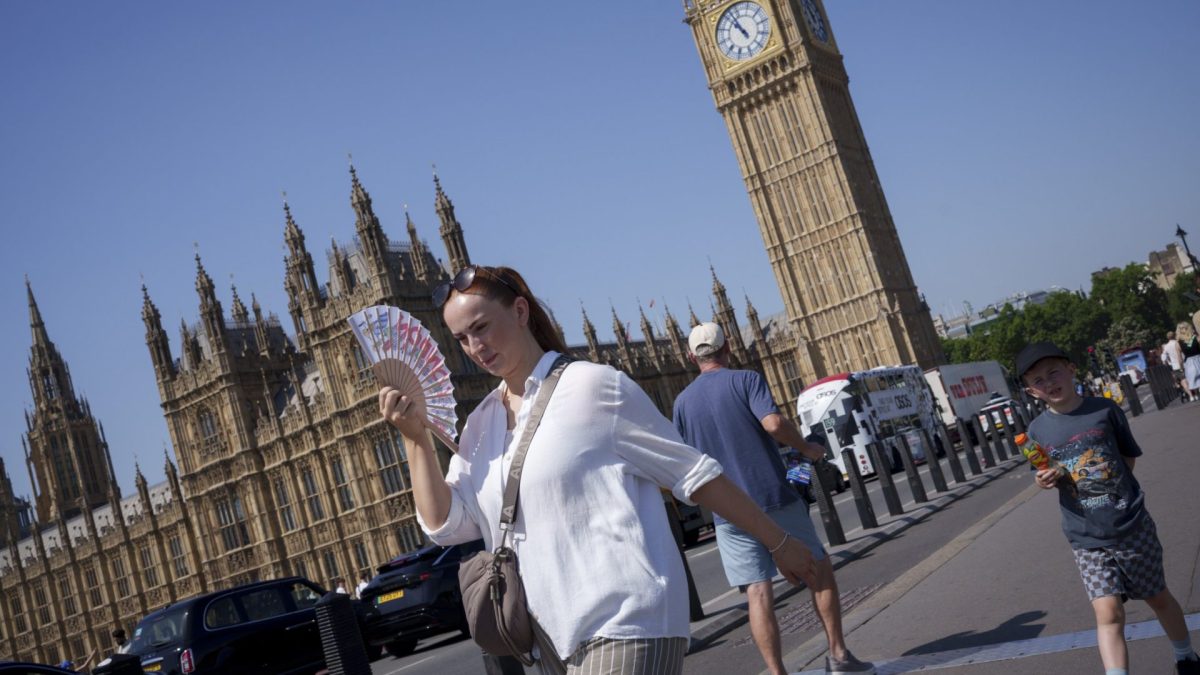
I’ve never been so glad for the shelter of trees on my midday walk as I have in the past couple of months. As the country sweltered in the hottest June on record, I instinctively made a beeline for those streets in my area that are lined by oak trees and luxuriated in their cooling effect in a way that I haven’t before. And research confirms that the profound effect of these canopies wasn’t just psychological. Tree cover reduces the temperature of the air below by up to 8°C, according to the Forestry Commission’s research arm. Much of this temperature relief is simply because the foliage blocks out the sun. But the evaporation of water through pores in the leaves also cools the air as the process absorbs heat from it – and this cooler air brings down the temperature of the surrounding area as well. The effect is so strong that the provision of trees – or lack of it – is starting to have a significant impact on people’s quality of life in the summer months, as climate change pushes up temperatures up to new levels. Research shows that in an average city, those UK neighbourhoods where tree cover per person is highest are up to 4°C cooler during a heatwave than those where it is the lowest. The benefit of trees is most pronounced in big cities because of the “urban heat island” effect – whereby asphalt, concrete and brick absorb heat from the sun during the day and radiate it slowly in the evening and overnight. During the record July 2022 heatwave, the urban heat island effect raised temperatures by 7.2°C in parts of Greater London, according to University College London. And that extra heat is lethal: of the roughly 1,773 deaths in Greater London during the two-week July 2022 heatwave, around 370 were attributed to heat. Sadly, while you might think of Britain as a country rich in vast forests, our cities sorely lack trees. A new analysis of 767 European towns and cities finds the UK ranks 31st of 38 countries for urban tree cover, ahead of only Serbia, Ireland, Kosovo, Montenegro, Malta, Cyprus and Iceland. The average UK urban area is just 17.9 per cent tree-covered against a European average of around 30 per cent, according to the analysis of Copernicus satellite data by the Energy and Climate Intelligence Unit (ECIU) research group. That means the average European city has 66 per cent more tree cover than the average UK city. London ranks 565th of 767 at 18 per cent cover, while Greater Manchester, the greenest major British conurbation, manages 27 per cent. By contrast, Nice has 39 per cent tree cover, Barcelona has 31 per cent and Madrid and Marseille have 29 per cent – cities which are well used to the kind of heat that is now becoming normal in the UK, and know a thing or two about the cooling properties of trees. And the heatwaves are only going to get worse. Government advisor The Climate Change Committee warned in May that the risk of extreme heat in homes and offices is projected to be four times higher in the 2050s than today. It also said that, under 2°C of global warming, around 92 per cent of existing homes would overheat and that heat-related hospital attendances could triple by the 2050s. We are currently at 1.37°C of warming since pre-industrial times. As so often, the less well off will be impacted hardest by this warming. Research shows that the most affluent UK neighbourhoods have around 50 per cent more tree cover than the least affluent, meaning those poorer areas are likely to endure temperatures several degrees hotter in a heatwave. And so, in London, a city with an impressive eight million trees overall, well-to-do Richmond’s “canopy cover” is more than 30 per cent, compared to just 8 per cent in Barking & Dagenham. Sadly, while the government is aware of the importance of tree planting, the main focus is on creating rural woodland – and even there it is not meeting its targets. A separate ECIU analysis in June revealed that the UK is on track to miss its tree planting targets by an area the size of Portsmouth (15.5 square miles). Where cities are concerned, there is no similar target for tree cover. Although, the Forestry Commission recommends a minimum of 20 per cent cover in urban areas and the Trees for Cities tree planting charity supports a more ambitious goal of 30 per cent tree canopy cover, while recognising that this target isn’t achievable everywhere. Trees are a key part of the government’s drive to become net zero (by sucking planet-warming CO2 out of the air) and to boost nature. But, in urban, areas they are also a relatively cheap and very effective way to keep down temperatures. They also lift our environment, boost our morale, cut pollution (by filtering out nitrogen dioxide and tiny “particulate” pollution that can reach deep into our lungs) and reduce the risk of flooding. So, it’s surely a no-brainer: the government needs to step up its tree planting campaign with legally-binding targets for urban areas. It should begin by heeding the Woodland Trust’s call for Treasury funding to help those neighbourhoods with low tree cover to catch up with leafier, more affluent areas.
The simple way to cool our cities which is being ignored
Full Article
Original Source
Read the full article at Inews →KhanList aggregates and links to publicly available news content. We do not host full articles from third-party sources. Always verify important information with original sources.