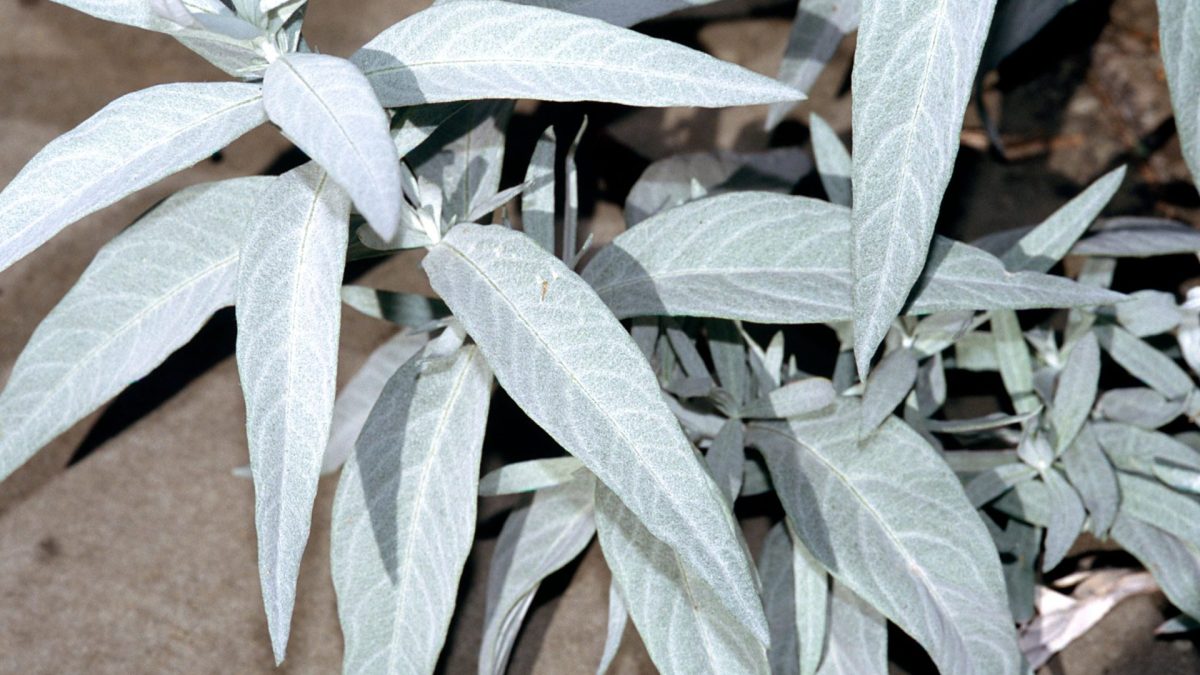
It is summers like this that make you appreciate silver-leafed plants that shrug off drought, shimmer in the sun and bring contrast to brighter summer flowers, making them stand out. They must have well-drained soil, though clay soils tend to hold enough water that it doesn’t need drought-resistant silvery-leaved plants. Verbascums or mulleins have done exceptionally well this summer, despite the wet winter. The native great mullein, Verbascum thapsus, is a 1.5m brute suitable only for wilder gardens, but if it can be tolerated, is very valuable for pollinators and supports the stripe mullein moth caterpillars. It is not as grey as other verbascums. Two much better verbascums are V. bombyciferum and V. olympicum, both growing to 2.5m. Neither are especially widely sold, but they are easily grown from seeds, which must have light to germinate. Sow barely covered with sifted growing medium or vermiculite. Shorts V. bombyciferum is a biennial, while V. olympicum is a short-lived perennial that takes two years to come into full flower, after which it dies. Collecting and sowing seeds in the garden is necessary if they are to persist. Mannington Hall Gardens with Stachys byzantina (Photo: RHS/Ellie Walpole) V. bombyciferum has a dramatically wooly stem, as if made from cotton wool, supporting sparse yellow summer flowers. V. olympicum carries many shoots, generously covered in yellow flowers. All these verbascums have broad rosettes of grey leaves that smother weeds. Cut out flowered main shoots of V. bombyciferum to promote sideshoots. Unlike some other grey plants, they are very hardy. At the other end of the scale low-growing silvery plants include Pseudodictamnus mediterraneus, a hardy woody perennial, about 60cm tall, with little rounded woolly leaves topped by pink flowers. The leaves start green but turn whiter and woolier as they grow into the light. Lamb’s ear, most often seen as Stachys byzantina “Silver Carpet” (right), grows to 30cm, and is exceptionally woolly. This plant was regarded as very vulnerable to the severe pollution of the time and hard to grow in cities in the 20th century, but now it is prized for the ability of its leaves to collect pollution and cleanse the air. It doesn’t flower, so is no use to pollinators, but it does sometimes support the curious woundwort case-bearer moth caterpillars, which protect themselves with jackets of the fuzzy leaf hairs. Curry plant (Helichrysum angustifolium) is another low grower, at 30cm, and brings a spicy note to the air on sweltering days. Its yellow flowers are rather ignominious, and it soon gets scruffy, when a tidy-up with shears is called for. It is hardy and tolerant of poor conditions. Artemisia are very willing and good for wilder borders. They are strongly scented, sometimes a little acrid, and rich in active chemicals such as artemisinin (Artemisia annua), used as an antimalarial drug, while their common name, wormwood, refers to their reputed, if hazardous, use against intestinal parasites. Verbascum ‘Olympicum’ in the Dry Garden at Hyde Hall (Photo: RHS/Richard Bloom) Good garden forms include the 60cm height and spread herbaceous Artemisia ludoviciana “Valerie Finnis”, with very attractive white shoots, and the small grey woody perennial Artemisia “Powis Castle”, with delicate neat silvery grey foliage. Their undistinguished yellow flowers are best snipped off. Arguably the choicest silvery plant is Convolvulus cneorum, a little (50cm) woody shrub, related to bindweed, but free of vice. It is tricky but worth persevering with for its shining silvery leaves and, in late summer, massed white flowers disconcertingly similar to bindweed. Good drainage, plenty of sun but not too dry – on a bank or raised bed, for example – helps them thrive. Guy Barter is the Royal Horticultural Society’s (RHS) chief horticulturist. The RHS is a charity inspiring everyone to grow via its research, advisory, outreach, shows and gardens. For more information, visit: rhs.org.uk
The silver-leaved plants that will help your garden through a dry summer
Full Article
Original Source
Read the full article at Inews →KhanList aggregates and links to publicly available news content. We do not host full articles from third-party sources. Always verify important information with original sources.