
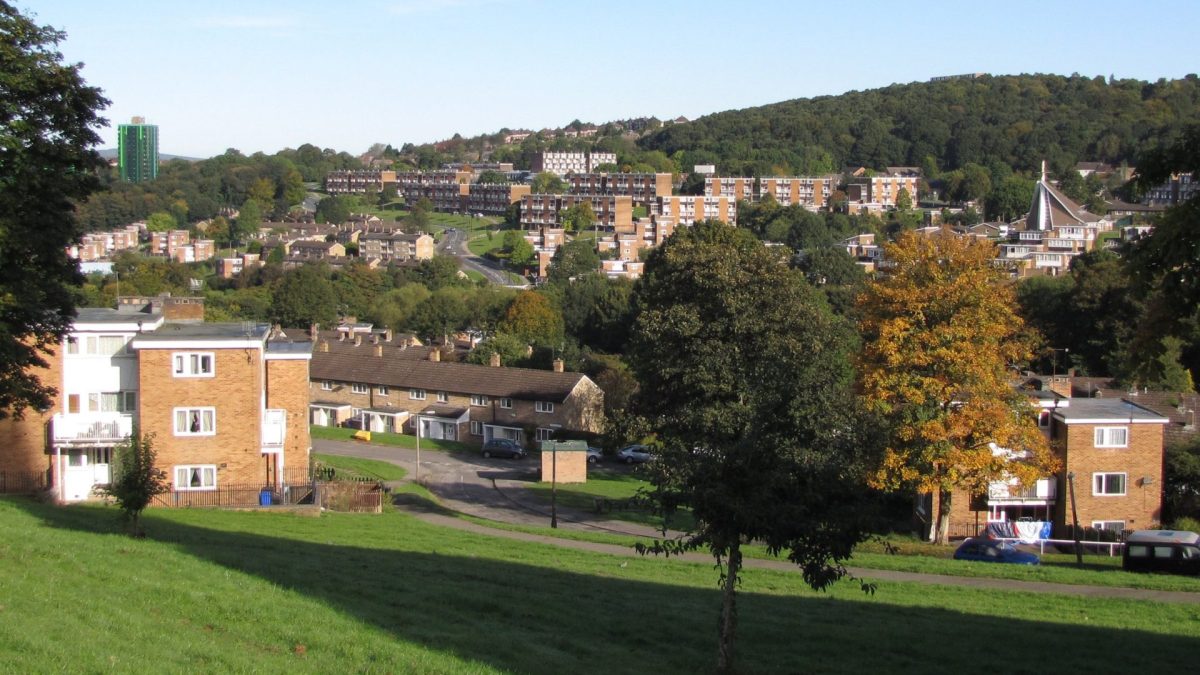
Want to understand what’s really going on in Britain and how we can fix it? Join Vicky Spratt’s subscriber-only newsletter, The State We’re In, where she breaks down the big issues shaping the country. You can sign up to get it sent straight to your inbox, every single week, here. It’s that time again. Today, John Healey will deliver his first budget as Chancellor. So far, the expectation are that it will be “boring”. By that I mean that he won’t announce anything that will a) spook the global financial markets or b) depart too radically from the manifesto Labour were elected on. And yet, I wonder if all of the briefing that this Budget will be “boring” might actually be a way to keep at least one of the rabbits in Healey’s hat under wraps; let’s see! Coming up in this week’s newsletter: Can Labour afford to fix the housing crisis? Why early decisions from the new renters’ rights tribunal are causing a stir! One thing we do know is that Healey will announce an additional £1bn for Labour’s landmark 10-year social and affordable housebuilding programme (SAHP). This will take the total being made available to £40bn . So far, just £10bn has been brought forward and allocated by Housing Secretary Angela Rayner. In an exclusive interview with me for The i Paper, she outlined how that cash would be “tilted” towards council housebuilding as per Andy Burnham’s wishes. Shorts However, a group of Northern housing leaders – the Northern Housing Consortium – have told me that they are calling on Healey to give them more money and power to regenerate the homes they already own, bringing them up to modern standards, as well as allocating new money to build more homes. Social housing providers – whether that’s councils or, more commonly, housing associations – regularly make headlines for the wrong reasons: poor conditions, dodgy repairs and bad customer service. However, it’s a fact that regeneration and development funding for housing associations has faced significant financial pressures, delays and rationing in recent years all over the country. This has made it harder for providers to keep the homes they own in good nick while also looking ahead. Where direct state grant funding used to be available to housing associations for regeneration, it is now mostly funded by the sale of new market-sale housing, low-cost loans or via rental income. As a result, the Northern Housing Consortium say that getting more money to them for regeneration, as well as giving mayors more power and money to move regeneration along, could unlock as many as 500,000 good-quality homes. Consider the example of Gleadless Valley, a housing estate 2.5 miles south-east of Sheffield City Centre. Some tower blocks have been updated and insulated with new cladding in recent years (Photo: Historic England Archive/Heritage Images via Getty) Started in the late 1950s by Sheffield City Council, Gleadless Valley was designed as a large municipal housing estate with around 4,000 homes. The concrete blocks of flats built here on top of hilly green land replaced the slum housing that had existed in this steel city since the Industrial Revolution. It was an ambitious example of post-war planning but, now, the homes are in need of updating. Some of the blocks have been updated and insulated in brightly coloured cladding. However, regeneration has been stop-start at Gleadless Valley since 2017 for one reason: funding uncertainty. At the end of 2025, a masterplan, created in partnership with residents called “Our Vision for the Valley”, was approved, including plans for 1,100 new homes. Work has started on elements of the scheme, but full funding has not been secured, which means the uncertainty over this estate’s future persists. Reverend David Middleton, member of the Gleadless Valley Regeneration Board, told me that the community was now on a knife-edge. “We must not lose the trust we have worked so hard to gain from residents,” he said, adding the regeneration will “give hope to one of the most deprived communities in the UK”. “It includes plans to refurbish, remodel and build new homes alongside improving infrastructure and green spaces,” he added. The first project “Spotswood Meadow”, a newly-opened park and nature spot, was completed in August, and teams are tackling issues such as fly-tipping and antisocial behaviour as part of the regeneration project. However, these initiatives are cheap to run in comparison to the cost of the building work that is needed to regenerate the housing on the estate. This is why the Northern Housing Consortium are calling on the Government for more investment in regeneration. Patrick Murray, Northern Housing Consortium’s executive director, told me: “Gleadless Valley is not unique; these challenges are repeated across the North.” “Regeneration and supply of new homes go hand in hand,” he added. “That is why social housing leaders across the North have written to the Chancellor to secure backing for regeneration at the autumn Budget.” But Murray would also like to see “dedicated devolved funding for regeneration to replace or refurbish poor-quality homes, alongside funding to build the capacity and capability to deliver regeneration at the scale needed.” Andy Burnham has made it clear that he wants a council housebuilding revolution. In the process of making that a reality, he must also make sure that the original post-war council homes are in better shape. But if we know anything about the challenges that his Government faces, it is, quite simply, that there just isn’t enough money to do everything. Housing crisis watch Something rather interesting is happening. The first cases heard under Labour’s new renters’ rights tribunal have taken place. This is the tribunal at which renters can challenge their landlord’s rent hikes. In two cases, having reviewed all of the evidence submitted by tenants, judges have not only ruled that landlords cannot increase the rent they want to charge but have actually gone further and ordered the landlords in question to lower their rent. This, as you can imagine, is causing a bit of a stir. I’ve explained it in a video which you can watch here. Vicky’s pick On Sunday, I went to see the big 90s exhibition at the Tate Britain. It has been curated by former Vogue editor Edward Enniful. Sadly, the whole thing is a bit flat. It’s more like a magazine spread than an interactive multimedia exhibition showcasing the art, fashion and culture of one of the most definitive decades in recent history. This tracks; Enniful had also worked at i-D Magazine and American Vogue over the years. But the 90s was so much more than fashion; it was a decade that changed the way we consume everything from music to TV and, of course, when New Labour changed our politics. I’d like to have seen a bit more of that in the Tate’s galleries. But I would say that, wouldn’t I!
The Sheffield estate where hundreds of homes are ‘falling apart’
Full Article
Original Source
Read the full article at Inews →KhanList aggregates and links to publicly available news content. We do not host full articles from third-party sources. Always verify important information with original sources.