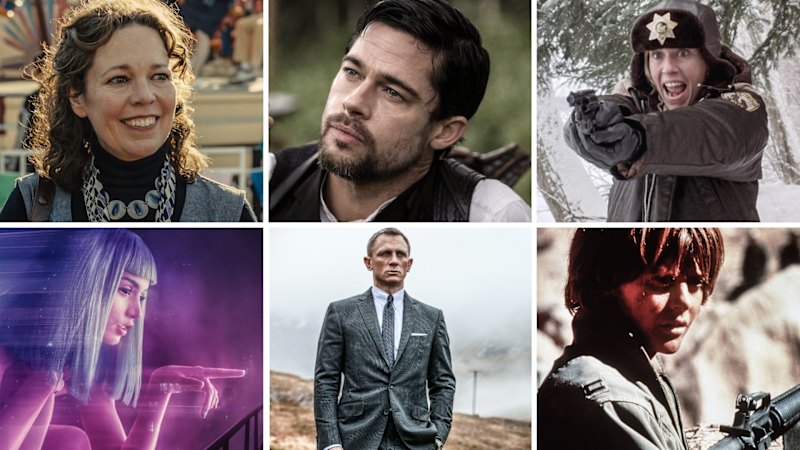
Tom RyanJuly 21, 2026 — 3:00pm“It was all about the light,” writes famed cinematographer Sir Roger Deakins in his welcome autobiography, Reflections: On Cinematography.Now 77, with an impressive list of credits to his name, he’s referring in particular to how he shot the complicated casino sequence in French-Canadian filmmaker Denis Villeneuve’s Blade Runner 2049 (2017). But, as his book indicates, he could be alluding to his entire career behind the camera, from his early work on documentaries and music videos (which he knew as “pop promos”) through to his single Bond contribution, Sam Mendes’ Skyfall (2012), and his fifth assignment for the same director, Empire of Light (2022).Sir Roger Deakins is the cinematographer behind some of our most iconic films.However, he insists, there are no rules governing his approach. For him it’s always a case of starting afresh. Every day on a set becomes a new exercise in problem-solving, drawing on his previous experience and adhering to directors’ requests for the kind of look they’re after.As he explains in a lecture to the staff of Pixar Animation Studios in the US, who are interested in adapting his lighting techniques to their work, “Lighting, to me, begins with the choice of a light source, building from there to create a sense of naturalism. There is no formula you might find in a textbook.”Roger Deakins poses with his Oscar in 2018.APAnd his Reflections take us into the preparations for and onto the sets of some of the most visually innovative British and American films of the past half-century. It also shares the wild inventiveness he brought to the diverse tasks he’s taken on over the years.Deakins explains how, after director Michael Radford’s original plan to shoot Nineteen Eighty-Four (1984) in black-and-white was rebuffed by financiers, he and his team set out to borrow a technique for colour-desaturation that Japanese cinematographer Kazuo Miyagawa had invented 25 years earlier for Kon Ichikawa’s Her Brother. The problem was that Miyagawa kept his process to himself.He recalls that his approach to Alex Cox’s Sid and Nancy (1986) was entirely different, conjuring up a “punk chaos” style to match the modus operandi of its title characters, Sex Pistols bassist Sid Vicious (Gary Oldman) and his ill-fated girlfriend Nancy Spungen (Chloe Webb). Abandoning conventional film lighting in consultation with Cox, he adopted what he calls a “run and gun” approach, drawing on his earlier improvisational work on documentaries.That experience also played a major role in his approach to the snowbound Fargo (1996), one of a dozen films he’s shot for the Coen brothers. Noting that he’d previously learnt about the potential effectiveness of storyboards from them, he adds that this time they wanted something in the observational style of a Ken Loach film, requiring him to work without a safety net, without the reference points provided by a storyboard.Pervading all of this are his informed views about what constitutes the art of his craft. “Many people equate the craft of cinematography with creating beautiful images,” he writes. “In contrast, I believe the cinematographer’s role is to support the story, to immerse the viewer rather than create attractive but ultimately uninvolving ‘eye candy’.” Photo: That he is widely respected among his peers is evident in the many awards he’s received, including 16 Oscar nominations and two wins (for Blade Runner 2049 and, in 2019, for Mendes’ bravura simulated-single-take war film 1917). There’s also the testimony of those who’ve worked with him. He modestly doesn’t cite them but in his book Hits, Flops, and Other Illusions: My fortysomething years in Hollywood (Gallery Books, 2024), Ed Zwick, for whom Deakins shot Courage Under Fire (1996) and The Siege (1998), contributes a typical example. “I’d never met anyone as well-prepared as Roger,” Zwick writes, “but also willing to throw it all away in the interests of telling a better story. He brought an extraordinary commitment to realism … It rubbed off on the actors. He also gave a great latitude to their movements, which lent spontaneity to their performances.” The bulk of the book deals with Deakins’ film work, and there are loads of anecdotes about personal interactions on the productions in which he’s been involved. He’s an affable, learned storyteller, generous to those he’s worked alongside. And at the same time as he’s prepared to be critical of some of the films he’s shot, he’s also consistently committed to his directors’ needs. His protective concern for the problems faced by Andrew Dominik during the production of The Assassination of Jesse James by the Coward Robert Ford (2007), the young Australian’s American debut, is admirable.But Deakins’ “reflections” also take him back to where it all began and then led: his childhood in Torquay, a coastal town in Devon; his training at the National Film School based at Beaconsfield’s then-“ramshackle” studios in Buckinghamshire; his work in documentary (which led to him travelling on a yacht around the world, and then to Africa and India); his first feature, a “soft porn” film starring Koo Stark (an early girlfriend of the now-disgraced former Prince Andrew); and, during the production of Michael Apted’s Thunderheart (1992), his meeting with wife-to-be James, subsequently one of the many collaborators to whom he credits much of his success.Deakins’ handsomely illustrated coffee-table-style book is a pilgrim’s progress story about a kid who grew up loving movies – his was an informal but informed education – and ended up making them. It also offers a practitioner’s view of the changing face of filmmaking over the past half-century.At the same time it serves as a reminder of the long, hard climb that generally precedes success (and occasionally fame) but that doesn’t always lead there. And while the close attention to technical detail might prove much too extensive for the casual reader (and its font size is far too small for comfort), it also provides a valuable how-to guide for aspiring filmmakers and is likely to be of special interest to anyone concerned to do more with a camera than snap away at sunsets.Reflections: On Cinematography by Roger Deakins is published by Hachette ($90). What else is happening in the book world?This novel has plenty of sex - but it’s far more than a racy read.Can’t get published by the Big Five? Win a major prize instead!Here are five thrilling and chilling new novels to keep you up at night.Our critic shares 10 of the best audiobooks of 2026 (so far)More:ReviewPop cultureLiteratureWhat to watchSee & DoFrom our partners
The secrets behind some of Hollywood’s best-looking movies
Full Article
Original Source
Read the full article at Smh →KhanList aggregates and links to publicly available news content. We do not host full articles from third-party sources. Always verify important information with original sources.