
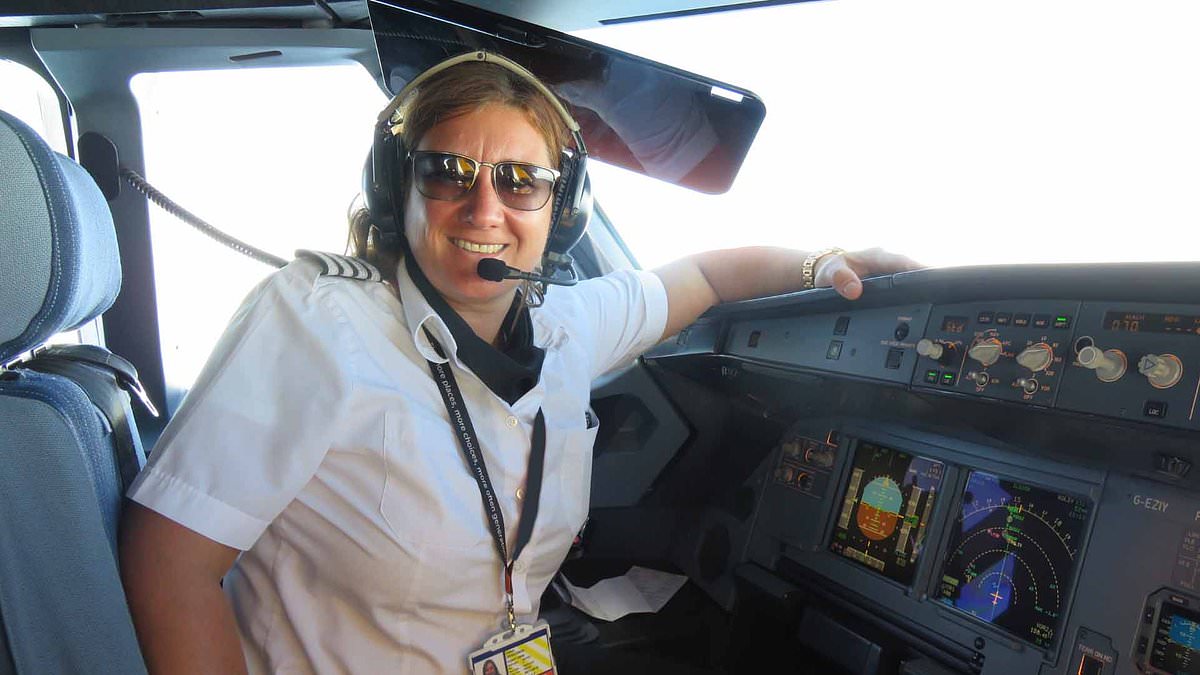
A lot of behind-the-scenes action goes on to make sure your plane journey is safe and smooth – from mechanical checks to crew member training. Code words play a part too and allow pilots and flight attendants to communicate when things may be going wrong.From squawk codes to phrases like 'pan-pan', they may sound meaningless to everyday people, and they aren't actually ever heard by the passengers on board, but they can be vital during a journey 30,000ft in the air. Former airline captain Emma Henderson explains how each one works and when they might be used. According to the pilot, squawk codes are 'transponder mode-c codes'. She told the Daily Mail: 'All aircraft over a certain weight (all passenger carrying aircraft) have to be fitted with a transponder (similar to the kind you wear when you are in a race but much more sophisticated) which transmits height, speed, aircraft information etc.'Transponders actually “talk” to each other too and are used in TCAS (traffic collision avoidance systems) to prevent collisions.'Each aircraft is given a regular squawk code which usually consists of four numbers. But squawks 7500, 7600, 7700 are emergency codes.These are 'dialled into the box in the flight deck where the transponder lives' and according to the airline captain 'would never be read out to passengers.'The code 'makes the aircraft visible to all the different layers of air traffic control, allowing controllers to see the aircraft even when it is outside the altitude range they are controlling'. Former captain Emma Henderson explains how codes are used behind the scenes on planes to help keep passengers safe Squawk 7500Squawk 7500 is used in rare cases where the plane is hijacked, according to Ms Henderson, who is now a professional speaker. Squawk 7600A 'squawk 7600' is declared 'for loss of communications between the aircraft and the ground,' the pilot explains. Squawk 7700As for a 'squawk 7700', this code is used 'for an emergency situation' and there have been plenty of reports over the years of when a pilot has utilised it. In March, easyJet flight EZY439 declared a squawk 7700, which alerted air traffic control of an emergency.The plane turned around and returned to Glasgow after passing over Galloway just 30 minutes into its journey. The aircraft was hit by turbulence soon after setting off when all passengers were seated, according to the airline. But the incident resulted in a crew member needing medical assistance, The Herald reports, 'which prompted the code to be issued.'Once the aircraft landed, health services were ready to provide help and the flight was rescheduled. Another squawk 7700 code was issued by cockpit crew on a Ryanair flight in October last year after the plane reportedly came within six minutes of 'running out of fuel' mid-air.Most recently, a Jet2 flight jetting off from London Stansted to Ibiza declared a squawk 7700 code and made a U-turn as it flew over France and landed in Paris, Metro reports. A 'squawk 7700' code is used 'for an emergency situation,' according to the former airline captain (stock)Mayday The word ‘mayday’, repeated three times, is also used in an emergency and is transmitted between pilots and air traffic control.The code was used last year on a United Airlines flight after the plane lost an engine soon after take-off.'Failure, engine failure, left engine, United 108. Declaring an emergency. Mayday-mayday-mayday,' one of the pilots of United Flight 108 said calmly to air traffic control after taking off on July 25, 2025.The plane had departed from Washington Dulles Airport and was bound for Munich and had only climbed to an altitude of 5,000ft before the issue arose and the left engine lost power. It managed to return to Dulles and touched down smoothly. All passengers and crew deplaned safely. At the time, United Airlines confirmed the incident in a statement referring to it as a 'mechanical issue', and confirmed the flight's subsequent cancellation.In another incident last year, a pilot declared mayday on a flight heading from Boston Logan International Airport to Philadelphia.The American Airlines pilot was forced to turn around after just ten minutes due to 'maintenance issues', according to the airline. 'The flight landed safely and taxied to the gate under its own power,' the spokesman said, noting that the aircraft 'has been taken out of service to be inspected by our maintenance team'. Mayday, said three times, is declared in an emergency and is transmitted between pilots and air traffic controlPan callPan-pan, also said three times, is used in 'an urgent situation,' Ms Henderson says. Last year, an easyJet flight heading from Madeira to Gatwick triggered a pan call alert after a bird strike. It requested a continuous descent and a 'sterile runway' before landing safely at the London hub.Code 300 and AngelPhrases such as 'code 300' and 'angel' are usually declared by commercial pilots 'to discreetly signal a medical emergency on board, often when a passenger is incapacitated, unresponsive, or in serious distress', Jason Martinelli, director of operations at Cirrus Aviation Services, told Travel + Leisure.Although he notes that these two codes are not standardised across the industry and different airlines may use variations.
The secret codes pilots use when your flight is in trouble: From the chilling '7500' hijack signal to 'mayday' calls - former airline captain reveals what they REALLY mean
Full Article
Original Source
Read the full article at Dailymail →KhanList aggregates and links to publicly available news content. We do not host full articles from third-party sources. Always verify important information with original sources.