
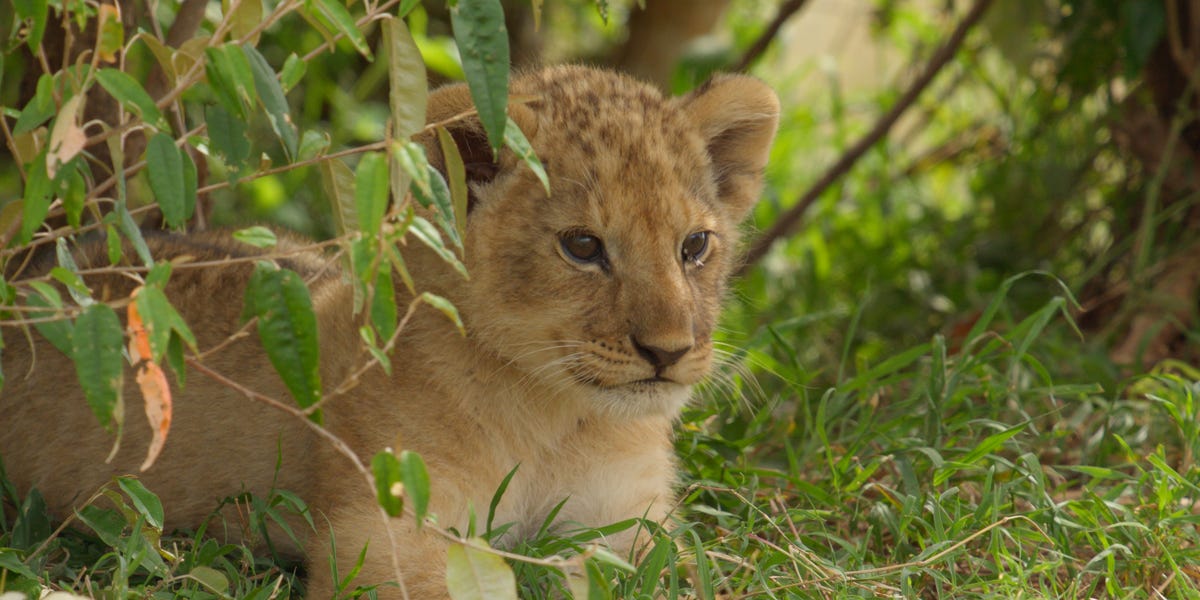
Every product was carefully curated by an Esquire editor. We may earn a commission from these links. Here’s how we test products and why you should trust us.Sophie Darlington15 min readThe mama lion shouldn’t be here. The sun is too high, the air is too hot, and she has cubs hiding somewhere in the brush. But there she is anyway, standing casually by the side of the dirt road with Kenya’s Lake Nakuru shimmering in the distance. Although her emergence at this time of day is odd, she looks unbothered. At ease. As if she has no worries whatsoever.Seems like there should be some kind of playful local term for such a state of mind.The lioness holds her gaze on our Land Cruiser like a pedestrian waiting for traffic to stop before crossing to the other side. We grind to a halt, raising a small cloud of dust. Faith Musembi, who spent four years working as a producer and director on the new NatGeo documentary series Lion, is the first to spot her prowling through the tall grass. Musembi grew up near Mount Kenya, the peak that gives her country its name, and she has been tracking wildlife in documentaries for her whole professional life. Still, the thrill of seeing a lion prowling in its own natural realm never diminishes. “I know we’re supposed to have a distance, but it’s impossible, because if you love animals, you’re drawn to them,” she says.NatGeo brought me here to the wildlands of this African nation to join Musembi and Lion director of photography Sophie Darlington as they ventured back to explore the animals and places featured in their four-episode series debuting August 19. Over the course of more than fourteen hundred shooting days, the show evolved into a shockingly close real-life version of Disney’s cherished 1994 animated feature The Lion King.Lion is executive-produced by Iron Man and The Mandalorian filmmaker Jon Favreau, who also directed the photo-real digital retelling of The Lion King in 2019. This doc series is not only true live action; it is an undoctored and emotional look at how even the strongest of creatures struggle to grow up. The animals don’t sing in Lion, obviously, but the show does follow the similar journey of Kio, a tiny cub who is cast out of his pride but valiantly manages to survive and thrive. The filmmakers had no idea that’s what they were going to capture when they started.“We thought we were following four female lions,” Favreau tells me just days before my Kenya trip. “It was a big pride. And what the story ended up being was one little baby that was born off cycle, this little runt that looks so adorable. The story actually turned into that little cub getting older and maturing and surviving, with the others that we thought we were following dying off. So he became the central character.”Nature is a lot more merciless than a Disney story, however. Whenever Musembi, Darlington, and the rest of the Lion crew lost sight of Kio, there was a genuine question of whether they’d ever find him again. “It was a nail-biter because every rainy season we’d have to pull the crew out,” Favreau says. “It was like: We're hoping that this little guy makes it.”That “little guy,” the Lion documentary’s version of Simba, is a baby named Kio, short for “kiongozi,” which is Swahili for “leader.” He starts out as a cute little ball of fluff and—fear not—grows into a figure of inspiring strength and resilience.When Kio was still too small to help himself, he was protected by his dauntless mother, nicknamed Summer, who was part of the Topi pride that rules over part of the Maasai Mara. That wildlife reserve is in the southwestern corner of Kenya, about 150 miles, or half a day’s drive, from Lake Nakuru, where we make our first stop after starting out from the skyscraper-filled capital city of Nairobi. The female lion we see walking the lakeside road is from a different pride, but she shares a similar purpose: protect and defend her children. That’s why her presence in this place out in the open at this time of day is so perplexing.Anthony BreznicanA mama lioness takes a break from her cubs for a walk around the block in Kenya’s Lake Nakuru National Park.The Wandering MotherAs we watch the mama lion step into our path, I help Musembi lift the lid on the Land Cruiser. The roof pops up like a folding table, allowing us to peer down at the predator from a few feet above, safely contained within the metal vehicle but open to the air. I wonder what stops the lions from leaping up and turning us into a snack. The answer is … nothing. But the cats here in this national preserve are used to tourists and hunting is banned. (“As long as they don't feel surprised, they're fine,” she reassures me.)NatGeo Expeditions, which curates in-person safari experiences like this, and G Adventures, which oversees the logistics of the tours, joined forces to bring us to three different regions of Kenya, including some of the same locales the filmmakers visited to capture footage of Kio and his pride. (You can book your own version of this exact trip at National Geographic Journeys.)Musembi began to remind me of something else we encountered on this journey. Among the mesmerizing animals around Lake Nakuru is the iridescent blue and orange Superb Starling, which studies its surroundings with intensely alert eyes. They are friendly, curious, and get just close enough to the action without being in danger. Musembi seems like that to me—sharp, focused, and quick to move—whenever an animal in the vicinity captures her attention.Anthony Breznican“I’m a huge Lion King fan,” Faith Musembi says. This watchful Superb Starling might be her animal counterpart in that animated world.We are hushed as we watch the mother lion on the road, but the veteran field producer’s expertise with these animals allows her to deduce there are cubs nearby, even if they remain out of sight. “She seemed like she was suckling because her teats were really sticking out,” Musembi tells me later. “She looked quite full of milk.”But that only added to the mystery. “I did wonder: Is she hungry? Is she looking for something to eat? They really should be resting because it's hot,” Musembi says. “There's no reason for her to be on the road.”So, why did the lioness cross the road …? It sounds like the opening to a children’s joke, but in this case a solution was offered by Darlington, who like Musembi has spent her life studying these animals through the lens of a camera. If Musembi calls to mind the sharp-eyed starling, the tall and willowy British-born cinematographer’s match in this landscape would be a mellow but vigilant giraffe, keeping a calm eye on things from her own high vantage point.“They often take breaks from the cubs,” Darlington says, theorizing that this was why the mama was awake and wandering when she would ordinarily be tucked in and asleep with her brood. “They’re like, Oh God, can I get away? I need some childcare.”Jason Reitman/Anthony BreznicanCinematographer Sophie Darlington at work on Lion, whose Lion King alter-ego might be the graceful, studious giraffe.As the mama lion wandered, there was also a warthog romping on the opposite side of the road in the shadow of an umbrella-like acacia tree. (The driver points it out, calling the tusked creature not a warthog, but a “Pumbaa,” one of the many ways The Lion King has shaped the language of both tourists and their guides.)The warthog is not being actively stalked, but the lioness was much more interested in it than she was in us as she walked casually down the center of the craggy dirt roadway, stopping to sip from a puddle. “Lions are opportunists,” Darlington says. “So if they hear something that they might be able to eat, they will never turn it down.”But this lioness lets the “Pumbaa” go off on its merry way. No worries, warthog. Not this time.The Playful Little OnesLater that evening, as the sun is setting and the lions begin their version of morning, we see exactly why that mother needed the apex predator version of a coffee break.After checking in to the Sarova Hill Lion Game Lodge, a collection of bungalows nestled in the heart of the Lake Nakuru National Park, our NatGeo group gathers back into the G Adventures Land Cruisers and ventures back out into a network of backroads. There is no hunting permitted in Kenya—the country banned it nearly fifty years ago—so visitors shoot only with cameras, not guns.Not far from where we spotted the wandering mama earlier that afternoon, we encountered a group of hedonistic baboons blocking the roadway. As the vehicles draw closer, they abandon their shenanigans and clamber off into the woods like a party of teenagers being raided by the cops.A little farther down the road, we spot two lionesses in the grass, only their ears and the tops of their heads visible. Creating a ruckus under the trees, however, are a handful of cubs. They dash together through the leaves, tackle and roll over each other, and bound around into their patient mothers. One of the tiny lions is especially curious, sitting in a clearing and waging a tireless battle against a curved stick that keeps springing back after every hit.Even as cameras click and oohs and aahs emanate from the popped tops of our safari vehicles, the lions and their cubs remain at ease. This is what the Lion creators experienced out in the field with the Topi pride. “One of the lovely things about experiencing lions in countries where they're not hunted is you get to have that kind of interaction where they're completely relaxed,” Musembi says. “I hate seeing an animal stressed out because of me. This tells me those animals are looked after.”The vibrant personality of that rampaging little one and his brawling stick becomes undeniable after only a few minutes. Now amplify that times thousands of hours the Lion team spent tracking their subjects. “It’s a luxury recording an animal for that amount of time, for being allowed into their world,” Darlington says. “And there were days we didn't find them, but most days we did.”The amount of time that NatGeo was willing to devote to the project was unusual among nature docs. “As Faith said at the beginning: You don't get to do this,” Darlington adds. “You get absolutely ingrained into every aspect of their lives and you become consumed. It's such a brilliant job because you get up in the morning and it doesn't matter what on earth is going on in the world. All you're concerned about is finding Kiongozi or Summer or the pride. That's your focus. We get up every morning, an hour before dawn. We get out there so we can listen to them calling.”This is why the survival of Kio became such a concern for the Lion documentarians. It’s unethical to interfere in any way, but they still felt deeply for their little star and his mother as nature threw its harshest challenges at them.“I’ve had [times] where I've just sat there crying and you don't want to,” Musembi says. “The emotion comes because I got into this field to make a difference for the animals. When you're there, you can see assistance is needed …” She trails off, winces and shrugs. “How I'm helping them isn't immediately getting them out of the situation. That's difficult. But the bigger picture is I know when people watch this, their curiosity might lead them to look into lions a little more—and that's useful.”Her hope is that shows like Lion will warm viewers’ hearts, alert more people to the danger of human-caused threats, and lead to greater conservation efforts. “It requires human resources to look after the animals,” she says. “We can create something that will trigger funding that goes into these projects.”What Makes a Lion King?After the cuteness overload of the cubs, the ferocious side of the lions reveals itself just about a mile away. In a vast flatland at the edge of the park, the distended, bloody ribs of a partially devoured zebra rise above the grass top like the vaults of a collapsed cathedral. Standing guard over the carcass is an immense male lion, who pads back and forth warding off a trio of hyenas who are trying to claim their share.Female lions do virtually all of the hunting, giving male lions a reputation among some for laziness and lying low. That behavior makes them especially challenging for documentarians. “They are much less proactive than the females. They sleep even more than the females because the females are the ones who do a lot of work,” Darlington says. We watch as this male, which the cinematographer estimates is about four or five years old, engages in his primary job: protecting and defending.Anthony BreznicanAn adult male lion guards the remains of a kill in Lake Nakuru National Park as hyenas circle and wary impalas watch from a distance.“Sometimes they'll be patrolling,” Darlington says. “They spend quite a lot of the time when they get to be adults on their own. It's only when they're moving to a kill or chasing some hyenas that they [come together.] They're really hard to see unless they’re mating.”This one is currently all by himself. Further away, a small herd of impalas look up from nibbling the grass as one particularly frustrated scavenger retreats after being chased off by the big cat. “They're much more concerned by the hyena. They're all staring where the hyena is,” Darlington notes.She estimates that the zebra was last night’s kill, based on how cleanly it has already been picked over. She and Musembi think that might be why the mama lion from earlier in the day was so comfortable and placid about the frolicking warthog in her midst. The pride had been well fed.Hyenas have a job to do as well. They are the cleanup crew that gnaw away the bones, completing the self-perpetuating cycle that the Disney film and Elton John immortalized as The Circle of Life. As we watch, the lion sniffs around the remains and comes to the conclusion that there is nothing left to defend. He trots away, leaving it behind.A group of zebras is called a “dazzle,” and the morning after this, the bones are gone but the same field is dazzling in full force, with a countless array of the black-and-white-striped equids on display. Our daytime game hunt takes us in the direction where the male lion ventured off the night before, and we find him lying asleep at a crossroads in the center of a bed of grass. Swallows slice through the air just above his mane, snatching bugs in mid-flight.He stirs awake as we draw near, but again—Hakuna Matata. He doesn’t mind us looking, as long as we keep it down.The animated classic is constantly referenced by guides, tourists, and documentarians alike. Musembi is still astounded that their Lion series ended up being such a close companion to the Disney film. “The parallels to The Lion King are actually uncanny,” she says. “Again, we didn't set up to tell the cub-to-king story because it's really difficult to follow male lions.”When it became clear that Kio was their star, the filmmakers started to lean into the similarities. Darlington is especially proud of some shots that echoed moments from the Pride Rock sequence. Nothing was ever altered, certainly no visual effects were deployed, so every image seen in the series is authentic.That led Musembi and the other field producers to also reckon with the title of that animated classic. “As a team, we were like, well, visually we have to show them being kings,” she says. “So what does it take? What's a king? We landed on: they have to have their own pride. They've conquered territory and they've got their own pride. Then, you're ruling.”Exploring Kio’s KingdomAs that part of NatGeo’s Lion expedition ends, we backtrack southeast to another body of water—Lake Naivasha. Situated in Kenya's Great Rift Valley, we stayed for one night at the Kongoni Lodge, once a colonial-era coffee plantation, now an eco-friendly retreat with secluded cottages and acres of lush gardens. The next morning we headed due west for a day-long drive through backroads and small towns to the claw-shaped Maasai Mara National Reserve, 580 square miles of open wilderness that connects to the Serengeti National Park in the neighboring nation of Tanzania.Somewhere out there, Kio still rules. Today, he is a kind of national hero, adored by Kenyans as a cherished part of a nation that has made protecting the natural world such a key part of its identity. Unfortunately, the now-grown star of Lion was at that point roaming outside the range of our home base at the luxurious Fig Tree Camp, situated near the crux of the national reserve’s claw.The NatGeo Expedition team did manage to get us close to many of his fellow lions, along with an array of other species of African wildlife. The Maasai Mara contains the greatest hits of the Wildlife Treasury cards that kids of the eighties used to collect in their green plastic carrying cases. Among the sights seen on our morning and evening game drives: The aforementioned martial eagle, standing sentinel at sunset. Baby elephants toddling along behind their mothers in the brush. Giraffes feasting on the treetops, while rhinos wander across the road like bank vaults on legs.A favorite moment is when two cheetahs are spotted, a mother and her son, crouching behind a rock, waiting for a herd of grazing impalas to draw close enough for their version of DoorDash. “That’s extremely rare,” Darlington says. “Their numbers are just so low here. The cheetah is really in crisis.”Fig Tree Camp is built on a rock ridge over the Talek River, and in the middle of each night I was awakened by bus-sized hippos in the muddy water just outside my tent, emitting deafening grunts that sounded like a mirthful Jabba the Hutt crossed with an especially malevolent Santa: WAH HOH HOH HOH. Anthony BreznicanAlong with lions, some of the other wildlife you can see on this National Geographic Expeditions tour of Kenya.The lions remain the prime attraction. It was a fascination with their ways and their world that inspired the BBC Studios Natural History Unit and NatGeo to join forces on the documentary that evolved into Kio’s story. “I worked with [the BBC’s] Mike Gunton, who’s been partners with Sir David Attenborough forever on the Planet Earth stuff,” Favreau told me. “We worked together for three seasons on Prehistoric Planet for Apple, the dinosaur show. He said, ‘Look, there's an opportunity here to follow a pride of lions in a way that nobody's done before because the tech has gotten better.”As Favreau explained, the cameras are able to boom off of the back of the truck and get down to eye level. “It's a much more intimate type of coverage,” he says. They also had developed quiet stealth drones that don’t alarm the animals, which made it possible to get close and follow along like never before. “We had access to the parks, and we had the best crew of cinematographers and people putting it together,” Favreau recalls. “I said, ‘Yeah, let's go.’”“There Was Hope In That Name”On the last day of safari, our expedition rolls up on a pride of lions near the Serengeti border. We see some of what the filmmakers anticipated they would capture: dominant female lions keeping their young in check.No adult male is visible, but if there is one, he’s off in the distance maintaining his perimeter to keep out intruders. The females of the pride emerge from the grasslands to hunt, flanked by adolescent male lions whose manes are far from the massive, flowing crowns that adorn the heads of the fully grown. Instead, their shaggy faces call to mind the wispy, wannabe-mustache of a high school freshman.At this point, they are still in the fold, but the day is coming soon when any of them might be forced to venture off alone, presiding over whatever kingdom they hold from afar. Still others won’t rise to that status, existing more like itinerant samurai ronin than kings. “Some lions have to do that when they’re alone,” Musembi says. “You're not strong enough to fight.”Some aren’t even strong enough to survive. One of the prime killers of young male lions is other, older lions, who see them as competitors rather than brethren. That’s another eerie parallel with The Lion King—murderous Uncle Scar is for real. And grown-up lions can truly be weird with each other. (You have no idea.)Anthony Breznican/Janean RuttnerAs the sun set on the Maasai Mara, our last expedition brought us to a full pride of lions, some bathing in the last remnants of sun, others feeling playful. In the corner, that’s me with NatGeo’s Jennifer Driscoll, watching them gather.That’s why there was some hesitation during the making of Lion about shifting so much focus to Kio. “Until they're about a year old, you never know if they're going to survive because they're so vulnerable. So we just kept going back, filming him, filming him and banking footage,” Musembi says.The names given to lions are usually bestowed by the official Kenyan tour guides who spend their lives tracking the animals under these African skies, or by groups of schoolchildren who are sometimes given the chance to choose a moniker for a female. But young male lions are so much more vulnerable that they often aren’t named at all until it is clear they will survive, usually after two years.The Lion filmmaking team started out just calling him “the cub.” Then the name Kiongozi became popularized among the local guides, and the filmmakers embraced it. “We chose to go with that name quite early on—about when he was maybe five, six months—because he just kept appearing and he was a survivor,” Musembi says.It was a heavy name for a little cat. Kiongozi. Leader. But it stuck around. And so did he.
The Search for the Real-Life Lion King
Full Article
Original Source
Read the full article at Esquire →KhanList aggregates and links to publicly available news content. We do not host full articles from third-party sources. Always verify important information with original sources.