
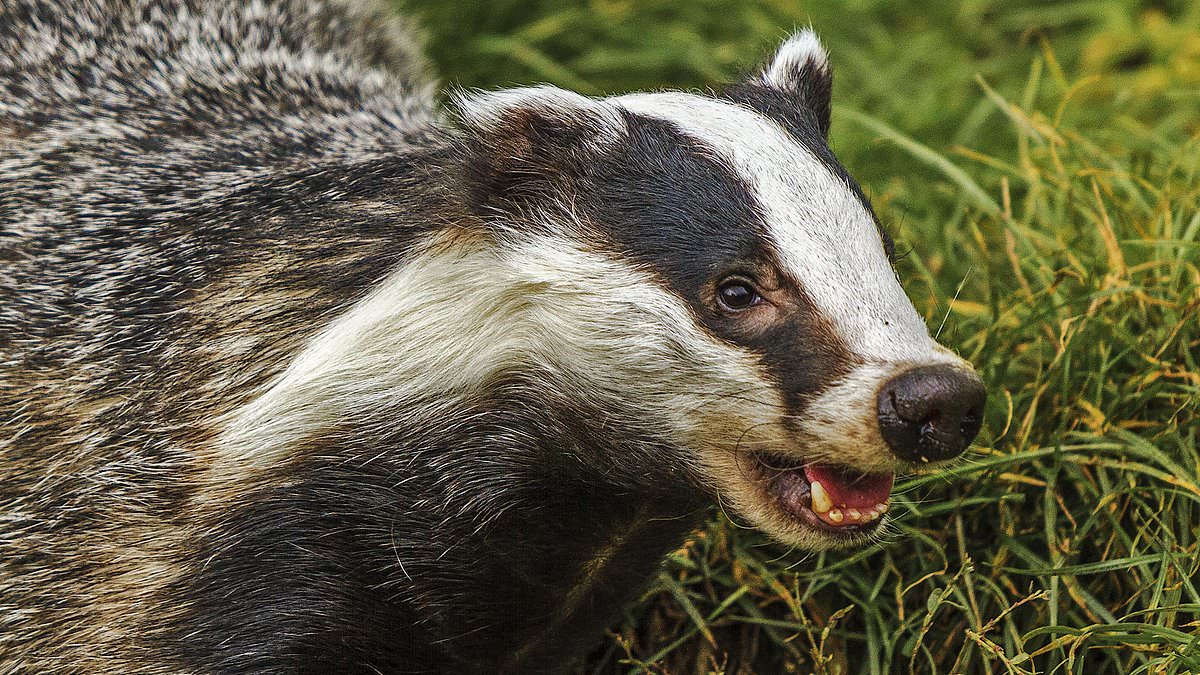
Britain's hedgehogs are disappearing. The chief reason is well known to scientists but rarely spoken about by campaigners, naturalists, wildlife television presenters and journalists – who appear to have mostly agreed to turn a blind eye to the true cause of the decline of one of Britain's favourite creatures. But the evidence points strongly to one main cause: badgers.Something is plainly going wrong for hedgehogs on farms, in woods, gardens and parks despite a general improvement in the management of these habitats. Farmers leave more uncut grass and shrubs, gardeners leave more leaf piles, foresters are planting more native trees. Yet still the prickly beasts get rarer and rarer.This matters mainly because hedgehogs are fascinating creatures with a place in all our hearts – not least for their bright button eyes, twitching noses, and slow, confiding waddle. As well as their starring role as Beatrix Potter's Mrs Tiggy-Winkle. But they also do good by eating slugs and other garden pests.Most hedgehog champions prefer to blame roads and pollution for the decline. TV presenter and naturalist Chris Packham, for instance, attributes the drop in hedgehog numbers to pesticides killing the insects they feed on.Ex-Queen guitarist and animal lover Brian May wants to create 'hedgehog safe boroughs' where the animals can cross roads without being squashed. At Kew Gardens, hedgehogs disappeared as badger numbers increased. Similar patterns have been observed in Wytham Woods, while hedgehogs thrive on Scottish islands where badgers are absent The growing population of badgers is the main cause of Britain's declining hedgehog numbers, rather than the roads, pesticides and habitat loss commonly blamed by conservationistsYet while both of these problems do exist, blaming pesticides or traffic for the animals' decline makes little sense because insecticide use is generally less than it once was and hedgehogs are disappearing even in habitats where use of such chemicals is rare, such as gardens.As for traffic, hedgehogs generally live at higher densities in busy suburbs than they do in remote places where roads are less busy.People like Packham and May campaign against badger culling, so they have a vested interest in portraying badgers as cuddly and innocent. Understandably, this seems to have coloured their views.There is a general reluctance to face up to the overwhelming evidence that badgers are the main cause of the decline of hedgehogs. Their numbers have been falling for years, though the widely quoted statistic of a 97 per cent decline from 30 million hedgehogs in the 1950s is a myth, based on an exaggerated guess made by a naturalist, Maurice Burton. It is more likely that numbers have roughly halved – and that most of the decline was since the 1990s.Here is the first clue. Maurice Burton based his estimate on the number of hedgehogs he saw on an evening stroll in the royal Botanic Gardens at Kew, where the animals were plentiful in the 1950s.Today, you would be hard-pressed to see a hedgehog at Kew. The animals vanished in the late 1980s and for 20 years, from 1992 not a single hedgehog was seen in Kew Gardens till Tony Kirkham, head of the arboretum, spotted one in 2013.Why? It's not as if the gardens had suddenly become inhospitable to the animals. This is an arboretum, managed as such for generations. Kew gives the lie to the oft-repeated claim it is changes in habitat that are to blame for the decline of the hedgehog.'We have a problem,' Kirkham said at the time of his lucky sighting, 'in that we have a high badger population'.Badgers appeared at Kew at exactly the time hedgehogs began disappearing. Now there are some 35 to 40 setts in the gardens, housing 50 to 75 badgers on just 300 acres.Badgers love to eat hedgehogs. They are better than foxes at unrolling them to get at the soft underbelly, avoiding the spines.Hedgehogs hate badgers. Experiments in the 1990s showed that when they smell badger faeces they tend to skedaddle. More recent studies found that hedgehogs are often forced to forage in poorer habitats as they seek to avoid badgers.All across the country, there is a correlation in time and place between badger increases and hedgehog decreases.'The probability of hedgehog occurrence in suburban habitats declined towards zero in areas of high badger density,' one study found.It is similar in other countries. In Sweden and the Netherlands, scientists have found a clear cause-and-effect relationship between booming badger numbers and shrinking hedgehog numbers.The most compelling evidence, though, comes from the badger culls. When badgers were culled in England to reduce bovine tuberculosis, the effect was a sudden rebound in hedgehog numbers. For example, researchers from Exeter and Southampton universities found that in the cull zones, in 'amenity grassland' such as parks, gardens and playing fields, hedgehog population density increased from 0.9 animals per hectare to 2.4 per hectare in five years. In areas where no badgers were culled, the hedgehog density remained unchanged over the same time.I first became aware of the incompatibility of hedgehogs and badgers as a researcher at Oxford University in the 1980s, when a colleague was recruited by the zoology department to study the hedgehogs of Wytham Woods, just outside the city. 'There are no hedgehogs in Wytham Woods,' he quickly realised, rethinking his career plans.There were too many badgers there. In 1991, Patrick Doncaster released 15 hedgehogs (eight males and seven females) into Wytham Woods to see if they could survive: the badgers scoffed the lot within weeks.Further evidence comes from the fact that hedgehogs are thriving in somewhat unsuitable habitats on the Inner and Outer Hebrides.Hedgehogs were introduced to South Uist, Islay and Mull in the 1970s and soon flourished to such an extent that they became a serious pest, eating the eggs of rare wading birds. There are no badgers on these islands. Likewise, hedgehogs do well on Orkney and even Shetland – again in the absence of badgers.But why should badgers suddenly be such a problem for hedgehogs? After all, the two species have coexisted for millions of years.The answer is simple. Badgers now live at unnaturally high densities in Britain thanks to three factors: lack of predators, abundance of human food and legal protection.Without wolves, bears, wolverines and the like, badgers need fear only people and people have not been allowed to kill or even disturb them since 1992 – about the time hedgehog numbers started declining steeply.Thanks to farming, gardening and food waste, we boost badger numbers to a level that is wholly abnormal: there are about half a million of the animals now in Britain, twice the numbers of the 1980s and perhaps ten times the number that were here in historic times.The hedgehog is not the only species that is suffering as a result of the badger boom. Bumblebee nests are a favourite food of badgers. Three times in recent weeks on walks I have come across a spot where badgers have dug out nests and eaten all the young bees.This is a well-known ecological dilemma called the 'mesopredator release problem'. Get rid of top predators and the middle-ranking predators run amok to the detriment of their prey – especially if subsidised by roadkill, landfill and trash.Remove wolves and bears, watch foxes and badgers wipe out small birds. Feed crows all winter with roadkill and waste, watch them devastate ground-nesting birds in spring.Britain has some of the highest badger, fox and crow densities in Europe with dire consequences for some of our most loved species such as hedgehogs and bumblebees. (If you want to look after hedgehogs in your garden the advice is to leave out water – but never milk as they're lactose intolerant – and tinned cat or dog food, but not bread.)In the Disneyfied imagination of too many animal charities, predation is never a problem. But we are derelict in our duty if we ignore it. If we refuse to control badgers, the demise of the hedgehog will be on our conscience.
The ruthless black and white menace that's the real reason you never see Mrs Tiggy Winkle in your garden anymore
Full Article
Original Source
Read the full article at Dailymail →KhanList aggregates and links to publicly available news content. We do not host full articles from third-party sources. Always verify important information with original sources.