
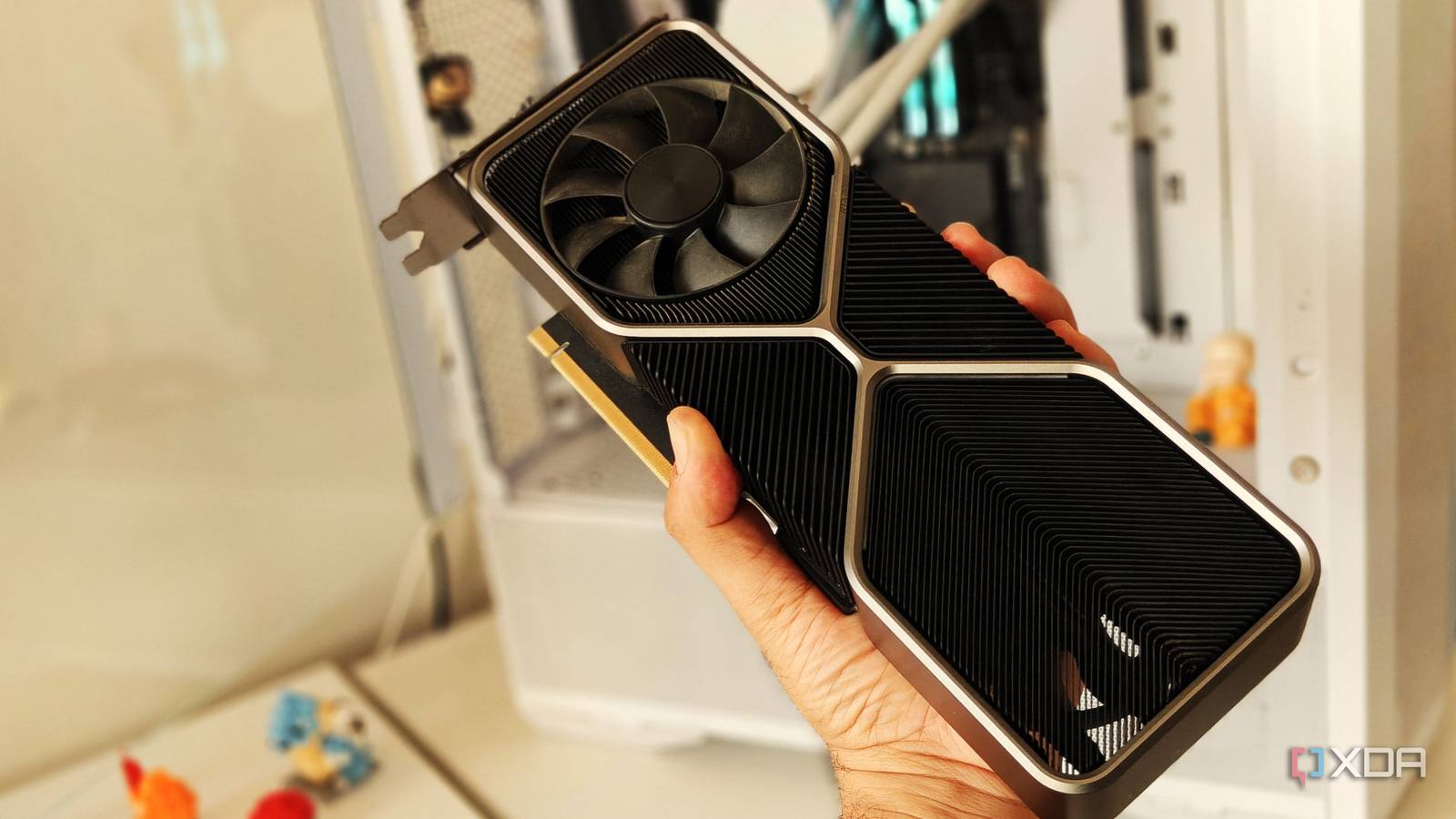
Published Oct 27, 2026, 4:30 PM EDT After a 7-year corporate stint, Tanveer found his love for writing and tech too much to resist. An MBA in Marketing and the owner of a PC building business, he writes on PC hardware, technology, and Windows. When not scouring the web for ideas, he can be found building PCs, watching anime, or playing Smash Karts on his RTX 3080 (sigh). I've written about Nvidia's Pascal lineup being their best one yet, and most gamers seem to agree. The iconic GTX 1080 Ti has a lot to do with that acclaim. The community fondly remembers it as the best GPU produced by Nvidia, possibly by any company. Its unmatched longevity and excellent performance per dollar made it a benchmark for flagship GPU performance. Three and a half years later, Nvidia launched the RTX 3080, coincidentally at the same MSRP. It many not have been apparent at the time, but the 80-class Ampere card was destined to repeat what the GTX 1080 Ti did in the last decade. Its performance uplift, value for money, and lasting appeal have ensured that the RTX 3080 has a lot more to say than it has already. It was almost an anomaly from Nvidia, and something the company has never repeated since. I've been using the RTX 3080 for over four years now, and I can confidently claim I won't need an upgrade for the next 2–3 years, at least. The RTX 3080 was a massive leap, just like the GTX 1080 Ti Younger gamers reminisce about the Ampere lineup Credit: Wikimedia Commons It's not like Nvidia hadn't delivered strong generational jumps before the GTX 1080 Ti, but the Pascal flagship unlocked a different level of performance. It was nearly 70% faster than the GTX 980 Ti despite being priced only $50 higher. It wasn't cheap at $699, but it enabled 4K 60+ FPS in the newest games of its time, no multi-GPU setup needed. This was no joke; the GTX 1080 Ti had become the undisputed king of PC gaming; there was no competition. Similarly, when Nvidia announced the RTX 30 series in 2020, the RTX 3080 was what caught the eye of most gamers. It wasn't outrageously priced like the $1,199 RTX 3080 Ti or the $1,499 RTX 3090, but still delivered a massive uplift over the RTX 2080. At $699, Nvidia's pricing was surprising, considering the nearly 70% performance jump and also what the industry had seen with the previous-gen RTX 2000 cards. Few people got it at that price, but that's another story. The GTX 1080 Ti had 11GB of VRAM, which was far from common at the time. It is one of the reasons the Pascal card has stood the test of time. The 10GB VRAM on the RTX 3080 wasn't breaking records in 2020, but it was more than sufficient. Even today, 10GB can easily power 1080p gaming and even smooth 1440p performance in many titles — I speak from experience. Every successive 80-class card has been a letdown Nvidia made sure not to repeat its "mistake" The RTX 3080 was not just different from its predecessors but also its successors. If you compare the 80-class cards across all generations of GPUs in the last 10 years, you'll see a dark pattern emerging. Nvidia has been steadily slashing the core hardware on their lower-tier GPUs relative to the flagship in both generations that have followed the RTX 30 series. The average relative core count of the 80-class card relative to the flagship across the GTX 900, GTX 10, RTX 20, and RTX 30 series was around 70%. The RTX 3080 launched with a whopping 83% of the core count of the RTX 3090, which sheds light on the anomalous nature of the card. The RTX 4080 and RTX 5080 featured only about 59% and 49% of the core counts of their respective flagships, respectively. It's not just the core count that has suffered in the last six years; even the memory bandwidth has taken a hit. While the average from the GTX 980 through the RTX 3080 was around 70% of that of the flagship, this number was around 81% for the RTX 3080. The subsequent 80-class cards dropped it back to around 70% on the RTX 4080, and just 53% on the RTX 5080. This shrinkflation has offered steadily declining 80-class performance to gamers over the years, relative to the flagship. The silver lining, at least for RTX 3080 owners, is that the Ampere card shines brighter than its successors. It feels like the last great 80-class graphics card we got from Nvidia. The RTX 3080 is still the best value 1440 GPU The used market to the rescue In a market where buying a new GPU has been virtually impossible for the last year, pre-owned GPUs are perhaps the only option for those who want an urgent upgrade. The RTX 50 series pricing has broken all records, with the RTX 5080 going for nearly $2,000. Even the most popular GPU according to the Steam Hardware Survey, i.e., the RTX 5070, is selling for over $900, a massive $350 premium over its MSRP. The RTX 3080 has slowly become the obvious choice for gamers who want a decent 1440p card without spending their entire budget on the GPU. For instance, the RTX 3080 on eBay shows regular completed listings for $350–$400. You're getting RTX 4070 levels of rasterized performance with full support for DLSS upscaling and enough VRAM for most 1440p titles. Ray tracing is hit or miss in the latest games, but optimized settings can still make it work. It's been six years since the RTX 3080 launched, and it has proved its longevity by powering 60+ FPS in both ray-traced and non-RT titles. Thanks to upscaling (and unofficial frame generation mods), your RTX 3080 has a lot more life left. The delayed RTX 60 series has given gamers yet another reason to hold on to their RTX 30 series cards. I reckon I can keep using mine till at least 2028 without major issues. The RTX 3080 will be remembered for a long time The GTX 1080 Ti remained relevant for nearly a decade before modern games left it behind. The RTX 3080 has the potential to last just as long. It has already lasted for six years, and with the next-gen GPUs delayed till 2028, most owners will sit tight and wait. 1080p gaming in the latest titles is a piece of cake for the RTX 3080, and even 1440p is doable with the help of optimized graphics settings and upscaling.
The RTX 3080 is the GTX 1080 Ti of this decade, and it's going to last just as long
Full Article
Original Source
Read the full article at Xda-developers →KhanList aggregates and links to publicly available news content. We do not host full articles from third-party sources. Always verify important information with original sources.