
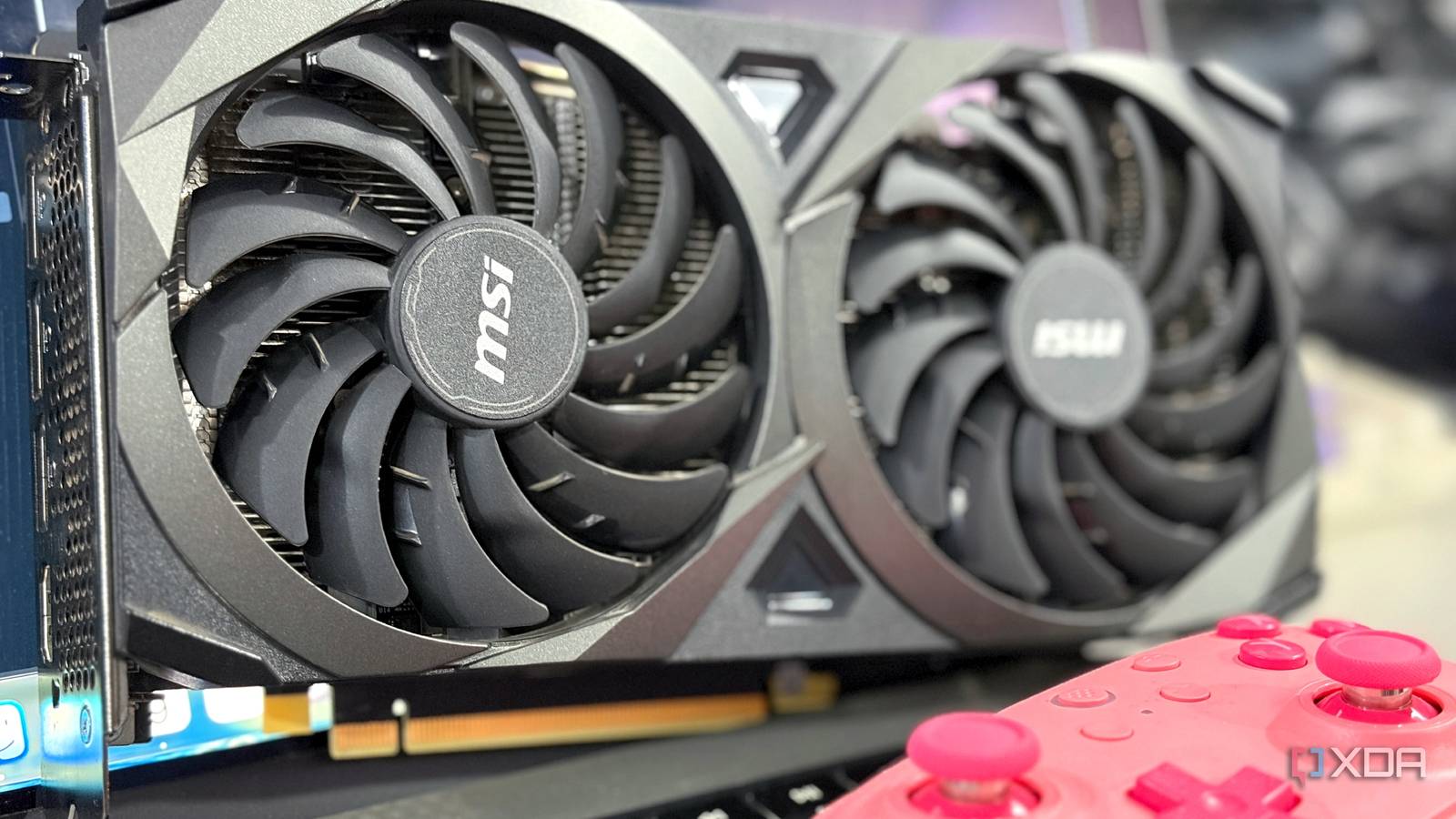
Published Oct 10, 2026, 7:01 AM EDT Gaming has been Samarveer’s greatest passion, and the Literature graduate in him takes immense joy in dissecting games for their themes, messages, and impact. Samarveer holds a deep appreciation of gaming, and considers the platform to be the most immersive and impactful across all media. He can be found engaging with gaming communities online, always ready to debate the finer points of ray tracing or itching to write an 8-page collegiate thesis on any game that impacts him emotionally. Back in 2021, an RTX 3060 was undeniably the card to buy for budget gamers like myself. And yet, it still felt like settling. The RTX 3060 wasn't the fastest Ampere card, and its ray tracing performance was barely remarkable, if at all. Five years later, somehow, the RTX 3060 12GB has become one of the most interesting GPUs in the PC hardware landscape. Even while the GPU itself remains the very same as it was in 2021, the world around it has changed, and massively so. Today's GPU market is dealing with problems that didn't exist when the RTX 3060 launched, and some of the decisions Nvidia made back then, in hindsight, look pretty sensible. I've spent enough time with older hardware to know that longevity isn't always about performance, but instead about having the right hardware at the right time. The RTX 3060 was never supposed to make this comeback Nvidia accidentally built the GPU 2026 needed Let's face it: the RTX 3060 was never the glamorous member of the Ampere generation. It was just a beginner-level GPU that offered respectable 1080p and 1440p performance, while the enthusiasts shopped in the tier above. At the time, the faster Ampere cards like the RTX 3070 and RTX 3080 shipped with 8GB and 10GB VRAM respectively, which made the RTX 3060's 12GB model particularly strange, making for an odd bit of product segmentation. Five years later, though, it couldn't look more prophetic. Nvidia bringing the RTX 3060 12GB back to retail in 2026 is therefore hilarious in the best possible way. It's not like the card's raster performance is still competitive with modern GPUs, after all. Nvidia is only doing so because the card's otherwise unremarkable specification just aged remarkably well. The memory crisis has made 12GB considerably more valuable than it was when Ampere launched. The other reason the 3060 refuses to disappear is software. It remains an RTX GPU with DLSS support, mature drivers, CUDA compatibility, and a massive installed base. Even newer DLSS technologies can extend the useful life of hardware that would otherwise be considered obsolete, while community-made frame-generation solutions have pushed that longevity even further. 12GB of VRAM turned the RTX 3060 into the people's AI GPU The GPU's VRAM allocation has trumped its benchmark numbers The RTX 3060 was never a particularly exciting AI accelerator, but that misses the point. For those running local LLMs, models fitting into the VRAM is much more important than the speed at which the GPU processes tokens. A faster 8GB card can lose that argument before it even starts, while the humble 3060 can at least load considerably larger quantized models. That makes the RTX 3060's 12GB memory buffer unusually useful for people experimenting with Ollama, LM Studio, image-generation tools, and any other local AI projects. Today, the cheapest 12GB GPU from Nvidia that's available at retail is the $800 RTX 5070, which, of course, you wouldn't be able to get your hands on without paying a $150–$200 premium owing to the same memory crunch that has made the RTX 3060 return. With the RTX 3060 12GB, however, you can spend just around $500 (or less), install a few apps, download 10GB+ models, and start poking around with local AI without needing a workstation-class accelerator. In 2026, local AI is much less of a novelty than ever before. What it is, however, in practical terms, is a legitimate computing workload. The RTX 3060 12GB, as such, is playing a rather valuable role today — it's the card you could recommend to someone who wanted to experiment with local AI before spending serious money on it. In 2021, Nvidia's decision to give its mainstream 3060 12GB while faster cards received less memory definitely looked like bad segmentation. Today, however, that extra VRAM is what keeps this card alive and interesting. The RTX 3060 changed how users are navigating the memory crisis VRAM has become more important than the generation badge When it comes to the pre-owned GPU market, the RTX 3060's 12GB configuration often makes it more attractive than faster 8GB and 10GB cards. At the same time, its return to retail shelves shows that there is still genuine demand for it. Judging purely by benchmarks, that's backwards progression, but if you judge by how long GPUs remain useful, it makes perfect sense. The memory crisis has effectively changed the question buyers ask. Instead of simply chasing the newest architecture or highest average FPS, people are increasingly looking at the amount of VRAM they get for their money. An 8GB GPU can be faster today and still become a worse purchase tomorrow if the games and applications they care about outgrow its memory. The RTX 3060's 12GB gives it something much more valuable than bragging rights — breathing room. That is why I think calling the RTX 3060 important isn't hyperbole. It has become a living demonstration of what happens when a mainstream GPU has enough memory to outlast its generation. Nvidia may have intended 12GB to differentiate the 3060 from its siblings, but the memory crisis turned that compromise into its greatest strength. MSI Gaming GeForce RTX 3060 12GB GPU Memory Clock Speed 1875 MHz Shader Units 3584 Base Clock Speed 1320 MHz Boost Clock Speed 1777 MHz Memory Capacity 12 GB Memory Bandwidth 360 GB/s Longevity has proven to be a real performance metric this decade The RTX 3060 was never engineered to become a symbol of anything at all. It was simply a budget, entry-level GPU with one specification that looked excessive at launch. That very specification now happens to be one of the most valuable things a graphics card can have, which says rather more about the industry's priorities than it does about Nvidia's foresight. I don't think the 3060 will suddenly become everyone's dream GPU (it shouldn't, either). There are faster, newer, and more efficient cards everywhere. However, what makes the RTX 3060 12GB so incredibly important is that it has become a reminder that hardware doesn't exist in a vacuum. A GPU's value can change dramatically when the demands around it change, and that's what we've seen happen in real-time with this five-year-old card that is incredibly important and relevant today.
The RTX 3060's 12GB accidentally solved the GPU memory crisis Nvidia created
Full Article
Original Source
Read the full article at Xda-developers →KhanList aggregates and links to publicly available news content. We do not host full articles from third-party sources. Always verify important information with original sources.