
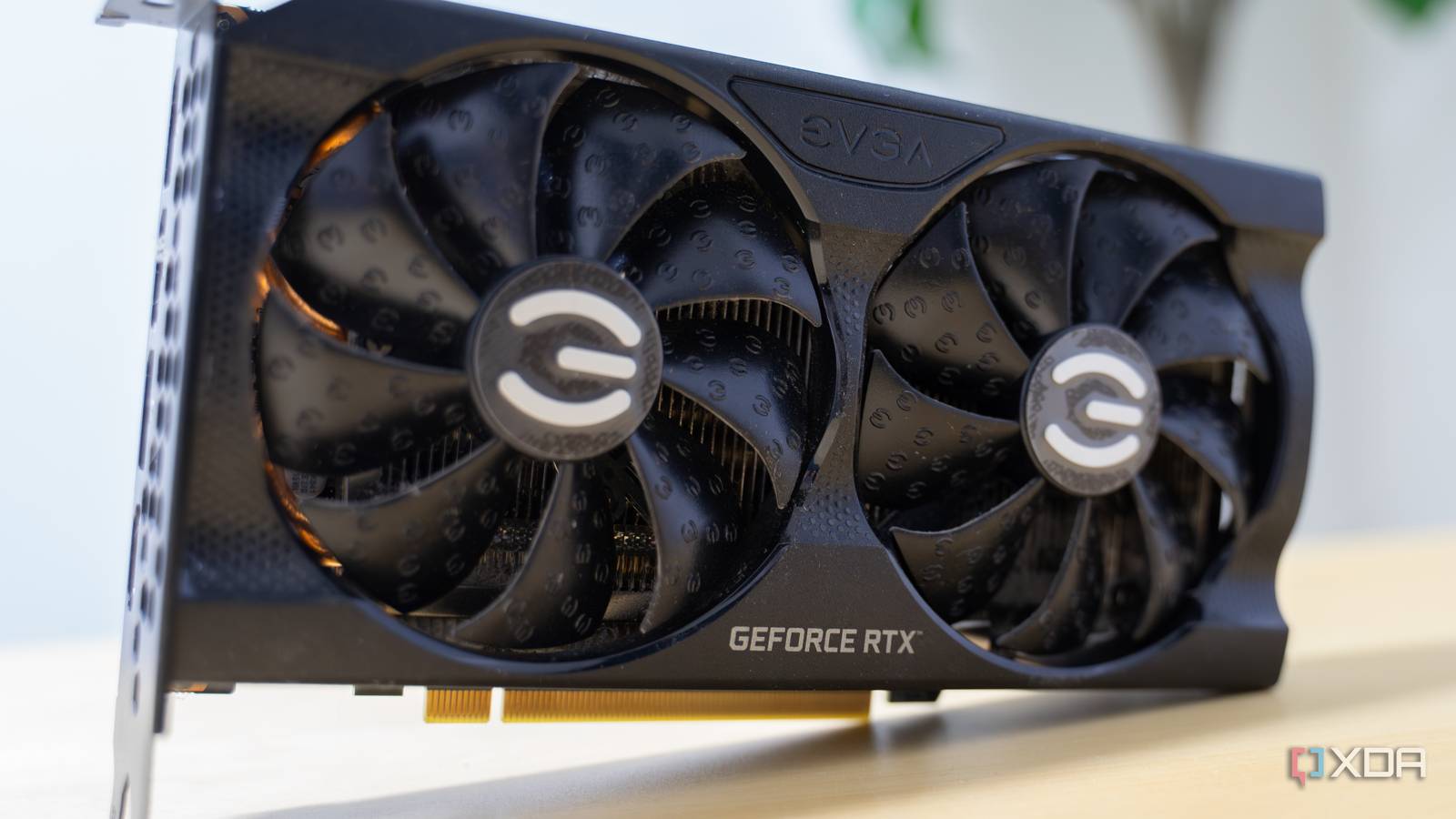
Published Jul 28, 2026, 2:30 PM EDT Gaming has been Samarveer’s greatest passion, and the Literature graduate in him takes immense joy in dissecting games for their themes, messages, and impact. Samarveer holds a deep appreciation of gaming, and considers the platform to be the most immersive and impactful across all media. He can be found engaging with gaming communities online, always ready to debate the finer points of ray tracing or itching to write an 8-page collegiate thesis on any game that impacts him emotionally. Summary RTX 3060 revived in 2026 to meet booming local AI demand, not just gaming. Its 12GB VRAM lets larger local LLMs run without slow system-memory spilling. Great value for self-hosted AI labs; newer cards still better for pure gaming. For years now, the Nvidia GeForce RTX 3060 has been remembered as Nvidia's dependable mid-range gaming card. It was the GPU you bought when you wanted solid 1080p performance, enough VRAM to outlast its rivals, and even decent 1440p performance if you wanted to dip your toe in a higher resolution pond, all for a price tag that didn't completely empty your wallet. Five years later, it is now back in production, and while budget gamers do have every reason to celebrate, they are not quite the audience for it, which is what makes this return so fascinating. The return of the RTX 3060 has almost nothing to do with frame rates alone. It's the explosion of local AI that has completely changed what makes a GPU valuable. That's why the RTX 3060's 12GB VRAM buffer puts it in a unique position that even newer GPUs can't match easily, making it one of 2026's smartest GPU purchases. The AI revolution has given the RTX 3060 a second life Nvidia isn't reviving a five-year-old GPU by accident When Nvidia restarted production of the RTX 3060 earlier this year, half a decade after its original launch, it caught a lot of people completely off guard. Graphics cards don't usually get encore performances once multiple generations have come and gone. Usually, they're replaced and forgotten, and they just might find newfound respect in the used market. That's why bringing back a budget Ampere card in 2026 feels unusual enough on its own, which makes it hard to believe that gaming is the only reason behind the decision. Nvidia has revived the RTX 3060 and it has been put back on shelves at an MSRP of $329 since June 2026. It's the timing that tells a much more interesting story here. Back in 2021, the RTX 3060 had launched in a world before ChatGPT became mainstream, and well before Ollama, LM Studio, and ComfyUI turned running AI models locally into something anyone could do with a decent desktop. Back then, GPU buying advice revolved only around frame rates, ray tracing and DLSS. Today, things are different, because an entirely new group of buyers is shopping for GPUs with a priority list that has self-hosted AI models at the top and gaming much further below. The GPU is now the engine behind private AI assistants, offline coding tools, document analysis, image generation, and even desktop automation workflows. Self-hosted AI services that never send your data to the cloud are gaining traction incredibly quickly, and local AI has become just as compelling a reason to upgrade as the latest blockbuster game with new ray-traced tech. With that said, how could the RTX 3060 not feel relevant once again? Its comeback meets a demand that never even existed back in 2021. The hardware behind the RTX 3060 12GB remains unchanged, but the workloads people expect it to handle certainly have. In local AI, VRAM trumps raw GPU performance The model can't use horsepower if it doesn't fit in memory Gaming may have taught us to compare graphics cards by CUDA cores, clock speeds, and benchmark charts, while local AI plays by an entirely different set of rules. Before a model generates a single line of code or summarizes PDFs, it has to fit inside the GPU's VRAM. If it doesn't, the system immediately starts spilling data into the (much slower) system memory, and that's where performance falls off a cliff, with a single response requiring minutes instead of seconds. That's what makes the RTX 3060's 12GB frame buffer so surprisingly valuable in 2026. An 8GB card like the RTX 4060 may be newer, faster, and much more gamer-friendly with features like frame generation and smooth motion, but that extra 4GB is what determines if you can comfortably run larger quantized models like Gemma4:e4b and Qwen 3.5 9B without having to divide what part of the model runs on what part of the GPU. Granted, more VRAM doesn't always mean more speed, but it does frequently mean more freedom vis-à-vis local AI hosting. More VRAM doesn't always mean more speed, but it means more freedom in local AI hosting. With new users entering the self-hosted LLM environment every day, the same GPU that was the go-to entry-level GPU for gamers, can now power Ollama, help with local coding assistance, summarizing documents, generate images, and even automate desktops with the right setup, without ever having to rely on cloud-based AI subscriptions. A GeForce RTX 3060 in 2026 can very well become the foundation of an entire self-hosted AI lab. None of this ever showed up in initial reviews of the RTX 3060. Frame rate charts can only tell you how this GPU would run your favorite AAA title, but they won't tell you if a model you have your eye on will load successfully, and that too with how much of a context allocation. VRAM is what matters more than CUDA cores or Tensor Cores in the age of local AI. Ironically, gaming isn't why I'd recommend it anymore Gaming is no longer the RTX 3060's biggest strength Don't get me wrong, the RTX 3060 hasn't become a bad GPU now in 2026. It still delivers an excellent 1080p experience, and it's got enough VRAM to comfortably handle modern textures. Plus, it benefits from DLSS 4.5's transformer-based Super Resolution and Ray Reconstruction upgrades. It does miss out on newer features like Frame Generation and Smooth Motion, but it can comfortably pay the hefty VRAM tax that DLSS 4.5 demands from older RTX 30-series and RTX 20-series cards. If gaming is your only priority, I'd probably point you toward something newer. Ray tracing, frame generation, and upscaling are all here to stay, and newer cards are much better at utilizing the new tech while being more efficient, which makes modern GPUs the more sensible choice for a traditional gaming rig. MSI Gaming GeForce RTX 3060 12GB GPU Memory Capacity 12 GB Shader Units 3584 Boost Clock Speed 1777 MHz Memory Bandwidth 360 GB/s Memory Clock Speed 1875 MHz Base Clock Speed 1320 MHz The GPU market has changed, and a five-year-old GPU changed with it Between the Ryzen 7 5800X3D being revived and the RTX 3060 with it, it's interesting how older products are now ending up in the right place at the right time. Hardware from older generations is trending again, as entirely new workloads reshape what buyers actually value. Clearly, longevity often comes from adaptability instead of raw performance alone. For those who are making their PCs their personal AI workstation instead of just a gaming machine, the RTX 3060 looks like a remarkably forward-thinking purchase. Five years after launch, I doubt even Nvidia could have predicted that one of their greatest-ever cards would get a second wind.
The RTX 3060 is one of the smartest cards to buy in 2026, and gaming has almost nothing to do with it
Full Article
Original Source
Read the full article at Xda-developers →KhanList aggregates and links to publicly available news content. We do not host full articles from third-party sources. Always verify important information with original sources.