
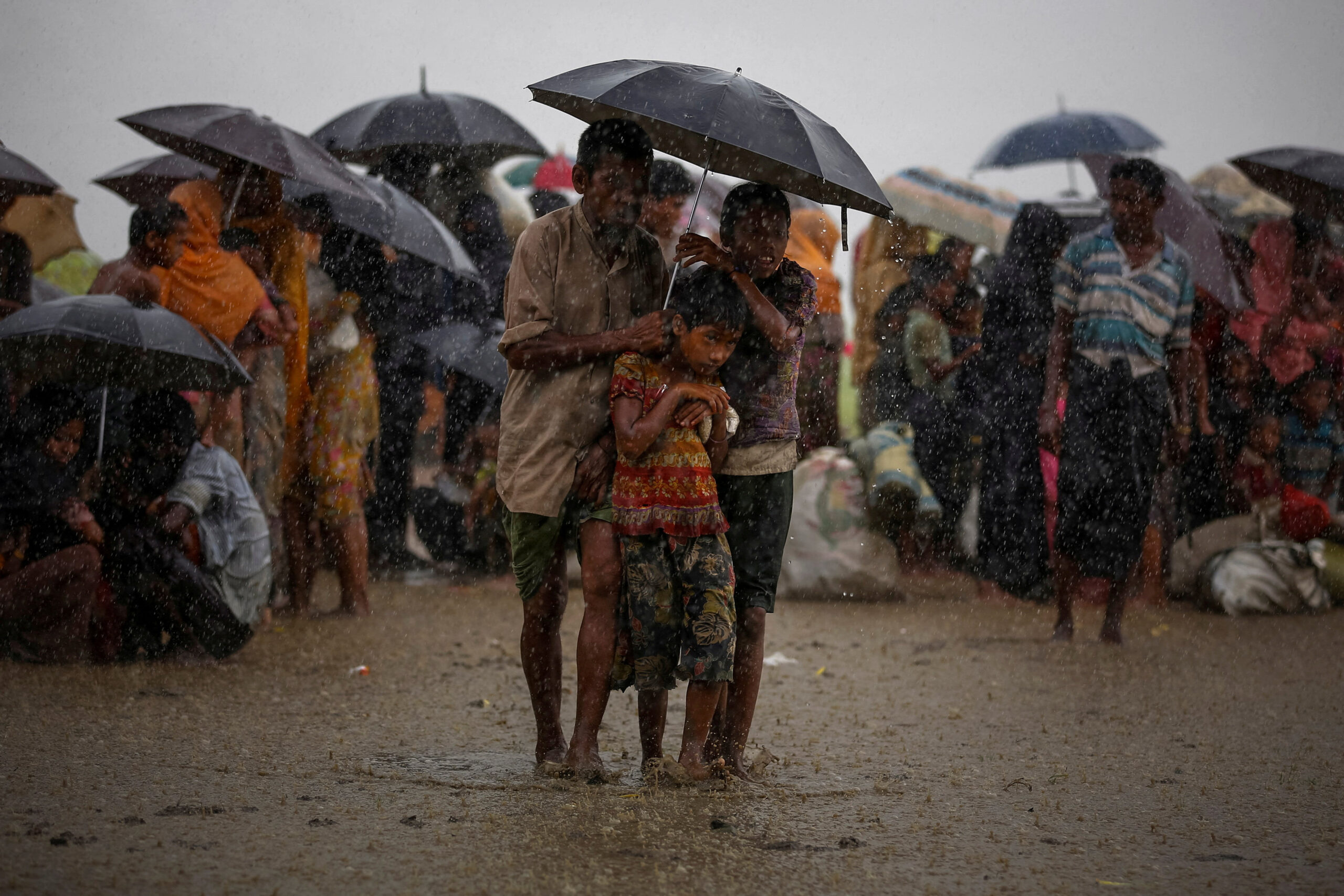
MIDDLETOWN, Connecticut—On November 19, the International Court of Justice (ICJ) found Myanmar responsible for genocide against the Rohingya community. It is the first time that the ICJ has held a state responsible for committing genocide. On the same day, US President Donald Trump, Chinese President Xi Jinping, and Russian President Vladimir Putin issued a declaration after their meeting in Shenzhen that warned against jurisdictional abuse by the International Criminal Court (ICC). The declaration named the ICC and “other similar bodies,” language broad enough to cover the ICJ, the UN’s principal judicial organ. The following day, the spokesperson of the Myanmar president referred to the stance of the three leaders on international courts during a statement that deemed the ICJ’s ruling “unfair.” This would suggest that Myanmar’s implementation of the measures ordered in this judgment, especially its protections on access to citizenship for the Rohingyas, could depend on negotiations shaped by the interests of great powers. This judgment’s notion of citizenship shows what is really at stake. The ICJ recognized that the denial of citizenship to the Rohingya people was part of a framework of discrimination, which was relevant to its findings on genocidal intent. Nevertheless, it considered granting full and equal citizenship to every Rohingya as “beyond the scope” of appropriate guarantees against another genocide. However, the ICJ did order measures of restitution, including to “ensure the protection of the Rohingya from discrimination and persecution.” The judgment noted in two places that this measure includes “with respect to access to citizenship” and “protection from discrimination in accessing citizenship and with respect to freedom of movement.” Because the court stopped short of ordering Myanmar to grant citizenship, whether the Rohingya actually receive it will depend on political negotiations in which governments with their own stakes in Myanmar are already engaged. Governments across the world that are in talks with the Myanmar government when it comes to getting access to its territory and resources, from Washington’s interest in rare earths to Beijing’s port at Kyaukphyu and New Delhi’s Kaladan transport corridor, face a crucial choice. They can integrate Rohingya citizenship into the political arrangement, or they can accept the Rohingya’s continued exclusion in order to pursue their own strategic interests. Outside powers should use their leverage, including trade, to make the ruling’s implementation and a long-overdue path to citizenship and safe return part of any settlement they support. The ICJ delivers its judgment in the case accusing Myanmar of genocide against the Rohingya Muslim minority, in The Hague, Netherlands, on November 19, 2026. (REUTERS/Piroschka van de Wouw) If outside powers back a settlement that leaves the Rohingya stateless, the conditions that drove them from Myanmar will remain, and another exodus will become more likely. In their joint declaration, Judge Leonardo Nemer Caldeira Brant and Judge ad hoc Navi Pillay noted that Myanmar’s obligation to ensure equal access to citizenship should be read into the operative part of the judgment. While recognizing that states have sovereign authority to decide citizenship requirements, they stressed that access to citizenship is necessary for protection and non-recurrence. Given the current political situation in Myanmar, implementation of this judgment will likely require the cooperation of actors beyond Myanmar’s central government, including the Arakan Army, a nonstate armed group that now controls much of Rakhine State and has also been inflicting abuse on the Rohingyas. Myanmar remains legally responsible for carrying out the restitution ordered by the court and for upholding its obligations under the Genocide Convention, which include preventing and punishing genocide. The court found that Myanmar failed to prevent genocide by civilians acting alongside its security forces, so that duty reaches beyond the state’s own agents. An assurance of safe return from Naypyidaw means little to families going back to townships the Arakan Army controls. Bangladesh, where more than one million Rohingya refugees now live, seems to have already considered its next diplomatic moves. On November 8, State Minister for Foreign Affairs Shama Obaed Islam talked about engaging with both the Myanmar authorities and the Arakan Army. She raised concerns regarding the wide-ranging opposition in Myanmar to the return of the Rohingyas. This suggests that the Arakan Army’s capture of most of Rakhine from the military, on its own, will not clear the path for the refugees’ return. While the ICJ judgment bolsters the case for a durable return, Dhaka’s negotiations with various actors in Myanmar should continue. India, too, has interests in Myanmar, in part because of its connectivity ambitions. The port in Sittwe and the Kaladan corridor are part of its Act East strategy to connect the landlocked northeastern states to the Bay of Bengal region. Local businesses are already dealing directly with the Arakan Army, which now holds the territory across the border. On October 31, a Times of India report mentioned a trade agreement between the Siaha district unit of the Mizoram Commercial Vehicles Association and the Arakan Army’s political wing. Indian engagement with Myanmar has been under consideration for a while. As a former Indian ambassador to Myanmar put it last year, “The Chinese openly have relations with all sides; can India afford not to have the same?” Therefore, New Delhi’s reaction to the ICJ judgment appears restrained. While it acknowledged the verdict and supported a sustainable return, it did not use the word genocide. Citizenship disputes also shape India’s bilateral relations with Bangladesh. After the National Register of Citizens (NRC) exercise left out 1.9 million people from a citizenship registry, the United Nations Refugee Agency warned in September 2019 about the risk of indefinite statelessness. At the time, rights groups warned that it could set off a crisis like the one the Rohingya faced in Myanmar in 2017. The broader geopolitical concern for the region is much about how states distinguish their own citizens from populations they regard as foreign, particularly those communities that are deemed to share ethnic, linguistic, or religious characteristics across the border. Bangladesh has a direct stake in the consequences of this kind of citizenship framing by its two neighbors. For their part, Chinese policymakers are focused on different kinds of issues when it comes to Myanmar. As Crisis Group has noted, Beijing has long cultivated ties with numerous groups in the country, including the Arakan Army. Beijing’s Belt and Road Initiative and Kyaukphyu goals mean that China has an interest in securing a negotiation between armed actors and the Myanmar authorities. Not surprisingly, while Beijing responded to the ICJ judgment with concern regarding judicial overreach, it offered continued support for dialogue. That keeps China positioned as an intermediary without committing it to enforcement, though Beijing is hardly neutral. Crisis Group notes that it threw the military regime a lifeline in 2024. Bangladesh’s challenge is to obtain Chinese backing for repatriation without Beijing treating the Rohingya’s return as something to settle only after its commercial projects are secure. The role of the United States reflects another set of tensions. While Washington recognized the Myanmar military’s atrocities as genocide in 2022, its current diplomatic priorities appear to have shifted. As Reuters reported earlier this month, a State Department strategy seeks a ceasefire offering a pathway to peace by 2030, through forums on fiscal federalism and territorial demarcation that it links to access to Myanmar’s rare earths. Washington’s reaction to the ICJ verdict laid out concerns for abuses, and at the same time it noted its concern about “politicization” of the court. The question remains as to whether Washington will prioritize citizenship of the Rohingyas or make it a lower priority compared to its commercial opportunities. Bangladesh has proposed the UN General Assembly as a platform for mobilizing support and building a coalition to press Myanmar and the Arakan Army to carry out the court’s restitution measures, not least since the country now holds the rotating General Assembly presidency. Along its border with Rakhine state, Bangladesh can expand trade as an incentive for further cooperation. Such tools create openings for negotiations. It is crucial that Rohingya representatives and youth participate in such dialogues when it comes to securing full citizenship rights and future repatriations, with the backing of the international community. Next, the court ruled that Myanmar must report within two years regarding measures it has adopted to provide restitution and, if applicable, compensation. But there is a risk in moving too fast. Negotiations that result in a hurried repatriation that leaves the Rohingya vulnerable could lead to instability, forced exodus, and ultimately additional atrocities. While the ICJ judgment provides Bangladesh and its partners a diplomatic opportunity, international partners must press for a secure Rohingya citizenship status in Myanmar before embarking on future steps.
The Rohingya genocide ruling faces a geopolitical test
Full Article
Original Source
Read the full article at Atlanticcouncil →KhanList aggregates and links to publicly available news content. We do not host full articles from third-party sources. Always verify important information with original sources.