
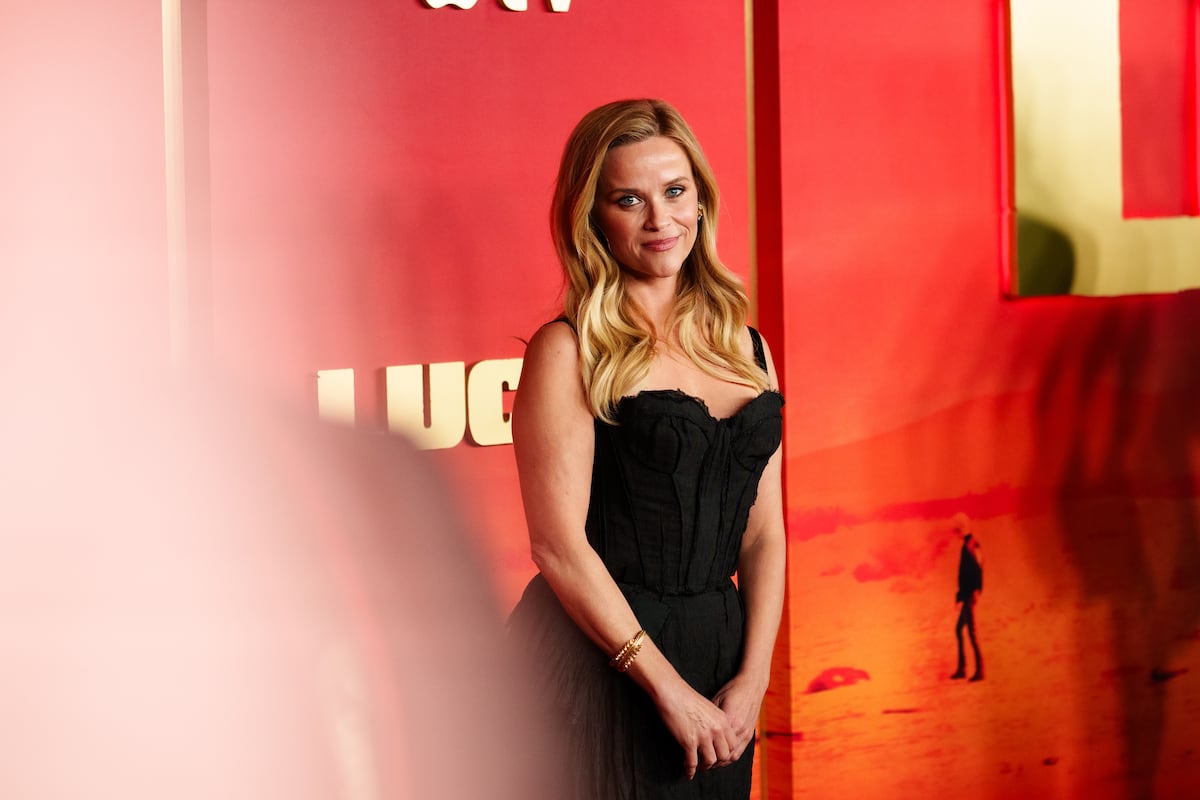
It was August 2021, and the headlines said it all: “Reese Witherspoon becomes the world’s richest actress.” The payoff was hard to overstate. The actress had landed her biggest coup yet, selling a large stake in her production company, Hello Sunshine, for around $900 million. She was rich, richer than ever, and more powerful, too. Hollywood’s boom years were smiling on her.But, as always, the good times didn’t last. The lean years arrived. And Witherspoon’s fortune, along with her clout, has waned. Her story is also a sign of a broader shift, both in Hollywood and beyond.Hello Sunshine is not what it once was. Or rather, it is: The company is still hugely influential in book sales through its book club and continues to produce popular screen adaptations such as Big Little Lies and Daisy Jones & The Six, as well as more recent series including The Last Thing He Told Me, Lucky and Elle, the prequel to Legally Blonde, the film that launched Witherspoon to stardom.What it never became, however, was what its buyers had hoped for: the next Oprah Winfrey, the next Martha Stewart, the next celebrity-turned-lifestyle mogul selling everything from magazines and table linens to cookies and skincare products through a personal brand. That has come at a heavy cost for everyone involved.In financial terms, the deal was not a bad one for Witherspoon herself. The same cannot be said for her company, whose reputation has taken a significant hit.In mid-October, it emerged that Witherspoon, alongside French media group Mediawan, had decided to buy back the stake in Hello Sunshine that the actress sold five years ago to two investors, through a company that was unnamed at the time and is now known as Candle. Back then, the deal valued Hello Sunshine at between $800 million and $900 million (Witherspoon personally pocketed around $120 million). This time, she bought it back at a valuation that trade publications estimate at no more than $50 million. In other words, the company is now worth roughly 6% of its former value.If there was any doubt that Hello Sunshine was in decline, confirmation arrived over the weekend with news that the company had laid off half of its workforce. Thirty employees lost their jobs, including the entire consumer products and sales division. Staff working in film and television production, as well as those involved with the book club, social media and marketing, have been retained, according to entertainment-industry outlet The Wrap, which said the company declined to comment.The firm that paid out those $900 million in 2021 was Candle Media, a company founded by Kevin Mayer and Tom Staggs, former Disney and TikTok executives, and backed by private-equity giant Blackstone.Buying Hello Sunshine was the icing on the cake for them. As Mayer said on a panel hosted by Deadline at a forum in Zurich in late September, they had invested a total of up to $4 billion in acquisitions — no small sum for a relatively unknown company. “We moved aggressively,” the executive acknowledged just over a month ago. “There is a certain minimum scale you probably need to make an impact.” Just a month later, the mood could hardly be more different. “We were just wrong,” an anonymous source close to Candle recently told The Wrap. “This isn’t a great deal in comparison to what we paid. It’s not a great outcome for Blackstone.”Candle’s and Witherspoon’s ideas about what Hello Sunshine could and should become turned out to be very different. After Candle acquired its stake in the production company (the exact size of that stake was never disclosed), Sarah Harden, Witherspoon’s right-hand woman, took the reins. Among other initiatives, Harden launched a music division, created an internal agency called Solar and opened an office in the U.K.But in early September last year, it emerged that she was leaving the company. She was succeeded by Maureen Polo, who had previously led its direct-to-consumer, or DTC, products division.Candle always wanted to expand the DTC side of the business, believing it could generate huge returns. Much of that confidence rested on the idea that Witherspoon was already an extraordinarily effective tastemaker, at least when it came to one product: books.Through Reese’s Book Club, in which the actress has selected and discussed a book with her followers every month since May 2017, a total that now stands at 128 titles, Witherspoon has forged partnerships with brands such as Target and Apple and helped propel dozens of books onto bestseller lists.But the Oscar winner’s ability to persuade people to pick up the books she recommended stemmed from two things: passion and necessity.On the one hand, Witherspoon has admitted she is an avid reader who loves both reading and recommending books. On the other, as she grew older, she discovered, to no one’s surprise, that there were few good roles available for her or many of her peers. She began finding them in books instead, as happened with Wild, Gone Girl and the first season of Big Little Lies, which she also began producing through her first production company, Pacific Standard. Then came Hello Sunshine, followed by fame and fortune.But after selling part of the company to Candle, both sides gradually realized that their visions were at odds. Witherspoon had a knack for choosing roles and projects, and for identifying books that could be adapted for the small or big screen. But Candle, backed by Blackstone, wanted something more. It wanted to turn the company into a DTC powerhouse, creating its own products and selling them directly to consumers rather than through intermediaries.The model never fully took off, and trade publications estimate that by 2023 the company was carrying around $1 billion in debt, a burden also driven by shifts in the entertainment industry, including fewer productions, lower spending by studios and the new collective bargaining agreements reached after the actors’ and writers’ strikes.With that partnership now over, Witherspoon will have Mediawan as her new partner. In her statement, the actress suggested that what appealed to her was precisely the way the French company and its three partners were navigating the “new media landscape.” “Mediawan has built an independent, global studio that puts creators first,” Witherspoon said, in a clear declaration of intent. “The best is yet to come.”The French company also holds stakes in Plan B, Brad Pitt’s production company, and LuckyChap, Margot Robbie’s company, which was behind the huge success of Barbie. In recent years, it has made numerous investments with a clear focus on film and television.That points to another issue: many private-equity firms have paid millions for stakes in companies and production houses simply because a celebrity was attached to them, only to stumble along the way. Candle itself invested $60 million in Westbrook, the company founded by Will and Jada Smith, in 2022, just two months before the infamous Oscars slap.The market has since become more cautious, with investments increasingly focused on proven expertise rather than celebrity appeal.Although Witherspoon has produced some of the biggest film and television hits of recent years, contributed nearly $1 billion to the publishing industry, and helped hundreds of stories reach millions of new readers, her focus was not on selling, but on what she sold: stories. And that will be the focus for her and Hello Sunshine in this new chapter.Sign up for our weekly newsletter to get more English-language news coverage from EL PAÍS USA Edition
The rise and fall of Reese Witherspoon’s media empire: Bought for $900 million, now worth less than $50 million
Full Article
Original Source
Read the full article at English →KhanList aggregates and links to publicly available news content. We do not host full articles from third-party sources. Always verify important information with original sources.