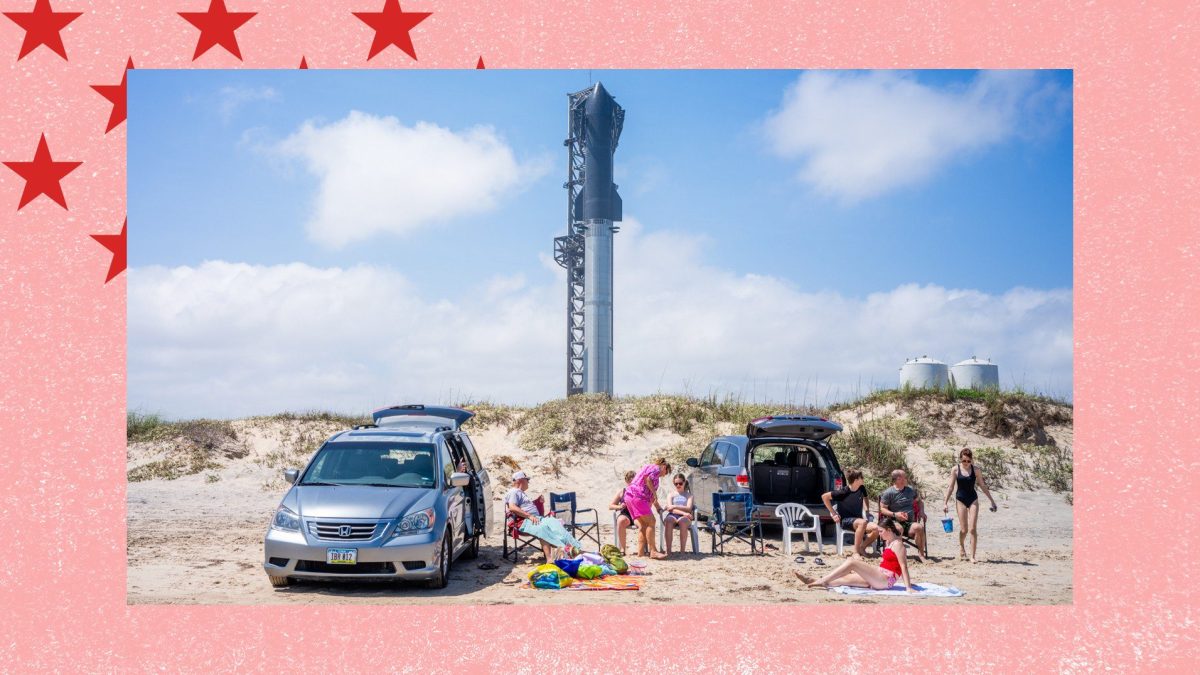
Welcome to Trump’s America, The i Paper’s World Insight series presenting the sharpest, deepest thinking on an era-defining shift in history and politics, investigating how Donald Trump and his administration have changed the US and the world – and where we go from here. • The White House I worked for would have condemned this image. Trump refuses• Trump isn’t damaging America. He’s reinventing it• The US is becoming impossible to live in In his second presidential term, Donald Trump is imposing a new kind of segregation. This time, however, there are no Jim Crow laws creating a second class of citizenship. Today’s divide is about money. It’s apparent in the option to fly private or economy, attend public or private school, drink ceremonial-grade matcha or $2 coffee from a cart. It’s even apparent in access to beaches. With the wealth divide becoming starker, the richest individuals in the US are steadily building their own America, in which access is limited to the privileged few. Demand is high for private services and exclusivity, fuelled by an increasing number of wealthy Americans, creating new industry for those who can afford to keep up with the Joneses. At the end of 2024, the top 10 per cent of US households had an average wealth of $8.1m and held 67.2 per cent of total household wealth across the US, while the bottom 50 per cent had an average wealth of $60,000 – around 2.5 per cent of the total, according to data released by the Federal Reserve Bank of St. Louis last year. In March, the Wall Street Journal reported a boom in ultra-wealthy households, with about 430,000 US households now worth $30m or more. “The rich opting out has been going on for a long time” says Donald Cohen, co-author of The Privatization of Everything: How the Plunder of Public Goods Transformed America and How We Can Fight Back. Austerity and Trump’s efforts to privatise services mean “it’s now supercharged”, he adds. “The growing wealth inequality [and] the growing power inequality, [which are] completely intertwined, are heading at pace to be worse and worse,” he warns. In a statement to The i Paper, White House spokesman Kush Desai said, “In President Trump’s first term, Americans enjoyed historic job, wage, and economic growth – along with the first drop in wealth inequality in decades – thanks to tax cuts, tariffs, deregulation, and energy abundance. As this same proven agenda continues taking effect in President Trump’s second term, Americans can count on the best being yet to come.” A homeless person sleeps on a warm air vent after a heavy winter storm in Washington DC (Photo: Celal Gunes /Getty Images) Housing, healthcare and travel Across housing, healthcare and travel, a two-tier democracy is becoming evident – creating further division in an already politically and ideologically polarised America. The uber-elite are benefiting from tax breaks while federal resources like Medicaid are cut, creating an America where the rich get richer and the poor stay poor. Between January and June this year, there were 295,350 private jet flights a month, according to data published by the WSJ – a 15.4 per cent increase from the same period in 2019. According to the newspaper, the increased interest in opting out of commercial flying has given rise to companies offering everything from private jet co-ownership to flights akin to carpooling. One company, Bond, is charging at least $3.7m to own part of a private jet. Yet, a survey published by Deloitte in May found that a decreasing number of Americans planned to go on a summer holiday this year – 45 per cent of those polled said they were travelling, the lowest figure in six years. Most of those opting to stay home attributed this to cost. Eighty-six per cent of those earning under $100,000 (£74,000) said that their outgoings were affecting their ability to spend on travel. Cohen, executive director of non-profit research and policy organisation In the Public Interest, tells The i Paper that “people with middle incomes to lower incomes, who rely a lot on public benefits of one kind or another, [are] not getting them, [and] they’re getting poorer”. In the US, healthcare is big business – $5.3trn was spent on it in 2024 alone – and spending on private healthcare, in particular, is on the rise. In 2024, the Centers for Medicare & Medicaid Services found that spending on private health insurance grew 8.8 per cent from the previous year, totalling $1,645bn. A large medical bill might be a drop in the ocean for the top 10 per cent of US households, but for the average American household, insurance premiums, copayments and deductibles stack up. Then there’s the rise of concierge medicine, allowing the rich care from the comfort of their own homes, including appointments and tests, for around $40,000 per adult a year, as one leading company charges. According to a 2024 CNBC report, the concierge market is expected to be worth nearly $11bn by 2032. Across the 50 states, the cost of “healthcare is up, food’s up, gasoline is up … car insurance and home insurance, energy [are all up]”, says Cohen. “Housing is a huge one. There is an affordability crisis in every major city in the country, and probably middle-tier cities as well.” But for those that can afford it, private real estate appears to be thriving – boosted, in part, by new money making their wealth in technology. In San Francisco, home to AI firms like Anthropic and OpenAI, the median house price was $1.76m in May, per data published by the BBC, while the average is $400,000 everywhere else in the US. And earlier in August, the Wall Street Journal dubbed Washington, DC, “America’s newest billionaire boomtown” as wealthy Trump administration members and tech execs snap up property in proximity to the White House. The battle for the beach In Texas, a small city with a population of around 500 people has become a microcosm of the David versus Goliath battle between the ultra-rich and the average American. In the late 2010s, Elon Musk, the Tesla billionaire and sometimes Trump ally, decided to make Boca Chica Village, near the Mexican border, home to SpaceX, his spaceflight and telecommunications company. SpaceX aggressively bought up much of the land around Boca Chica, including homes owned by local villagers, pushing them out of what for many was a desirable tract of land close to nature and a local beach. Musk, however, saw things differently: “We’ve got a lot of land with nobody around, so if it blows up, it’s cool,” he said in 2018. Today, Boca Chica Village is known as Starbase, Texas, after it was incorporated last year — with SpaceX employee Bobby Peden named its inaugural mayor. The locals are largely gone — their homes subsumed by SpaceX employees – but other communities are also losing out. Today, Boca Chica Village is known as Starbase, Texas (Photo: Michael Gonzalez/Getty Images) Mary Helen Flores from nearby Brownsville, Texas, has been going to Boca Chica Beach for much of her life. But access to the public beach, popular among sunbathers and fishermen, has been frequently restricted thanks to Musk’s millions. State officials have passed a bill allowing the closure of the beach during SpaceX launches, citing public safety. “Boca Chica Beach has always been ‘the People’s Beach’,” says Flores. “It was a gathering place for families on weekends and holidays for many generations. Boca Chica Beach was our heritage, our culture and a deep part of our identity.” According to Flores, beach closures affecting the local community aren’t limited to launches, as the 2013 bill intended. “SpaceX has essentially privatised Boca Chica Beach for their own use and destruction,” she says. “The Highway 4 and beach access closures happen often and without warning, making it impossible to plan any camping trips or family gatherings ahead of time.” In June, the Texas Supreme Court ruled against Flores and other plaintiffs who sued to preserve public access to the beach. “This is a premeditated scheme by a private company, with the state’s help, to take control of public land for its own profit, impairing the public’s constitutional right in the process,” the lawsuit, filed in 2021, alleged. The Supreme Court, however, upheld an earlier decision that private citizens did not have the right to sue for public beach access. “I have anger and sorrow over how this billionaire was able to buy up our beach and destroy our way of life for his personal agenda of further self-enrichment,” says Flores. The i Paper has contacted SpaceX for comment. The billionaire boom The power that billionaires wield over America is only set to expand. Since Trump’s re-election in 2024, his administration has embraced the privatisation of public services and spaces. He is selling off security checkpoints at airports, national parkland and potentially parts of the US Postal Service to billionaire-owned private companies. Both Flores and Cohen, the Privatization of Everything author, agree that outsized billionaire influence and Trump administration legislation benefiting the already rich must continue to be challenged. “It’s a slow and steady dismantling of the social fabric of a community,” says Cohen. “I think people are tired of this. The question is, what do you do about it?” “It does start with who you elect. There needs to be a rebellion at the polls,” he adds, pointing to politicians who put “people’s needs front and centre”, like New York City Mayor Zohran Mamdani, gaining power. “Democracy is a battleground … so you’ve got to win it. You’ve got to win it and redefine what democracy looks like, what society looks like,” Cohen says. “You sort of see people being inspired to say, ‘There is a different way’ … [You need] people running for office to say, ‘I want to do things differently.’ And that is happening.” Flores is not giving up either. “Our government has been hijacked by tech bro oligarchs and their political puppets,” she says. “Most of us are good people, and we are fighting to stop being represented by the lunatic fringe. Don’t write us off as a lost cause just yet.”
The rich are building their own America
Full Article
Original Source
Read the full article at Inews →KhanList aggregates and links to publicly available news content. We do not host full articles from third-party sources. Always verify important information with original sources.