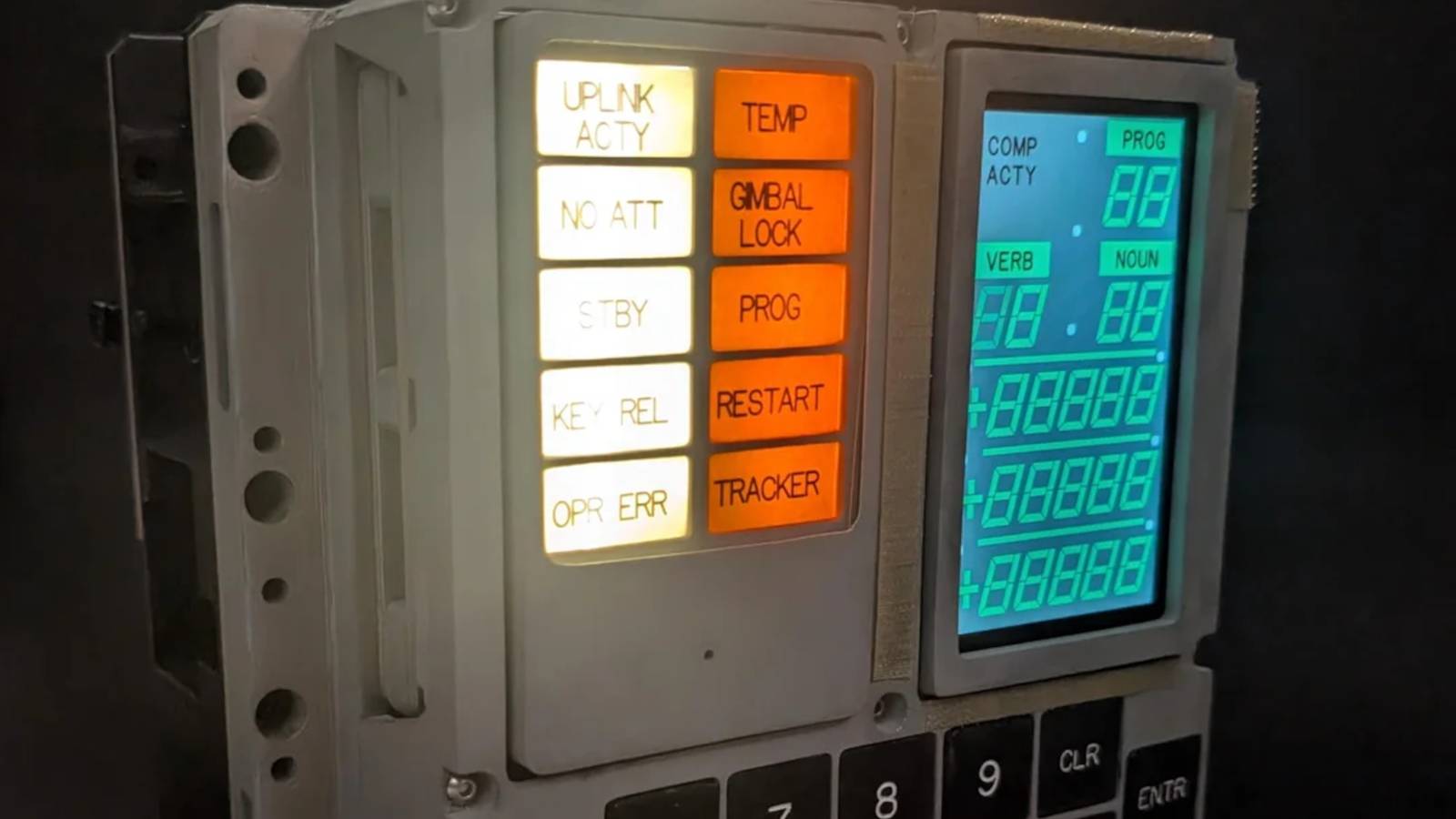
Credit: Mikeyme1998 Published Aug 4, 2026, 2:12 AM EDT Simon is a Computer Science BSc graduate who has been writing about technology since 2014, and using Windows machines since 3.1. After working for an indie game studio and acting as the family's go-to technician for all computer issues, he found his passion for writing and decided to use his skill set to write about all things tech. Since beginning his writing career, he has written for many different publications such as WorldStart, Listverse, and MakeTechEasier. However, after finding his home at MakeUseOf in February 2019, he would eventually move on to its sister site, XDA, to bring the latest and greatest in Windows, Linux, and DIY electronics. Sign in to your XDA account Summary RecreateDSKY emulates the Apollo DSKY on a Raspberry Pi, running VirtualAGC software. The hardware uses Arduinos, Python, and 3D-printed, archive-accurate casing and annunciators for realism. It helps preserve Apollo hardware heritage, and v2 will seek a simpler, Lego-like build. One of my favorite uses of Raspberry Pis is recreating old hardware. They're small but mighty enough to either replace aging hardware or rebuild a device using new practices. Such is the case with RecreateDSKY, which takes the software humanity used to walk on the moon and adapts it for your Pi. RecreateDSKY is the perfect project for the space enthusiast It looks great, too Over on the Raspberry Pi subreddit, Apollo enthusiast Mikeyme1998 showed off the RecreateDSKY project. It's part of a larger repository called RecreateApollo, and as you might imagine from that name, it was created to help people rebuild assets from the Apollo missions, including the 11th one that got people walking on the surface of the moon. This particular build recreates the Display and Keyboard (or DSKY for short), the dashboard panel astronauts used to interface with the Apollo Guidance Computer (AGC). As you might imagine, the raw processing power of a modern-day Raspberry Pi dwarves that of NASA's computers in the 60s; in fact, Mikeyme1998 says that the AGCs back then were one of the first computers to use chips, and at the peak of development, NASA used roughly 70% of the world's chip supply to build them. So, how do you go from a computer that took us to the moon to a fun hobby you can make in your garage? Well, it turns out that people are passionate about Apollo: "The functionality of the guidance computer was emulated in its entirety by a group called VirtualAGC (an incredible feat on its own) and I have their program running on my Raspberry Pi that lives in the DSKY. The screen, annunciators, and keyboard integrate to the Pi with arduinos and communicates to it through a basic python script." Even the 3D-printed casing is modelled after "real archived drawings" and painted to look like the computer that went to the moon. Yeah, these Apollo fans don't mess around when it comes to accuracy. The goal of RecreateDSKY is less to give people the means to guide their own homemade rockets into space and more as a way to preserve and honor the hardware that got humanity setting foot outside of Earth's atmosphere. It's not quite done yet, as Mikeyme1998 wishes to get a v2 going with a simpler, Lego-like design; however, if you want to see what went into V1, you can do so over on the project's GitHub repo. And why not visit the Recreate Apollo website, too?
The RecreateDSKY project lets you remake Apollo's guidance computer with a Raspberry Pi
Full Article
Original Source
Read the full article at Xda-developers →KhanList aggregates and links to publicly available news content. We do not host full articles from third-party sources. Always verify important information with original sources.