
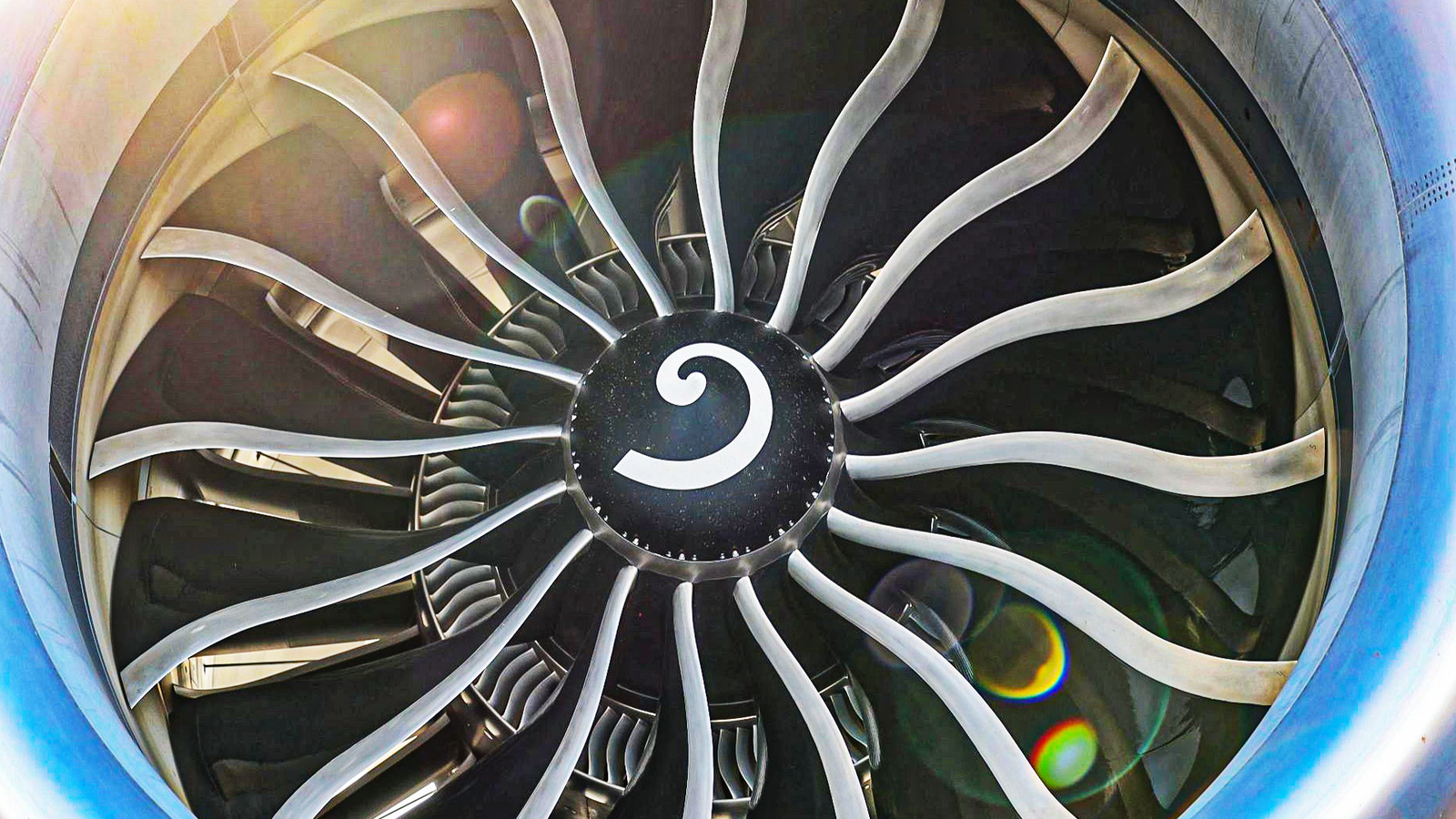
Standing at an astonishing 134 inches (340 cm) in diameter, the General Electric GE9X is so massive that its front fan casing matches the entire fuselage width of a Boeing 737. It is an engineering milestone that instantly dwarfs every commercial turbofan built before it. Even so, the true marvel of this colossal design is not simply that it is the largest jet engine in aviation history, but why GE pushed the envelope to such unprecedented extremes in the first place. For many years now, conventional wisdom in aerospace engineering linked massive size directly to chasing raw, record-breaking takeoff thrust. However, the 134-inch fan tells a fundamentally different story, one rooted in thermodynamic efficiency, bypass physics, and fuel burn reduction. This article explores how expanding fan diameter became the definitive master key to unleashing the true potential of long-haul operating economy, looking closely at the iterative evolution of the widebody power plant. Why Make A Fan So Large? Moving a larger mass of air at a lower exhaust velocity needs significantly less energy than expelling a smaller mass at extreme speed, and this principle is at the very heart of widebody engine design, as detailed in publications from Embry-Riddle Aeronautical University. In large turbofan designs, the front fan functions as the main thrust-producing element, generating the vast majority of the total propulsive force while the core primarily provides power to drive that fan. The basic division of labor explains why widebody propulsion relies so heavily on volumetric airflow rather than raw jet exhaust velocity. Expanding the fan diameter, reaching a massive 134 inches (340 cm), is the single most direct geometric lever available to engineers to scale this mass airflow. Through the widening of the intake area, the engine captures and accelerates a vastly greater volume of ambient air around the hot engine core. The deliberate scaling drives the bypass ratio up to approximately 10:1, maximizing propulsive efficiency and greatly changing the thermodynamic performance of long-haul flight. The direct operational payoff of these high-bypass mechanics is a decisive reduction in Specific Fuel Consumption (SFC). Because the enlarged fan handles a greater volume of air at lower rotational speeds, it minimizes the kinetic energy wasted in high-velocity exhaust plumes while delivering the smooth thrust required for transoceanic routes. The aerodynamic foundation then removes excessive fuel burn, giving way to that volumetric expansion that is the absolute master key to unlocking long-range operating economy. Slowly Increasing The Diameter Reaching the milestone 134-inch (340 cm) diameter was not an overnight conceptual leap, but the result of an aggressive, multi-year iterative design trajectory during the evolution of the Boeing 777X family. When General Electric initially laid out the propulsion design to succeed the legendary GE90 family, early studies contemplated retaining the proven 128-inch (325 cm) fan casing of the GE90-115B. However, as Boeing refined the aerodynamic profiles, maximum takeoff weights, and ultra-long-range operational targets for the incoming 777-9, engineers realized that minor tweaks would fall short of the radical efficiency leaps demanded by modern airline economics. Through successive design iterations, GE incrementally pushed the outer fan containment casing outward. The development path saw the diameter step up to 132 inches (335 cm), before briefly testing configurations at 133.5 inches (339 cm), and ultimately locking in the record-breaking 134-inch envelope. Each fractional expansion of the fan face resulted in measurable gains in bypass ratio and mass airflow, which helped to show that in the specialized world of widebody turbofan design, every additional inch of intake diameter can make exponential dividends in overall fuel burn reduction. The GE9X's step-by-step upscaling necessitated a total rethinking of fan dynamics, as a larger diameter compounds both centrifugal stress and aerodynamic drag if not meticulously managed. So, through carefully tailoring the fan tip velocities and expanding the casing boundaries through advanced computational fluid dynamics, GE made a brand new geometric baseline. This careful stretching of the fan envelope paved the way for unprecedented bypass efficiency that did not lead to a destabilization of the core mechanics of the engine. Using Material Science To Push Engine Capabilities Building an engine fan wider than a 737 fuselage is a huge problem for runaway rotational weight. Scaling a conventional metal fan to a massive 134 inches (340 cm) using traditional titanium or heavy alloys would create massive centrifugal loads, needing exponentially stronger containment rings and heavier shafts. It would instantly cancel out any thermodynamic or fuel-burn gains achieved by high-bypass geometry. GE solved this profound engineering problem through advanced material science, with the help of fourth-generation carbon-fiber composite fan blades. The breakthrough came in the aerodynamic efficiency and material properties of these advanced composite structures. Each fourth-generation blade is stiffer and capable of managing a vastly greater aerodynamic workload, so engineers were able to slash the total blade count from 22 on the legacy GE90 down to just 16 on the GE9X. Furthermore, these blades incorporate specialized steel leading edges and impact-absorbing fiberglass trailing edges to handle foreign object damage, all while maintaining an ultra-thin profile that keeps aerodynamic drag to its very minimum. Such a radical reduction in blade count, paired with a lightweight carbon-fiber composite fan case that saves roughly 350 pounds (158.8 kg) per engine relative to traditional metal casings, strips away massive amounts of dead weight. By shedding structural mass despite the record-breaking physical envelope, the low-pressure spool can rotate with optimal efficiency. The GE9X is just the latest example of how crucial advanced composites are to the modern widebody power plant design ethos. The Highest Limit The relentless pursuit of fuel efficiency naturally tempts propulsion designers to dream of even larger fan diameters, but the GE9X’s 134-inch (340 cm) envelope is seen as a strict, practical ceiling for direct-drive commercial turbofans. Pushing fan dimensions significantly beyond this threshold triggers immediate, almost uncontrollable structural and geometric penalties that threaten to offset any thermodynamic gains. Chief among these barriers is aircraft ground clearance; when fitted to the 777X, the massive nacelle leaves a tight static clearance above the tarmac, as noted by Jalopnik. Scaling the fan any further would result in substantially taller and heavier landing gear legs, bringing further structural weight penalties that would instantly prevent high-bypass fuel savings. Furthermore, swelling the fan casing beyond 134 inches leads to crippling aerodynamic drag and frontal cross-section penalties during high-speed cruise. As aerodynamic studies consistently demonstrate, the external drag penalty of an oversized cowl eventually eclipses the internal thermodynamic efficiency gained from a larger bypass ratio. For direct-drive turbofan designs, 134 inches hits the absolute mathematical sweet spot, balancing maximum propulsive mass flow against the rigid constraints of modern airframe integration. It is quite clear that the GE9X’s monumental fan diameter stands as a definitive milestone in conventional engine design, though even the most impressive engines have caveats. It extracts every available fraction of efficiency from a direct-drive layout, creating the absolute outer boundary of what is physically and operationally feasible for widebody propulsion before radical new architectures, such as open-rotor or geared systems, must take the stage. Less Power Than Its Predecessor? One of the most counterintuitive realities of the GE9X program is that despite possessing the largest fan diameter in commercial aviation history, it is not engineered to deliver the highest raw takeoff thrust. While its predecessor, the GE90-115B, is rated at up to 115,000 pounds (511.5 kN) of max thrust, the GE9X is calibrated to a nominal 105,000 to 110,000 pounds (467.0 to 489.3 kN), as per Simple Flying analysis. Ultimately, the deliberate reduction in maximum rated thrust highlights a key shift in how modern widebody propulsion is conceptualized and optimized. The justification for this lower thrust rating rests in the aerodynamic brilliance of the 777X airframe itself. Featuring a high-aspect-ratio composite wing, the 777-9 and 777-8 generate exceptional lift and cruise efficiency compared to the 777-300ER. Due to the airframe being inherently more efficient during climb and high-altitude transit, it does not need that raw, brute-force runway thrust to hoist heavy loads across intercontinental routes that was seen on the GE90-powered predecessor. Rather than chasing higher poundage ratings, GE engineers channeled every ounce of headroom into slashing Specific Fuel Consumption and mitigating thermal stress across the core. The goal was to tailor engine output precisely to the aerodynamic profile of the 777X, and therefore, the propulsion system achieves elite fuel economy without needing to match the maximum raw output of older, heavier power plants. The True Engine Benchmark Credit: Boeing The GE9X’s 134-inch (340.4 cm) fan is far more than a showroom spectacle; it is the definition of what thermodynamic optimization should look like. Prioritizing bypass ratio and mass airflow over raw, unneeded pounds of thrust, GE successfully resolved the conflicting demands of modern long-haul aviation, and did so without falling into the trap of brute-force escalation. Now, with the Boeing 777X family moving closer to full commercial entry, this monumental fan has made the definitive benchmark for widebody efficiency. It proves that the future of jet propulsion lies not in burning more fuel to create raw power, but in mastering the physics of air on an unprecedented scale. Delays have pushed its entry to service way out of initial projections, but when it does finally take to the skies in customer colors, the world will finally be able to see the full power of GE Aerospace's most radical creation yet.
The Real Reason Why The GE9X's 134-Inch Fan Beats Out The Diameter On Every Other Jet Engine Ever Made
Full Article
Original Source
Read the full article at Simpleflying →KhanList aggregates and links to publicly available news content. We do not host full articles from third-party sources. Always verify important information with original sources.