
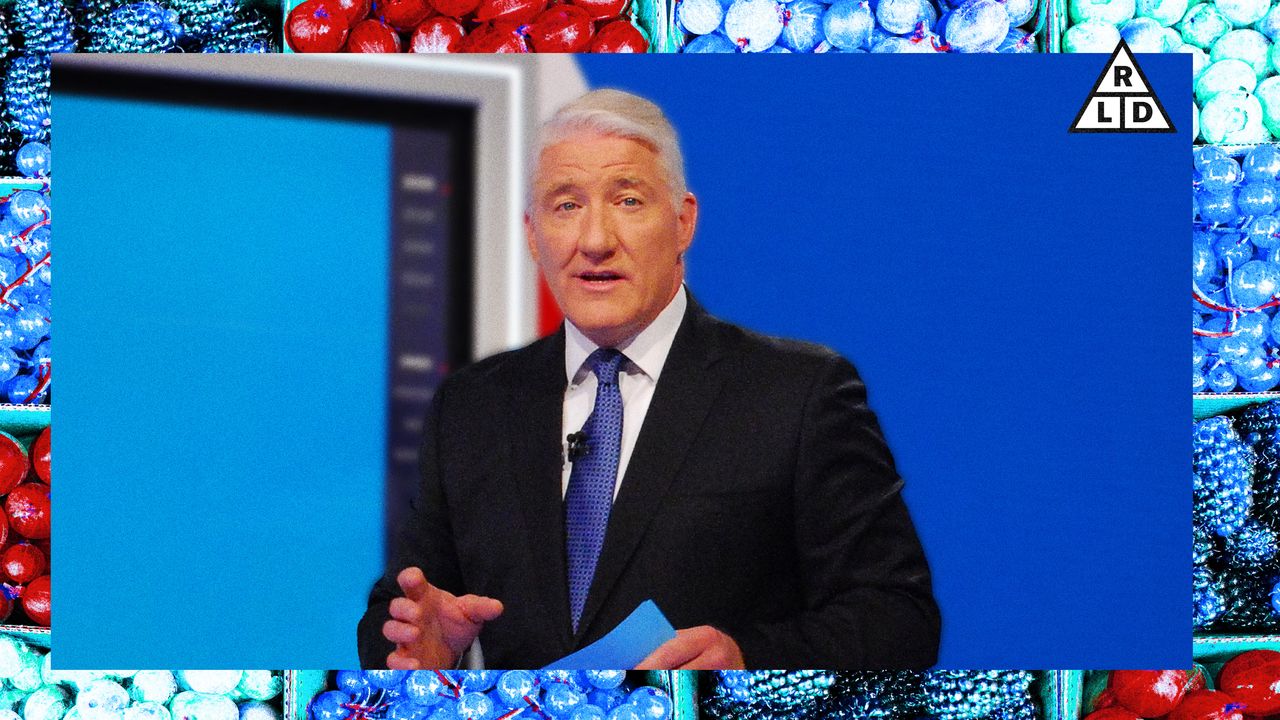
CNN’s chief national correspondent maintains a breakneck stamina by never compromising on exercise and taking 20-minute naps.Nobody white knuckles Election Day the way John King does. Since 2008, CNN’s chief national correspondent has spent his midterm and presidential elections in wizard-like command of the Magic Wall—the omnipresent interactive map that drills into granular data from county to county as votes trickle in. (This year it will also include stats that show whether the cost of gas, rent, or groceries have increased or decreased in specific precincts.) The so-called charthrob has also completed some especially long shifts—working back-to-back 12- to 16-hour days during the 2020 presidential election, when results took about a week to tabulate. This year, to prepare for the midterms, he’s been traveling nonstop between battleground states, interviewing sources to stay on top of the national mood. “The way to be at my best on election night is to actually do the homework by visiting those places in the year and a half or so leading up to the election,” he says.That is no easy task, given the 63-year-old dad of three also lives with multiple sclerosis. To keep his symptoms in check and his head cool as results pour in, he’s created a disciplined regime that includes hitting the gym no matter how little sleep he gets, keeping a mental map of healthy places to eat in flyover country, and occasionally giving himself time to sightsee—or stare at a wall. GQ spoke with King a week ahead of Tuesday’s races to learn how he keeps steady amid the chaos.GQ: You’re on the road for the midterms. Tell me about how your schedule changes this time of year.John King: All this year, I’ve been on the road, on average, about two weeks a month for the midterm cycle. And we started obviously late last year. You have to do that. This last week is particularly grueling. Normally we go out and we do one state and we travel into say, North Carolina. We were there for three days. We went to Texas and we were there for four days, three nights. The schedule’s pretty busy on those days, but you have a little bit of breathing room and you can make time for a hotel gym and you can search a little bit to find a better restaurant that might have a few actual salads or fresh fish on the menu. This week, we’re doing five states in five days.Wow.That included working until about 10 o’clock on Monday night and then having to catch a 6 a.m. flight Tuesday morning. It included last night wrapping at about 8 o’clock in Detroit and having to drive four, four and a half hours into central Ohio to be here today. On those days, you’re not really in control of your schedule. Your schedule is in charge of you. You just have to be somewhere at a certain point the next day. So everything is driven by that.So can you fly there? If not, you have to drive there. And in those situations, if you’re talking about trying to keep a healthy diet, that becomes a pretty tough challenge. You’re driving past the McDonald’s and the Burger Kings and the Culvers and you’re thinking, Oh, wow, that looks great. And you shouldn’t go anywhere near it.Sometimes you do. Sometimes you do because you decided you deserve a treat. Sometimes you do because you have no choice. My philosophy about that is, like anything in life, if you indulge, then you just have to pay the price on the other end. So that means having yogurt and granola for breakfast and some berries, and that means making sure you get to the gym.I’m psychotic about the gym. In part because I have multiple sclerosis and I have some mobility challenges sometimes. At the end of just about every day, I get what the doctors call MS fatigue. You get headaches and your legs are very heavy. And so I have found in dealing with this that if I exercise in the morning, it really helps me. And so the other day, when we had that 6 a.m. flight, even though I didn’t get to bed until 11 at night, I got up at 2 in the morning and went to the hotel gym.I’m trading sleep for exercise, which if you do that over 10 days, two weeks, you’re going to pay a price for it. But we’re doing five states in five days. It’s going to be pretty grueling anyway. We had an early start this morning. We had to be to a farm pretty early, and so I was at the hotel gym at 5:30 in the morning. That’s just part of my routine.What do you do at the gym?That depends on how much time I have. If I can, I work out for about 90 minutes in the morning. Every gym is a little different. Some hotels are great, some hotels are in-between. The hotel we stayed in last night was a bit of a time warp. The equipment was pretty old. If there’s a recumbent bike, I obviously have either emails from overnight to read or news articles to read or things to write. So I’ll spend 30 minutes or so on a recumbent bike, where I’m pedaling to get my body warmed up and I’m also doing some work, reading and communicating about the day ahead.And then I get on the treadmill for a little bit. I’m not a runner, but I can jog a little bit, or do incline treadmill just to get my heart rate up a little bit, and then try to do a little bit of light weights if I have the time.You do what you can. I’m pretty set in that I bike because I have to do some administrative stuff and that’s easiest on the bike. And then I get on the treadmill where I just try to listen to music and zone out a little bit. And if I can, I’ll do a quick circuit of some light weights because if you just do cardio, that one beer you have at the end of the night stays with you. So you got to do the weight.Did you say you write on the recumbent bike?I don’t usually write scripts or anything, but I will write to people back in Washington who are asking me questions. Or if I’m trying to find somebody on trips like this, a lot of stuff we do on the fly. I’ll occasionally write graphics. If I know I need to write a graphic or in the middle of a process, if we’re editing a piece, the editor might send me a graphic that they’ve done, What do you think? I’m not trying to write my actual scripts for pieces. Sometimes I tweak them, but if I tried to write them from scratch on a bike, I would lose my mind.But regardless, next-level multitasking.You have no choice. If I’m going to get my exercise in, at least part of that, it’s going to have to include some work time.You mentioned the need to keep up with the news. Are there ever moments that you choose to tune all of that out for the sake of peace of mind?Yes. When I travel. I started this when I covered the White House—I covered the White House for 10 years—especially on international trips where you’re living on local time wherever you are in the world, but our CNN programming is on US time. I would have what I call the 20-minute rule where no matter how tired I was, if I was in a cool place around the world or even in the country, I just tried to get outside of the hotel for 20 minutes of me time. And so if you’re in Paris, you take a walk and stare at the Eiffel Tower.I remember the Bush-Putin trip to Estonia where Bush said he looked into Putin’s soul. That became a big controversy. I remember after that day—we were on television all day and it was a big day—just walking around and looking at the architecture. The Berlin Wall had come down. We were a decade past that or more. But in a lot of those countries, you’d have this fabulous European architecture, like you’re in Paris or like you were in Prague, and then across the street would be this horrible concrete structure that the communists built.And so that’s how I learned. I’m a kid who grew up in Dorchester, Massachusetts. My family had no money. We never traveled. So I have this enormous gift of this job that sends me everywhere. And so I really think it’s important both for the curiosity part of it, but also I have a lot of work to do, but I’ll actually be more efficient at my job if I take 20 minutes to just say, “Wow, this is a cool place. Let’s enjoy it.”I don’t think of myself as someone who meditates, but do I sit still sometimes and listen to music. I try to keep up with the books my son in high school is reading. Sorry, CNN, sorry, politics, sorry, campaigns. I’m filing you away for 15 or 20 minutes. That’s absolutely critical to mental health.You are, I assume, a really good traveler at this point. How are you packing? Do you get jet-lagged? Tell me all your travel secrets.I try to pack a carry-on on this trip because we’re out for five days. Plus, on the tail end of it, I have to go to New York City because my daughter lives in New York City and she just got engaged and we’re having a celebration for her on Saturday night.Congratulations.Thank you. It’s a really amazing time. And of course, it all comes in a tornado, but that’s fine. But I have to bring a suit and I have to bring some other clothes. And as I said, my exercise is important, so I have to pack gym stuff. So usually I think of myself as a very efficient, tight packer so that I can have a carry-on bag, just so, number one, they can’t lose it. And number two, you can keep moving faster. But on this trip, I actually have to check my bag because I’m on the road for six days and then I’m going to New York for two more. I don’t like checking a bag, but so be it. I have to do it on this trip.I operate on East Coast time all the time. I get tired. I wouldn’t really even call it jet lag because I try to keep my body on East Coast time and my brain on East Coast time because that’s who I report to. After international trips, I’ll get jet-lagged, but exercise is important, number one. I drink too much coffee, and so on a long trip, that can get to you. Your body gets a little jittery if you have a little bit of jet lag. You try to sleep when you can. One thing I was never good at until campaigns is napping. Now I can take a 20-minute nap. There was a time in my life I could not nap. I can take a 20-minute nap now, which helps you sometimes when you need to. But I’m just trying to think of the last time I had really profound jet lag. I can’t have jet lag, I guess.It’s just not possible.Yeah. I’m not allowed. My work doesn’t allow me normally, so I just bull through it. That doesn’t mean I don’t get tired. This trip is going to be grueling. I’ll get to New York on Saturday and I’ll have three or four hours before my daughter’s dinner and I’ll need to get to the gym, but I’m also betting I’ll stare at a wall for a few minutes and just be like, Whoa. But I don’t dwell on it because I can’t.I very briefly spent some time on the campaign trail and I recall the difficulty of finding fresh fruits and vegetables or healthy options on hotel menus, especially in places like Iowa. Do you have a strategy for that?It gets hard on the hotel menu. Most hotels now at least will have a yogurt parfait or at least yogurt. There’s a very wide—what do we want to call it?— quality control or quality between the different kind of hotels you stay at.We’ve been to Wisconsin several times. There’s a hotel called The Trade in Wisconsin we always stay at and they have a spectacular yogurt granola parfait bowl. I know in the morning I’m going to have a nice, healthy breakfast. Other places, it’s a challenge and you can’t find it or you just have no choice. So you grab the bacon, egg and cheese sandwich and that means I’m having a salad for lunch.Then when you’re on the road, like last night, we were driving here, we had a four-and-a-half-hour drive, so you stop at a random gas station in small town America and you’re a little hungry. I try to grab the almonds, not the potato chips. Luckily, I’ve never been a sugar person, so I’m not going to drink soda that has sugar in it. I don’t even really drink diet soda. But on the road, it’s mostly water and coffee. And then, I’d be lying if I didn’t say I’m very happy if I could find a cold beer at the end of the day.Yesterday, we had fantastic Middle Eastern food in Dearborn, Michigan. Just a chicken salad, falafel. And we’ve been back there a couple times. There are a couple other places where we know of these small businesses, just some local person has started, just a place where they just have salads and healthy smoothies. When we’re in those towns, we go back to those places because we’re grateful they’re there and they help us reset the bad-road-food meter.It’s as if you have a magic food map in your mind, one would say.If I’m in Kansas City, I’m going to Arthur Bryant’s barbecue, and that is full of sodium and it’s not good for you, but it’s amazing.You are routinely on your game in really high-stakes news events, and especially election night. How do you do that?Part of it, especially since my MS diagnosis, I know that I’m going to get tired. I may have issues with both my leg and my hand functions. You learn a lot more from your struggles than you do from your successes, and I’m much more aware of my body on a daily basis, even on a minute-to-minute basis of how I’m doing and what are my challenges at the moment. Hydration is critically important.On election night, I might be standing for 16 hours. It’s probably closer to 12, but it might be 16. If you go back to 2020 when we had the election that went on all week, we didn’t call the election until Saturday. I was on my feet for 14 or 15 hours the first night, and then 12 hours the next day, and then 12 hours the day after that. That was a huge challenge.Was that the longest consecutive shift you’ve ever worked?That week was the longest. I’ve been on the road for campaigns covering candidates where it’s event, bus, presidential campaigns, you’re going from state to state. So it’s event, bus, plane, event, bus, plane, event, bus, plane. They’re handing you a box. You don’t even know what’s in it, but you eat it. Because it’s the only food you’re going to get for the next 10 hours.In the studio, I’m standing on my feet the whole time, but I have access to cold water. Somebody can get me a coffee. If you’re on television, you’re just asking for it if you try to eat a salad or anything like that because it’s going to get in your teeth and you don’t have time to go down the hall. You just don’t. You’re on live television. So I get little tiny mini protein bars and put a few of them behind the Magic Wall. And if I feel like I just need a little energy boost, I’ll eat those. I drink more coffee than I should, but coffee will help me when I need a boost. And then when I’m done, I can go to sleep. I can have a Nespresso after dinner and go to bed. My colleagues hate me because of that.That is a superpower.When I am sometimes challenged by the MS issues I have, it’s when something surprising happens and I’m not prepared for it. And then an hour into having to do something that I didn’t know I was going to have to do, I might think, Wow, my legs are jello, or having, they call it MS brain. It’s like a foggy brain issue sometimes.But I know the election is Tuesday. A lot of people ask me, “Why are you going on the road for five days? You don’t need to do that.” I do need to do it. Professionally, I need to do it. Physically, I will pay a price for this, but I know that. And so you just prepare for it.The human brain is amazing. I don’t pretend to understand it, and MS has a lot of mysteries, but from when I was first diagnosed to now, I can prepare myself for something and I’ve been able to get through it, knock on wood, which is my skull.I was diagnosed in 2008, and so we’ve had many big election nights since then, and I’ve gotten through them, and I’ll get through this next one. And then when it’s over, I will collapse. I’ll go home and I’ll fall into bed and I’ll sleep. But if I have to get up in four hours and do it again, I will. I’ve just trained myself to do that.You’re known for your proficiency with the Magic Wall. Has your MS diagnosis affected your ability to do that?I work out a lot so that I stay fit physically and that I have good stamina. I’m 63 years young, as I like to say, so it’s important anyway that you stay more physically fit and more active in your body. Part of that is preparation.In 2020, I was having issues with my hands, and my hands have to navigate a touchscreen Magic Wall. It’s hard for me to explain because you can’t see it, but the few people who have been around me when I’m having some struggles could see it. I have to watch more closely. I have to follow my hand because I can’t trust it to get where it’s going to go because it’s not connected to my brain.I don’t know what’s in front of you right now, but if you have a notebook or a glass of water, you see it and you reach for it and then you stop looking. You don’t watch your hand anymore. You know where your hand’s going, your hand knows where it’s going. It picks up your phone. It starts typing on your keypad. Sometimes I have to watch my hands. I have to watch my hand pick it up, and then I have to check to make sure I have a good grip on it because I can’t feel my fingers.I can’t feel the extremities. And so I will squeeze something extra tight. Sometimes, if you watch me on television, if my feet seem abnormally wide in my gait when I’m walking, that means I’m having balance issues and I spread my legs a little bit. To the naked eye, nobody sees that. If you’re around me all the time, you might say, “John’s walking a little weird today.”MS is really cruel to some people. MS sucks for me. MS challenges me, but I have been able to manage it thanks to good doctors and thanks to personal discipline. I call it my visitor. If my visitor is active on any given day, my attitude is, okay, well, I can’t kick you out, so I have to figure out how to deal with you, and you just do it.You mentioned that after a long shift you will crash. What is your ideal sleep and recovery and routine to get back to normal?As much as I can. And then, if I have to come back at it the next day like I did in 2020, I was going home and getting three or four hours sleep, and maybe I could’ve had five or six hours sleep, but I know that I have to do that 45 minutes or 50 minutes of exercise to be able to function. So I have to cut my sleep short to get the exercise. That’s the way I have to do it to function. I’m able to get through it. Could I do that for a month? I hope I never have to answer that question. I was able to do it for a week in 2020. 2024, you’re still doing stuff the days after the election. We just didn’t have that long drawn out uncertainty.I do not have trouble falling asleep. Even when I’m having a pretty good MS week, I have never had trouble sleeping. When my brain knows I’m done, I’m off the set, I’m in my office, I’ve had whatever post-action meeting I have to have, my brain tells me, “You’re done.” That means I’m going to find a bed, and I will sleep. I’ve been blessed so far, and I assume this will continue, that when I need to get back at it, I just get back at it.What is the one thing that you think contributes the most to your ability to continue on?Attitude is everything, especially if you’re tired or you’re struggling or things aren’t going well. Could I give you a list of complaints about my life? Could I give you a couple of complaints about where I work? Of course I could. Everybody can. As somebody who sometimes goes down to the gym in the basement of our office, why isn’t the office gym a little better? I mean, get over yourself. I think attitude is everything.I say this as a sinner. When I was initially diagnosed, I was taking that out on other people sometimes. There were times when it was either the stress of work—this can be a stressful business sometimes—or the stress and the fear. I was being a grumpy person, not being a good colleague. If you feel that, take a walk, get away and just have a good attitude. In traveling the last two years, when you see the struggles that working families are going through across this country right now, I’ve always considered myself to be the luckiest person in the world. And when I feel myself starting to complain, I just give myself a whack in the head and say, “Dude, get over it.”Attitude is incredibly important. That’s not a hack. It’s not a secret. It’s not a supplement, but look yourself in the mirror every morning and just go to it. Live your day in a way that you can look yourself in the mirror at the end of the day, and hold the gaze.In Real-Life Diet, athletes, celebrities, and other high performers talk about their diet, exercise routines, and pursuit of wellness. Keep in mind that what works for them might not necessarily be healthy for you.Not a subscriber? Join GQ to receive full access to GQ.com.Alyssa Bereznak is GQ’s Wellness & Grooming Director. She previously worked as a Senior Features Editor at the L.A. Times, where she launched the publication’s wellness section, and as a podcaster and Senior Staff Writer at The Ringer, where she reported, hosted, and produced two investigative podcasts: Boom/Bust: The Rise ... Read More
The Real-Life Diet of John King, Who Hides Mini Protein Bars Behind the Magic Wall on Election Night
Full Article
Original Source
Read the full article at Gq →KhanList aggregates and links to publicly available news content. We do not host full articles from third-party sources. Always verify important information with original sources.