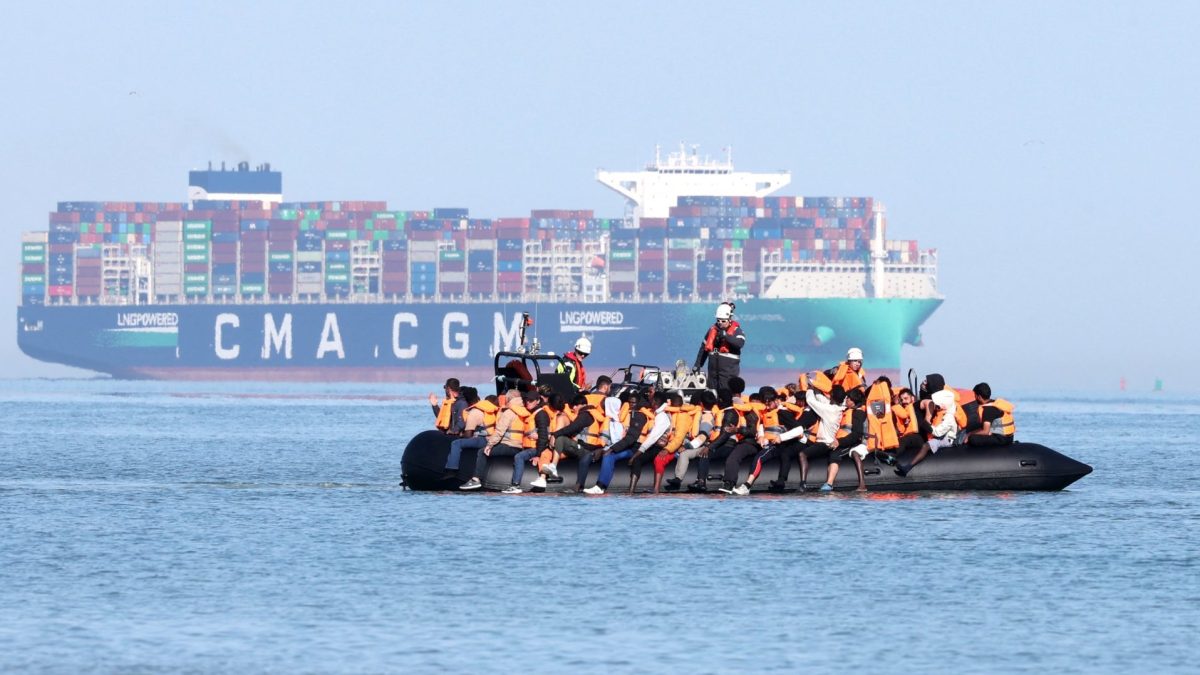
Four people have died while attempting to cross the English Channel after the busiest day for small-boat launches so far this year. French authorities said that three women were found dead on a boat off the coast of Dunkirk on Thursday, while a man drowned in a separate incident near Boulogne-sur-Mer. It had been reported that up to 1,000 people were attempting to cross the Channel on Wednesday but the Home Office confirmed 752 individuals in nine boats reached British waters, which is the highest total for a single day in 2026. It is the 33rd highest day for arrivals since 2018. Shorts Crossings are significantly lower than in previous years, which have seen multiple days pass 1,000 arrivals. Around 42 per cent fewer people have reached Britain on small boats this year compared to the same point in 2025. However, charities say that journeys are becoming deadlier because smugglers are trying to evade UK-funded security on French beaches by overloading larger dinghies and launching them at greater distances from British shores. How have crossings changed this year? At least 14,128 people have reached Britain on small boats so far this year, according to Home Office figures. This is lower than the comparable period in any year since 2021. The routes and methods used by smugglers facilitating the journeys have been changing. There have been concerns that larger and more dangerous vessels are being manufactured after a “mega-dinghy” containing 165 people was intercepted by the Border Security Command on 23 July. This is the largest number of passengers known to have been carried on a single vessel since small-boat crossings began in 2018. Boats have also been launched further away from the British coast, such as from the French commune of Berck, 50 miles south of Calais, and from Belgium. Belgium’s Federal Police has expressed concerns over the trend, and launched a public awareness campaign urging people to raise the alarm over signs of smuggling activity, including boats and engines hidden in sand dunes. How many people have died? At least 16 people have died trying to reach Britain from mainland Europe this year, according to figures from the International Organisation for Migration, which incorporate small-boat deaths as well as accidents involving other means of travel. The Migration Observatory at the University of Oxford said that a total of 162 people died attempting small-boat crossings between 2018 and 2025, with 24 confirmed deaths in 2025 and 73 the previous year. One factor that may play a role is the number of people in each boat, which grew from an average of 13 in 2020 to 62 last year, researchers say. This would make sinkings more likely and increase the possibility of passengers being crushed or suffocated on board. People attempt to board a small boat off the coast of Berck – 50 miles south of Calais- in June (Photo: Gareth Fuller/PA) The Migration Observatory said increased efforts to stop boats leaving the French coastline may also have prompted smugglers to change their strategies. These include longer voyages, and the use of “taxi boats”: rather than dinghies being launched from the shore, people wade or swim out to boats that are cruising further out, ready to pick them up from the sea. Refugee charity Care4Calais said crossings would become “even more deadly” unless the authorities changed their tactics. “The record number of deaths on our border in recent years has been driven by political choices,” chief operations officer Sydney Sopher said. “Safe routes stop crossings and save lives.” What impact is government policy having? Andy Burnham has not made small boats a focus of his first days as Prime Minister, but has praised a “very rigorous plan” brought forward by Home Secretary Shabana Mahmood. “Boat crossings are down quite significantly year on year,” he said. “So that does suggest that the plan is working.” The Home Office said co-operation between the UK and France has prevented 46,000 attempted crossings in the past two years, and 65 per cent of journeys were stopped in May. In April, Mahmood signed a three-year, £662m deal with France which aims to further bolster enforcement action on French beaches. Police officers carrying a person after an attempt to board a small boat near Berck (Photo: Gareth Fuller/PA) Dr Peter Walsh, a senior researcher at the Migration Observatory, said the figures did suggest that having “more boots on the ground” was making a difference, but that smugglers were also adapting. “Government policy could very well be responsible for some of this decline,” he told The i Paper. The suspension last September of the right for refugees to bring their partners and children to Britain “could change the calculus” for some migrants, he added. The Labour Government has also agreed a one-in-one-out deal with France, put sanctions on smugglers, and signed a returns deal with Iraq, while moving towards more restrictive asylum policies. However, Walsh said it was unclear how much asylum seekers knew of the changes, and that smugglers continued to present a “rosy picture” of life in the UK. “If people don’t know about the policies, we can’t expect them to be deterred by them,” he added. Walsh said the number of migrants making unauthorised journeys into the EU had also fallen significantly this year, and the number of people arriving covertly in Britain by means other than small boats was not known. “Fewer people coming into Europe would mean fewer people accumulating in Calais,” he said. “There are also other clandestine methods of entry which are really a big question mark. We just don’t have the data.” The Home Office said: “This Government is bearing down on small-boat crossings, with removals of small-boat migrants at record levels and asylum claims down by 12 per cent. “The Home Secretary has signed a landmark new payments-by-results deal with France to boost enforcement action on beaches and put people smugglers behind bars.”
The real figures behind the headlines on Channel migrant crossings
Full Article
Original Source
Read the full article at Inews →KhanList aggregates and links to publicly available news content. We do not host full articles from third-party sources. Always verify important information with original sources.