
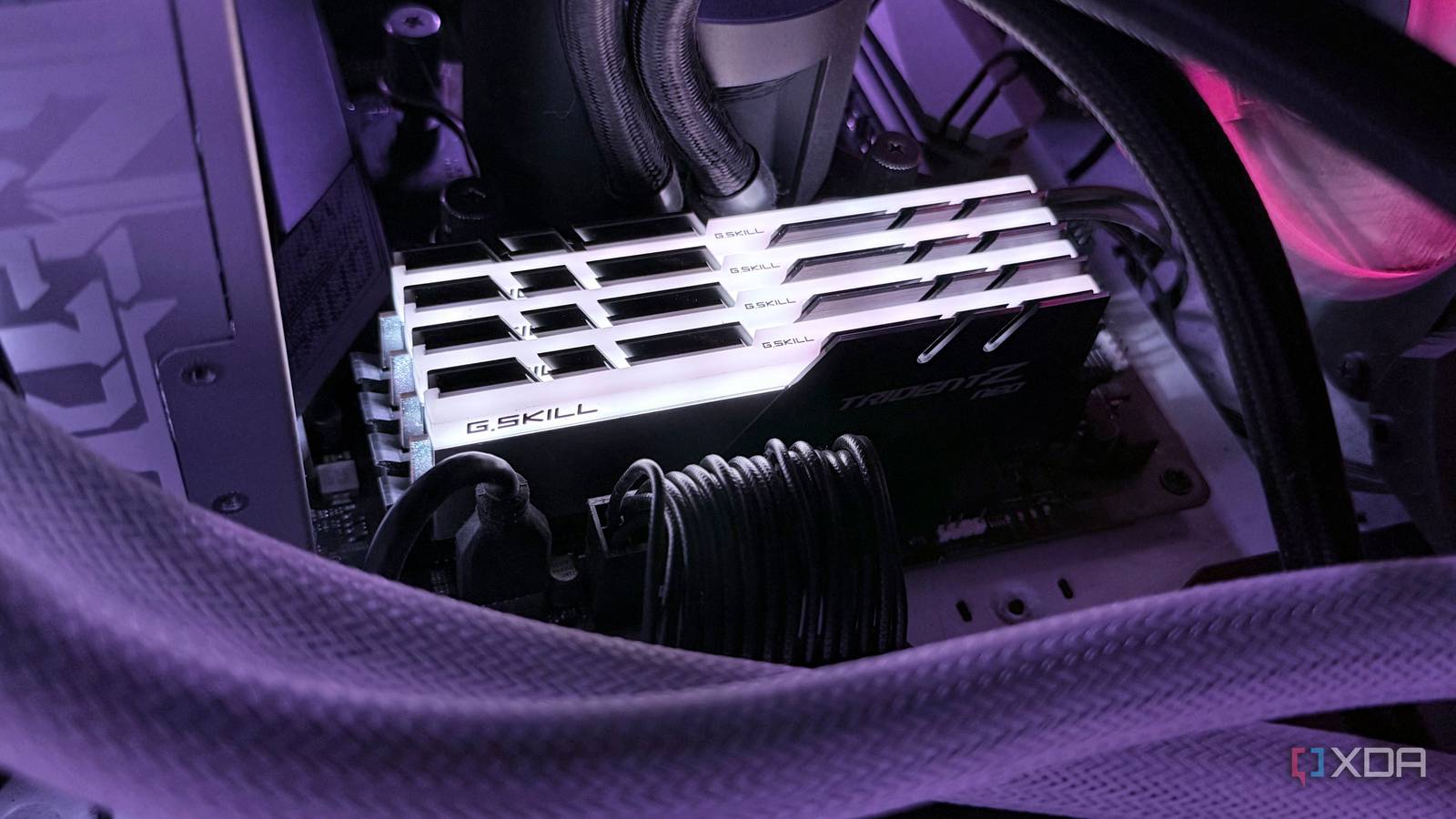
Published Oct 12, 2026, 7:00 AM EDT Holding a degree in Computer Engineering, Rayan is an avid PC hardware enthusiast. Having built his first computer during the pandemic, he's been hooked on the hobby ever since. His greatest passion is getting the most value out of every dollar, whether building a PC for gaming or tailoring one to another use case. He spends much of his time researching and testing new ways to maximize that value, then shares his findings through his writing. Although the memory shortage has affected everyone (from people who only need a work PC to casual gamers and enthusiasts), PC gamers have been hit hardest. Compared to console gamers and laptop consumers, we were the first to feel price increases, thanks to the relatively low-volume contracts memory kit manufacturers (like G.SKILL, Corsair, and the late Crucial) have with DRAM manufacturers.Additionally, we've had the largest share of price increases passed along to us, as the low margins memory kit makers work with don't allow them to absorb any of the cost increases. However, even as acutely as PC gamers have felt the adverse effects of the memory crisis, there's a whole other dimension to the shortage that hasn't been addressed. CUDIMMs were supposed to supercharge XMP Alas, it was not meant to be With the introduction of DDR5, we saw a whole host of new technologies introduced by manufacturers. First, in 2024, we saw the launch of CUDIMMs, a new type of memory module with a "CKD", or Client Clock Driver chip. Normally, RAM is driven directly by a clock sent by the CPU, which can be problematic at higher speeds. The CKD essentially acts as a buffer, strengthening and cleaning the signal from the CPU clock before forwarding it to the RAM. This helps drive RAM speeds higher, even beyond 9,000 MT/s. CUDIMMs would have helped at lower speeds, around 7,200 MT/s, improving stability on motherboards with weaker memory geometries. Truthfully, adoption of CUDIMMs was already quite limited, even before the current shortage, because they were largely confined to the fastest RAM kits. However, the RAM shortage hasn't helped, as now CUDIMM kits command around a 50% premium over an equivalent old-fashioned UDIMM kit. CAMM2's desktop debut put on pause Looks like we're stuck with DIMMs for now DIMM, although not a bad standard in and of itself, is starting to show its roughly 30-year age, with design limitations rearing their head as we approach memory speeds beyond 10,000 MT/s. For example, the upright orientation of DIMMs necessitates longer traces, which introduces issues. In contrast, CAMM2 modules screw directly into the motherboard, with contact pads along the flat bottom. With some initial demos of CAMM2 on desktop motherboards at Computex 2024, it looked like the technology was slated for a limited launch on flagship motherboards. However, unlike CUDIMMs, memory kit manufacturers didn't seem to be on board with that, and with no CAMM2 desktop kits, there was no incentive for motherboard manufacturers to launch any CAMM2-compatible motherboards. The situation doesn't seem to be changing any time soon: as consumer interest in high-end memory solutions wanes, motherboard and memory kit manufacturers don't feel the need to push new, innovative technologies. Mainstream adoption of DDR5 8000+ Natural progression of the DDR5 generation As CPUs get faster, they need more data to keep them fed, which is why JEDEC has been forced to roll out new DDR5 bins (now up to a whopping DDR5 9200!) to keep up with AMD and Intel's pace. Although that DDR5 9200 JEDEC spec might seem optimistic, both AMD and Intel have steadily increased supported memory speeds throughout the DDR5 generation. Currently, Intel's Arrow Lake Refresh CPUs support up to DDR5 7200 out of the box, while AMD officially supports DDR5 5600 with Zen 5. This is up from a maximum of DDR5 4800 and DDR5 5200 for their respective introductory DDR5 CPUs. XMP support has also been improved, especially on Intel platforms. Before the current shortage, it looked like the stars were aligning for higher XMP speeds, like DDR5 8000, to become much more mainstream. Prices were reasonable, with 2x16 DDR5 8000 kits available for about $150, and while that wasn't enough to drive adoption (diminishing performance gains and less stability than sweet-spot speeds like DDR5 6000 meant that most weren't willing to pay even the small premium for DDR5 8000), the situation would have surely changed with the launch of next-generation CPUs, which are rumored to have a substantial performance uplift, unlocking more performance gains with fast RAM. Before the current shortage, it looked like the stars were aligning for higher XMP speeds, like DDR5 8000, to become much more mainstream. With faster cores, CPUs could actually use higher memory speeds, reducing diminishing gains. Solutions like AMD's 3D V-Cache and Intel's upcoming bLLC can reduce the need for high-speed memory, but certain games with heavy texture and asset streaming (like Spider-Man 2) still love fast memory. Unfortunately, although it looked like the time was ripe for DDR5 8000 and beyond to become more widely used, the memory shortage has put a halt to that, effectively sending us all back to the DDR4 era. It isn't all bad though, as innovation never truly stops This crisis has birthed some ingenious new technologies Although the technologies aimed at improving performance at the high-end might be delayed due to the present shortage, the flip side is that manufacturers are actively looking for ways to reduce costs for mainstream users. For example, Asrock introduced a new memory standard called "HUDIMM", or Half-UDIMM, earlier this year. This standard halves the bus width of a regular UDIMM, from 64 bits down to 32 bits. At the same capacity, this means that HUDIMMs can theoretically use half the physical memory chips (at a higher density) than regular UDIMMs, albeit at the cost of halving the memory bandwidth. Hopefully, with more innovations like this, manufacturers will be able to combat price increases. In the meantime, we'll have to mourn the technologies that never were due to the RAM crisis. Crucial RAM DDR5 Brand Micron Size 8GB, 16GB, 32GB Technology DDR5 Speed 4800, 5200, 5600 MT/s RGB No Latency 40, 42, 46
The RAM shortage killed three technologies PC builders were counting on
Full Article
Original Source
Read the full article at Xda-developers →KhanList aggregates and links to publicly available news content. We do not host full articles from third-party sources. Always verify important information with original sources.