
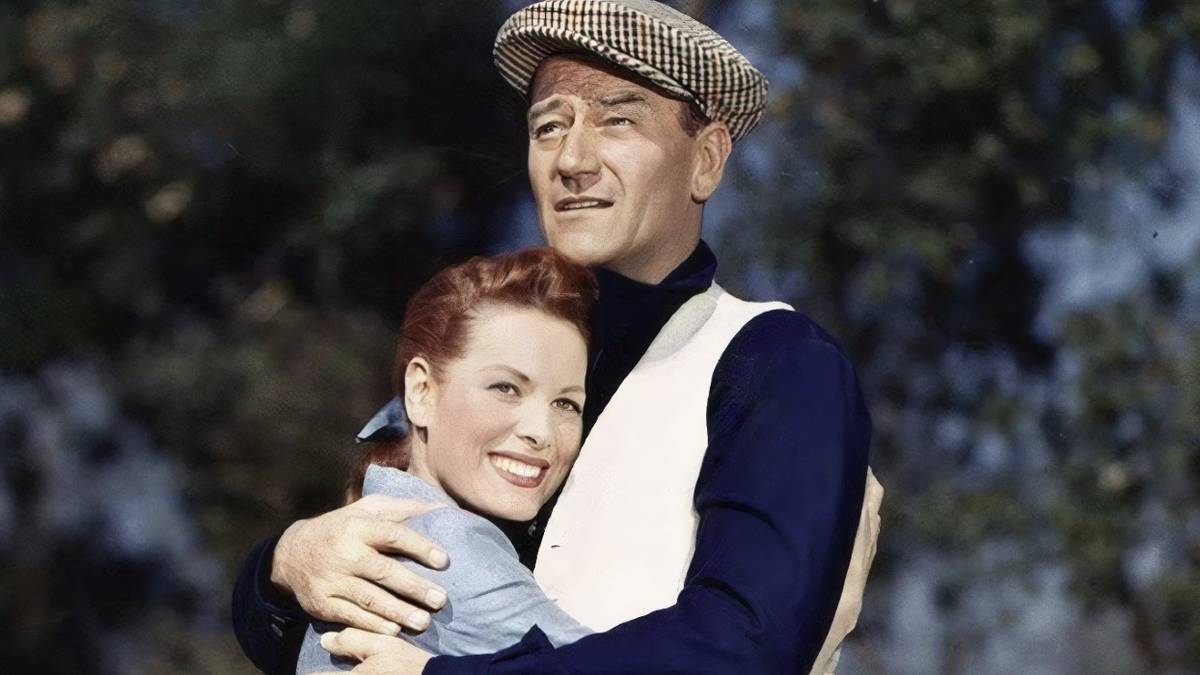
John Wayne’s 129-Minute Classic From 74 Years Ago Is Better Than Most Westerns He Made Published Oct 5, 2026, 4:30 PM EDT Sky Blanton is a Movie Contributor at ScreenRant with professional experience covering movies, television, and pop culture. Her published work spans news, interviews, features, and opinion pieces, with a focus on film, franchise storytelling, and the entertainment industry. She earned her bachelor's degree in Communications with a concentration in Professional Writing and a minor in Business Writing from Southern New Hampshire University. John Wayne made so many Westerns that it is easy to treat the genre as the whole story of his career. Stagecoach, Red River, The Searchers, and Rio Bravo are usually the first titles that come up, and for good reason. Wayne built much of his reputation playing men who rarely backed down and looked completely at home with a horse, a gun, and trouble waiting nearby. Yet one of his best performances came nowhere near the American frontier. Released in 1952, The Quiet Man takes Wayne out of the West and drops him into rural Ireland as Sean Thornton. He still has the size and stubborn streak audiences knew well, but Sean has come there hoping to put violence behind him, not look for another fight. That changes the way Wayne plays him. He spends much of the movie holding himself back, while his scenes with Maureen O’Hara’s Mary Kate bring out a looser side, especially when their attraction keeps running into pride, temper, and traditions Sean does not fully understand. Wayne also has two of his best collaborators around him. O’Hara matches him whenever Sean and Mary Kate clash, and the movie's director, John Ford, gives their courtship, arguments, and eventual fights plenty of room against the Irish countryside. The movie never asks Wayne to stop being the commanding presence audiences already knew. It just gives him different things to do with it, and the result is every bit as memorable as many of the Westerns that made him famous. John Wayne's The Quiet Man Explained Sean Thornton returns to Inisfree determined to buy White O’Mornin, the cottage where he was born, and start over far from his old life in America. Almost immediately, that puts him at odds with Will Danaher, who wanted the property himself. Sean also falls for Will’s sister, Mary Kate, but even courting her means navigating local customs, a chaperon, and a brother who has no interest in making things easy. What nobody initially knows is why Sean refuses to fight back. He was once a professional boxer who accidentally killed an opponent in the ring, and the memory still follows him. That makes his restraint around Will more complicated than simple fear. The real break comes after Sean and Mary Kate marry. Will refuses to give Mary Kate the money and furniture promised as her dowry. Sean does not care about the money, but Mary Kate does because it represents what belongs to her and the independence she expects to bring into the marriage. Eventually, Sean confronts Will over it, and the argument turns into the movie’s enormous village-spanning brawl. By then, the fight is about more than pride. Sean is finally facing the violence he crossed an ocean trying to leave behind. Why It Rivals His Westerns The Quiet Man works so well because it takes qualities Wayne used in movies like Red River and The Searchers and turns them in a different direction. Thomas Dunson and Ethan Edwards are dangerous partly because they refuse to back down. Sean Thornton has that same physical presence, but his defining choice is restraint. When Will Danaher insults him or tries to provoke him, Sean keeps walking away because he still remembers killing a man in the ring. The final fight in The Quiet Man matters because Sean is not only settling things with Will. Mary Kate sees her withheld dowry as proof that her brother still controls what belongs to her, while Sean initially treats the money as something not worth fighting over. Their marriage starts breaking apart because he does not understand what the dispute means to her. At the same time, fighting Will means Sean has to risk becoming violent again after crossing an ocean to escape that part of himself. By the time he confronts Will, gets the dowry back, throws the money into the furnace, and finally starts swinging, several conflicts that have followed Sean since he arrived in Inisfree are colliding at once. O’Hara gives Wayne a different kind of screen partner than he usually had in his Westerns. Mary Kate argues with Sean over money, marriage, pride, and what she expects from him, and she rarely lets him control the scene simply by being John Wayne. Ford gives the movie plenty of visual scale, too. The long roads, green fields, stone bridges, and White O’Mornin cottage make Inisfree feel every bit as important to the story as Monument Valley was to John Wayne's Westerns. Release Date August 21, 1952 Runtime 129 Minutes Director John Ford Writers Frank S. Nugent, John Ford, Maurice Walsh
The Quiet Man Is One Of John Wayne’s Best Movies Outside The Western Genre
Full Article
Original Source
Read the full article at Screenrant →KhanList aggregates and links to publicly available news content. We do not host full articles from third-party sources. Always verify important information with original sources.