
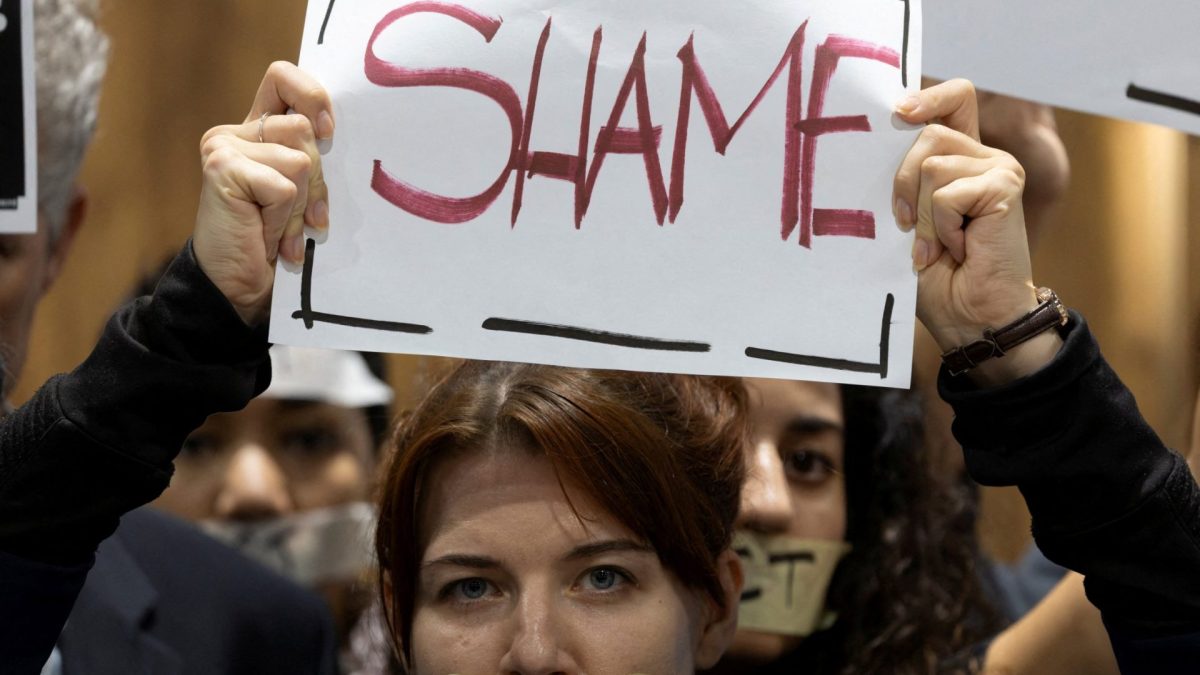
The world is “being held hostage by the petroleum mafia”, said Panama’s environment minister, Juan Carlos Navarro, after yet another United Nations climate summit ended in acrimony. An EU official said oil interests had hijacked proceedings. For years, big oil-producing countries have sounded sincere about the need to tackle climate change while in fact doing all they can to delay and to sabotage. The collapse of the COP31 conference in the Turkish resort of Antalya is not just a diplomatic disappointment. It has real-world implications: it means we’re still on course for a future that’ll become increasingly hazardous as temperatures keep rising. The reason the talks failed? It’s not simply that it’s difficult to get the world to agree on what to do. There’s an uglier explanation: that at the heart of the whole process is a deception. This pattern of lobbying by oil-rich nations has become increasingly blatant and aggressive over more than three decades. Back in 1992 at the Earth Summit in Rio, nearly 200 countries came together to support a new UN convention with a simple objective: to avoid dangerous climate change. It’s there in black and white, in a text endorsed by governments, including petro-giants such as Saudi Arabia, Russia, the US, the UAE and others. They also committed to the prescription: that the world had to “stabilise” levels of the heat-trapping gases that are released by burning coal, oil and gas. Protesters gather during a Gen Z-led demonstration in Cologne, Germany, on Friday, calling for action on social, economic and climate-related issues (Photo: Mouafak Mahmalji/Anadolu via Getty Images)So, on paper at least, everyone supported the basic scientific principle that climate change is not only bad but made worse by using fossil fuels. But right from the start, the oil-rich minority had no intention of sticking by these pledges. Their participation in the convention was in name only. They had a priority, shared with the biggest oil companies, to make sure the world did not turn away from the fuels that their incomes depended on. So they manoeuvred to derail and obstruct. It didn’t matter what had been signed in Rio. At more than a dozen of the UN’s giant conferences, I’ve seen for myself the tactics of trench warfare and how well they’ve worked. It’s why fossil fuels remain so dominant and why the climate is turning so hostile. At my first climate summit – COP11 in Montreal in 2005 – the Saudi delegation objected to a minor point with brilliant timing, just as a second long night of negotiations approached. Then the Russians delayed things, claiming to need approval from President Vladimir Putin – no one believed their line that he couldn’t be reached because he was on a plane. I tried to get some sleep under the table in our TV edit booth. Two years later at COP13 in Bali, the US blocked plans for binding cuts in greenhouse gases. George W Bush, an oilman, was president at the time and his negotiators wouldn’t budge. I’ll never forget the loud booing they faced. Year after year, proposals to reduce fossil fuels and boost renewables – fulfilling the promises made in Rio – have been challenged, scrapped and watered down. Occasionally there have been breakthroughs. In 2015, the COP21 conference led to the Paris Agreement, committing the world to limiting the rise in global temperatures to 2C, or 1.5C if possible. But it only survived intense pressure from the Saudis and others because the agreement did not compel anyone to act: each country could set its own climate targets, with no penalty if they broke them. Another positive step came in Dubai at COP28 in 2023. For the first time in 30 years of negotiations, the final statement mentioned “fossil fuels”. Astonishingly, every previous summit had had to avoid using those words – such was the power of the oil lobby. At the time, I recorded a video saying that this felt like a real shift. I was wrong. The next three summits – including the one in Antalya – dropped the phrase, a win for the petro-states. They have not only been blocking progress: they’ve put themselves in the driving seat of the negotiations. Clever move. The COP29 summit was held in carbon-rich Azerbaijan, whose president described oil and gas as a “gift from god”. At the start of the latest conference, Turkey’s president set the tone by praising the discovery of two big oil fields. But there are twin realities that even the most ardent petroleum lobbyists can’t escape. The effects of climate change are becoming increasingly lethal and visible – more people can see that the threat is genuine and that their leaders are failing to protect them. And the scale of investments in renewables and electric vehicles means that alternatives to fossil fuels have never been so plausible. I reported for The i Paper on the extraordinary rise of the Chinese electric truck. Put together, this means that the most promising initiatives are now emerging from outside the UN’s COP process. Coalitions of like-minded governments are supporting wind and solar power. Individual cities like London and Paris are limiting traffic pollution. Partnerships of companies, scientists and NGOs are working on zero-carbon projects, regardless of whether a climate summit succeeds or not. The UN conferences are the only forum that the world has to talk about climate change so they will continue. But for tangible progress, look beyond them. David Shukman is former BBC News Science Editor and author of The Response: A Story of Fire and Flood in Britain’s New World of Extremes.
The Putin delay tactic that showed me how oil-rich countries are lying to us
Full Article
Original Source
Read the full article at Inews →KhanList aggregates and links to publicly available news content. We do not host full articles from third-party sources. Always verify important information with original sources.