
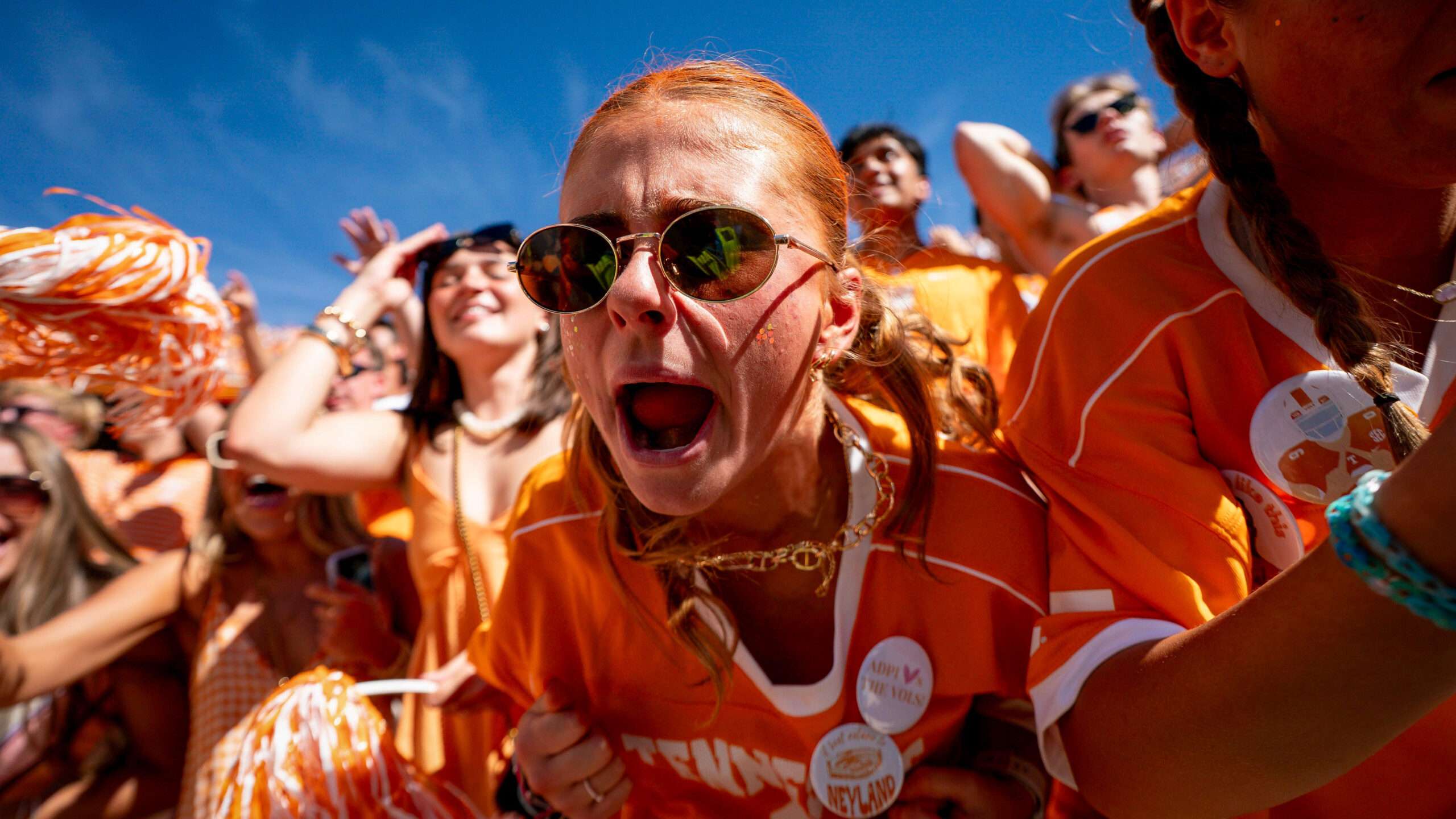
Hello and welcome to another edition of Free Agent! Is your toilet running? Then you'd better go catch it. The Senate passed the Protect College Sports Act late Monday night, so we'll focus on that one last time before some closing thoughts about golf. Don't miss sports coverage from Jason Russell and Reason. Locker Room Links The Irish soccer team nearly boycotted a match against Israel (which was played in Hungary instead of in the Middle East). MLB talked to the Trump administration about hosting a baseball game in a national park, according to The Washington Post. South Korean golfer Tom Kim hopes to win at the Asian Games this week to earn an exemption from South Korea's mandatory military service (apparently four PGA Tour wins is not enough). The National Women's Soccer League is expanding again, with its 17th team based in Atlanta starting in 2028. The United Football League also announced expansion plans for Colorado and Rhode Island in 2027, plus Oklahoma and Utah in 2028. In Week 2, Houston Texans linebacker Azeez Al-Shaair wrote on his eye black the name of a girl in Gaza who was killed by an Israeli airstrike. An NFL official told him he had to remove it or he couldn't keep playing. The NFL also decided Week 2 was the right time to crack down on a bunch of celebrations with fines, often for allegedly drinking fake beers. "Kentucky State center Aminata Seck has been in ICE custody for weeks," says Dennis Young of Front Office Sports. Elsewhere in Reason: "No, Private Equity Isn't Ruining Your Sandwiches, Your Apartment, or Grandma's Nursing Home." Private equity is good, actually! Many thanks to Sen. Rand Paul (R–Ky.) for quoting my earlier work on the Protect College Sports Act during a Senate floor speech and in a Fox News op-ed. "The backers of the bill believe politicians, not the NCAA, should decide how many transfers are allowed. They think politicians, not conferences, should set a compensation cap on how much schools can pay athletes. They think politicians, not athletes and businesses, should get… pic.twitter.com/JpHpmdSH5x — reason (@reason) September 28, 2026 The Senate passed the Protect College Sports Act on Monday, with 77 votes in favor and 22 against (one senator did not vote). The support was mostly bipartisan—50 Republicans voted in favor, plus 27 Democrats. Four amendments were added to the bill—mostly minor changes, but one increased the limit on power conference membership from 19 schools to 20. Sen. Ted Cruz (R–Texas), the bill's main backer alongside Sen. Maria Cantwell (D–Wash.), says he thinks the House of Representatives will come back from recess to vote on the bill before the November midterm elections—and that President Donald Trump could sign it into law during ESPN's College GameDay. That appears to be some extremely wishful thinking from Cruz, with sources telling journalists the House is unlikely to come back from recess just for this, especially in campaign season. In fact, the legislation may not get through the House at all. (Vaguely similar legislation, the SCORE Act, failed multiple times to get a vote in the House due to lackluster support.) If it doesn't pass before 2027, the legislative clock resets and everything starts from scratch again. That's just one reason why there's an urgency behind the bill, and why its Senate backers have been so focused on this for weeks (instead of, say, trying to lower gas prices, claw back tariff power from the president, do something about the war against Iran, or address the long-approaching insolvency of Social Security and Medicare). One of supporters' main claims has been that college sports are descending into chaos, with judges deciding who can play, and the answer seemingly changing by the week. The Protect College Sports Act, backers say, will bring stability and order to the college sports landscape. But, at least in the short term, it's actually going to cause numerous federal lawsuits challenging various parts of the act. Here are parts of the bill that could end up challenged in court: The student-athlete salary compensation cap The cap on agent fees Title IX's intersection with the compensation structure (i.e., the fact that male and female athletes won't make the same amount of money) The eligibility rules, specifically the age limit The eligibility rules, specifically the exemptions The transfer limits The anti-tampering rules around transfers The "Lane Kiffin Rule" banning coaches from leaving midseason The conference membership limit The preemption of state laws on eligibility, under a 10th Amendment state rights argument The preemption of state laws on name, image, and likeness (NIL) payments, under a 10th Amendment state rights argument The preemption of state laws on eligibility, under a Commerce Clause argument The preemption of state laws on NIL payments, under a Commerce Clause argument The delegation of lawmaking-esque powers to the NCAA, College Sports Commission, and conferences So sports fans who are annoyed that judges, instead of highlights, are clogging the headlines will not get a reprieve. The real winners of the Protect College Sports Act? Lawyers. Billable hours remain undefeated. The Protect College Sports Act Sucks, but It Wouldn't Ruin College Sports The average sports fan probably has no idea the Senate just passed what would be the biggest, most invasive sports law in American history. That's fair, I think, because the law shouldn't affect them very much. The Protect College Sports Act is a bad law for all the reasons I've previously mentioned, but it doesn't ruin what makes college sports great. It won't affect whether or not your favorite team plays its rival. It won't keep you, your family, and your friends from tailgating before the homecoming game. It won't stop the Michigan student section from belting out "Mr. Brightside" after the third quarter, or Ohio State's players from putting those dumb, ugly stickers on their helmets (if only!). It won't keep you from singing your alma mater's fight song as you rock your baby to sleep. It won't take away the memory you have of how the bar exploded when your school got the biggest, most shocking win of your lifetime. It doesn't change the feeling of the brisk autumn air on a Saturday morning while you mull the day's football action, or the anticipation of Selection Sunday before you make a bracket that will surely bust. The things that make college sports great were never under threat. They didn't need politicians to protect or save them. The U.S. Almost Completely Blew It at the Presidents Cup Because I am a golf fanatic now, I have some thoughts on the Presidents Cup, in which the U.S. beat the International team 17–13 but almost lost for the first time since 1998. The U.S. team clearly had the better golfers—just look at the head-to-head results from the singles matches, which the U.S. won 9.5–2.5. But as with last year's Ryder Cup, the U.S. was absolutely terrible at team golf. In alternate-shot matches, the U.S. got swept 5–0 on Friday and split 2–2 on Saturday. With only narrow wins in the best-ball sessions, the U.S. had a nerve-wracking 3-point deficit going into the final day. If a few of the narrow singles wins had gone the wrong way, the U.S. would have been looking at a massive embarrassment instead of celebratory beers. (The U.S. has never lost the Presidents Cup on U.S. soil, and while the format has changed, this was the second-worst point total the U.S. has ever had in a home Presidents Cup.) That said, team golf is fun to watch and seems like it should be used more often to draw new fans in. Someone might not know who to root for when they watch the U.S. Open, but if the U.S. has a team playing in the Ryder Cup or Presidents Cup, they know what to do. Once that fan has made a connection to a player, they get invested and want to see him do well in majors and regular tournaments too. Both the PGA Tour and the LPGA should keep this in mind and try to create more international competitions. Fans seem to want team golf—the Presidents Cup doesn't get great ratings since it's usually not very competitive, but this year's early TV ratings seem to be better than usual (weekend TV ratings are not yet available). I am surprised the PGA Tour didn't seem to consider any additional international team golf competitions when planning its recent schedule overhaul. More international team golf competitions would be great. But if U.S. golf teams can't get the right leadership in place who know how to pair the right players together against the right opponents, then more international team golf might lead to more embarrassment for Team USA. Replay of the Week There were plenty of wild plays and big moments in sports this week, but it's my newsletter, and this is my replay of the week (with an honorable mention to Max Scherzer). How can you not be romantic about baseball? pic.twitter.com/SRitybOvCv — Detroit Tigers (@tigers) September 26, 2026 (Oh yeah, he threw great and the Tigers won in a walk-off.) That's all for this week. Enjoy watching the real event of the weekend, the Formula 1 Bahrain Grand Prix (which, naturally, is not in Bahrain).
The Protect College Sports Act Passed the Senate. It Faces a Tougher Road in the House—and in the Courts.
Full Article
Original Source
Read the full article at Reason →KhanList aggregates and links to publicly available news content. We do not host full articles from third-party sources. Always verify important information with original sources.