
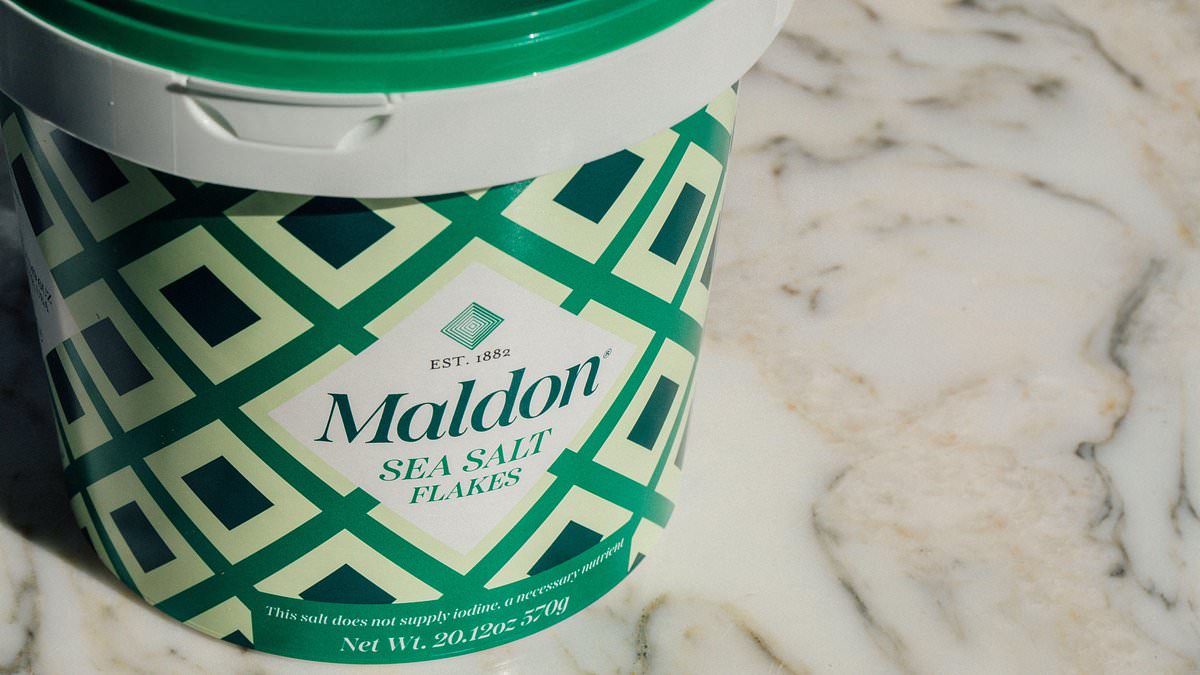
You might think the posh ingredients sitting in your kitchen cupboards are exactly what they claim to be.But after beloved British brand Maldon Sea Salt was revealed to use German rock salt, experts are warning that a host of premium foods may not be quite what they seem.Fancy products including olive oil, manuka honey, balsamic vinegar and avocado oil are regularly bulked out with cheap alternatives.In some cases, shoppers may be paying premium prices for products that contain little of the prized ingredient advertised on the label.This is to help keep production costs down and speed up the manufacturing process, while cashing in on the growing popularity of premium and health–focused foods.Luckily, there are a number of ways to tell whether your products are the real deal. After beloved British brand Maldon Sea Salt was revealed to use German rock salt, experts are warning that a host of everyday foods may not be quite what they seem As reported cases of olive oil fraud reach an all–time high in Europe, experts have revealed the five key signs your olive oil is real Olive oilWhile a healthy splash of olive oil can improve almost any dish, prices of the delightful vegetable oil are at an all–time high.A 500ml bottle of Filippo Berio's extra virgin olive oil now costs around £7.50 – an increase of £3.75 from 2022 – thanks to a series of poor harvests pushing up costs.These rising prices have fuelled a boom in fraud, with some products diluted using cheaper oils or falsely marketed as extra virgin.In extreme cases, investigators have even uncovered batches coloured to resemble genuine olive oil.Professor Maurizio Servili, an olive oil expert at the University of Perugia, told the Daily Mail: 'Olive oil is not a cheap product.'It's easier and more economical to make frauds of an expensive product than a cheap product.'Experts say shoppers should look for 'extra virgin' labels, traceable origins and DOP certification. Proper olive oil has a bitter, peppery taste which is hard to replicate.However viral tests, such as putting oil in the fridge, are unlikely to provide much insight.Manuka honeyPremium Manuka honey can cost upwards of £50 for a jar and owes its reputation to methylglyoxal (MGO), a compound linked to antibacterial activity.But its high price tag has encouraged some producers to dilute it with cheaper honey varieties and syrups. An EU investigation found more than 40 per cent of imported samples showed signs of tampering, with at least one source of additional sugar.Of the ten samples taken from the UK, every single jar was found to be a fake.Ian Campbell of the British Beekeepers Association said: 'Honey is widely considered one of the most adulterated foodstuffs globally.'Honey fraud is international and extensive. It's something of an 'arms race' between testers and those adulterating honey.'Experts warn that social media tests involving water, fire or so–called 'genetic memory' are unreliable, and recommend buying from local beekeepers whenever possible. Researchers at the University of California previously found that 89 per cent of avocado oil–labelled products contained other oils Avocado oilFoods marketed as containing avocado oil may not contain as much of the trendy ingredient as consumers expect.Researchers at the University of California previously found that 89 per cent of avocado oil–labelled products contained other oils.'Consumers are increasingly paying a premium for products made with avocado oil or olive oil,' lead author Professor Selina Wang said.'They deserve to get what they pay for.'The study suggests contamination can occur deep within global supply chains, making it difficult for brands to identify the source of the problem.Sourdough breadTraditional sourdough is made using a live starter culture and can take up to a week to ferment.However, campaigners warn that many supermarket loaves are actually 'sourfaux' products produced in just a few hours using commercial yeast and additives.Shoppers are advised to check ingredient lists carefully, as genuine sourdough should contain only flour, water, salt and starter culture.Balsamic vinegarAuthentic balsamic vinegar is made from concentrated grape must and aged over many years, costing upwards of £200 per 100ml.But cheaper supermarket versions are often blended with wine vinegar, caramel colouring and thickeners.Experts recommend checking the ingredients list, as products containing only cooked grape must are generally closer to the authentic article.The more ingredients listed, the more likely it is to be a mass–produced imitation rather than the real deal.Mazzetti, a maker of balsamic vinegar, said: 'The list of ingredients on the back label of the bottle says a lot about the quality of the final product.'The ingredients are listed by quantity: and as a general rule, more premium Balsamic vinegars are made with more grape must than wine vinegar.' As experts warn that the balsamic vinegar in your cupboard might be a fake, these are the five key signs to tell whether you have the real deal 'Ceremonial–grade' matcha It's the trendy drink every coffee shop whisks up these days, with supermarkets lining their shelves with promises of authentic 'ceremonial–grade' matcha powders.And while the term sounds like a mark of authority, each company can set its own standard of what is required.While 'ceremonial–grade' suggests quality, it isn't tightly regulated in the UK.'Higher–quality matcha can offer more antioxidants, but the label alone isn't a guarantee,' celebrity nutritionist Gabriela Peacock said. 'Colour, freshness and sourcing matter just as much.'Authentic and high quality matcha tea is made from the finely ground powder of green tea leaves specially grown in shade.The texture of high–quality matcha powder is also noticeably fine and silky smooth between the fingers. KombuchaKombucha has become popular because of its probiotic content, but not all bottles offer the same health benefits.Some manufacturers pasteurise the drink to extend its shelf life, a process that kills many of the live microbes consumers are paying for.Researchers warned that pasteurisation 'inevitably kills vast amounts of healthy, friendly bacteria too, cancelling out their health benefits'.To get the real thing, experts recommend choosing chilled products labelled 'raw' and 'unpasteurised'. How to tell if your kitchen staples are the real deal Olive oilLook for the words 'extra virgin olive oil' and the legally required description: 'obtained directly from olives and solely by mechanical means'.Genuine olive oil should taste peppery, slightly bitter and fruity, not bland.Check for a PDO/DOP (Protected Designation of Origin) seal.Bottles that name the grower, harvest region and olive variety are generally more trustworthy.HoneyBe wary of honey that seems unusually cheap.Real honey should have complex floral flavours, not just sweetness.Buy from local beekeepers if you can.Avocado oilBe cautious of processed foods boasting they're 'made with avocado oil', as many contain other oils.Check ingredient lists carefully and look at where avocado oil appears in the list.Products making bold avocado oil claims but sold at bargain prices may warrant extra scrutiny.Pure avocado oil should have a mild, buttery flavour and greenish tint.Buy from reputable brands with transparent sourcing information.Sourdough breadGenuine sourdough should contain just flour, water, salt and starter culture.If the ingredients include commercial yeast, it's often a shortcut version.Look for large, irregular air bubbles inside the loaf.Authentic sourdough typically has a tangy flavour and chewy texture.Balsamic vinegarAuthentic traditional balsamic should list grape must as the key ingredient.A PGI/IGP or PDO/DOP seal offers extra reassurance.Long ingredient lists containing caramel colourings and thickeners can be a warning sign.Real balsamic is usually relatively expensive due to lengthy ageing.If a bottle costs just a few pounds but claims to be premium aged balsamic, be sceptical.KombuchaLook for bottles stored in the chilled section.Labels should say 'raw' and/or 'unpasteurised'.Genuine live kombucha usually has a shorter shelf life.A slight fizz is often a sign the fermentation cultures are still active.'Ceremonial–grade' matchaDon't rely on the term 'ceremonial–grade' alone, as there is no tightly regulated UK standard for what qualifies.High–quality matcha should have a bright, vibrant green colour, not a dull yellow–green or brownish appearance.The powder should feel very fine and silky smooth, rather than gritty or coarse.Look for information about where the tea was grown, with Japanese sourcing often regarded as a sign of quality.Authentic matcha is made from shade–grown tea leaves, which helps give it its vivid colour and distinctive flavour.Premium matcha should taste smooth, slightly sweet and umami–rich, rather than overwhelmingly bitter.Freshness matters, so check for a harvest date or clear sourcing information where available.
The posh foods that aren't what they seem: As Maldon Sea Salt is revealed to use German rock salt, experts reveal the 'premium' kitchen ingredients that could be cheap knock-offs
Full Article
Original Source
Read the full article at Dailymail →KhanList aggregates and links to publicly available news content. We do not host full articles from third-party sources. Always verify important information with original sources.