
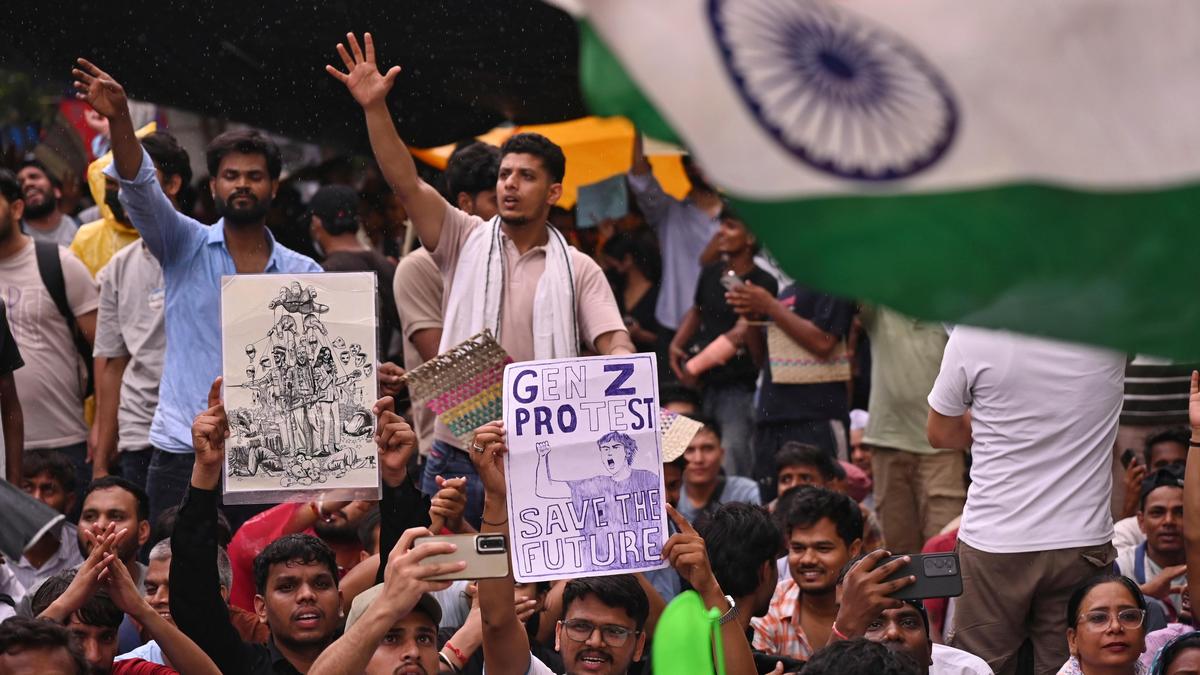
In his Independence day address this year, Prime Minister Narendra Modi declared that his government had eliminated the threat of armed Naxals/Maoists, but added that ‘dimaagi Naxals (brainy Naxals’) remain. These dangerous individuals, he said, had been elevated to policy advisers by his predecessors. Now, they look for opportunities to ‘drag society onto the wrong path’ and ‘steer the nation’s youth’ away from the ‘mainstream effort’ to turn India into ‘a developed nation.’ He asked Indian citizens to ‘identify and isolate’ such individuals among them.Defining the enemyIs Mr. Modi the first leader of a democratic nation to declare thoughts to be crimes, without resort to innuendo or euphemism, in a formal address to the nation? A search for other instances came up empty.But has he not used terms such as ‘urban Naxal’ before? Is ‘dimaagi Naxal’ any different? I believe it is a significant escalation.First, while he has used the term ‘urban Naxal’ in campaign speeches and in Parliament, he has not previously used it in an Independence Day address to the nation.Second, ‘urban’ implies an alleged connection to ‘rural’ Naxals: urban individuals are alleged to be facilitating crimes attributed to Maoist insurgents. The actual charges may be fabricated, and individuals might in fact be criminalised for their ideology, that is, for thought crimes. But the government did not admit this. In this case however, Mr. Modi declared the end of rural Naxals, and then formulated the category of ‘dimaagi Naxals’. It is their ‘dimaag’ alone, cut off from any alleged ties to armed Maoist insurgents, that he declares to be criminal.Had Mr Modi chosen to say ‘Naxali dimaag’ or ‘Naxali soch’ (thinking), it might be taken to mean Maoist ideology. But ‘dimaagi Naxal’ does not identify a specific ideology as dangerous.‘Dimaag’ itself is the deadly weapon. In Hindi/Urdu, dimaag is used to mean the brain, head, mind, consciousness, intellect, and intelligence. To use your dimaag is to ‘use your head’ — that is, to think out of the box, to reason, to think critically, to use your intelligence for resourceful problem-solving.Mr. Modi is notorious for asking Indians to identify terrorists by what they wear – ‘kapde se pehchano’ (Identify/judge someone by their clothes) – a dog whistle for Muslims wearing lungis, skullcaps or hijabs. Now, he is saying ‘dimaag se pehchano’ — identify anti-nationals by how they think.Operation Demonise Dimaag began a decade ago in 2016, with the attempt to incite hatred and violence against Jawaharlal Nehru University students and teachers. For six years the regime has declared student protesters (such as Umar Khalid, Sharjeel Imam, Gulfisha Fatima, Natasha Narwal, Devangana Kalita) to be terrorists, without a trial, without much push-back from the judiciary and the press. Emboldened, it deployed the same tactic against students protesting examination paper leaks, calling them ‘dehshatgarh’ (terrorists). But stretched to such lengths, this tactic snapped — and backfired. It ‘leaked’ the key to the regime’s propaganda codes. All of a sudden, all too many people could see the pattern plainly. The government rewarded mindless obedience, reverence and adulation for Power. Apply your mind, your dimaag, to demand democratic accountability from Power, and it would “identify and isolate” you as a terrorist, an andolanjeevi (parasite feeding on protests), a cockroach.Echoes of an old templateThe timing is telling. Mr Modi is attacking Dimaag when he is still smarting from his debacle at the hands of young students armed only with wit and imagination. He wants to prevent a recurrence. Ironically, since he calls his critics ‘Naxals’ (Maoists), he seems to be embracing the Chinese template for thought crimes.A Chinese Communist Party memorandum, of 2013, warns that Internet forums, “lectures, seminars, university classrooms, class discussion forums, civilian study groups” as well as “open letters and... petition-signings to vocalise requests for political reforms, improvement of human rights” represent a threat to the nation. Why? Because “if we allow any of these ideas to spread, they will disturb people’s existing consensus on important issues like which flag to raise, which road to take, which goals to pursue”.That is what the student protests did: demolish Mr. Modi’s claim to represent a monolithic popular consensus, challenged only by a tiny gang of unpopular critics. That consensus must be restored.Mr. Modi identified ‘dimaagi Naxals’ as the foremost internal threat to national security. Is his plan for “a huge voluntary force of civil defence” intended to deal with them?The examples Mr. Modi cites are unconvincing. Defending refineries from aerial bombardment and banks from cyber attacks cannot be left to ‘civilian volunteers’ — these would need enhanced air defence and cyber-security systems comprising experts. We already have the Civil Defence Act 1968 and the Home Guards to organise civilians for non-combat roles. Is Mr. Modi’s proposal inspired by his ideological gurus from a century ago?In 1931, Dr. B.S. Moonje, Hindu Mahasabha leader and close associate of Rashtriya Swayamsevak Sangh (RSS) founder K.B. Hedgewar, visited Italy to meet the fascist leader Benito Mussolini. Mussolini was notorious for civilian militias such as the ‘Voluntary Militia for National Security’, colloquially known as the Blackshirts, which unleashed violent terror against political rivals, union leaders, journalists and writers. In 1934, Moonje and Hedgewar met to discuss the need for a Hindu-supremacist militia to achieve the “ideal” of “a Hindu as a dictator... like Mussolini or Hitler of the present day Italy and Germany”. In 1935, Moonje explained that his aim was to also militarise Hindu society so as to completely choke off any other expressions of social life — “There will thus be no longer any distinction between the citizen and the soldier, between the civilian and the man in uniform.”In 1939, Moonje expressed the hope that the RSS “might be useful and handy” in the task of preparing such a Hindu-supremacist militia. Who would it fight? Not so much the British Raj or potential Japanese invaders, but “internal enemies” — i.e., Muslims and the Congress wing of the freedom struggle. Moonje specifically visualised a conflict between “the mutually antagonistic and clashing ideologies”, i.e., between “the Rifle” (symbolising the Hindutva militia) and “the Charka” (symbolising Gandhi). Nearly a decade later, Nathuram Godse wielded the Rifle that killed Gandhi.The road aheadToday, a woman who proudly declared herself a ‘fan of Godse’ and said the very name ‘Gandhi’ is like a ‘gaali’ (a swear word), has been elevated to the leadership of the Bharatiya Janata Party’s social media cell. As has a man who used foul abuse against Congress Parliamentary Party chairperson Sonia Gandhi, and the “b****y voting right” for Muslims and oppressed castes as the “root cause” of India’s problems. Meanwhile, online and offline pro-Modi mobs as well as police are hounding student protesters, especially girls and women. The pretext is that the students, as a last resort, raised profane slogans at Mr. Modi himself, which turned out to be the only thing to move him to remove his corrupt Minister.Will these mobs, together with the moral policing mobs and the anti-Muslim lynch mobs, be elevated to the ranks of Mr. Modi’s ‘civilian defence force’? This is a real danger, given that his supporters believe he is the ‘Hindu Hitler’ of Moonje’s and Hedgewar’s dreams.Kavita Krishnan is the author of ‘De-democratisation, A Global Story: Script, Actors, Enablers’
The politics of calling minds ‘Naxal’
Full Article
Original Source
Read the full article at Thehindu →KhanList aggregates and links to publicly available news content. We do not host full articles from third-party sources. Always verify important information with original sources.