
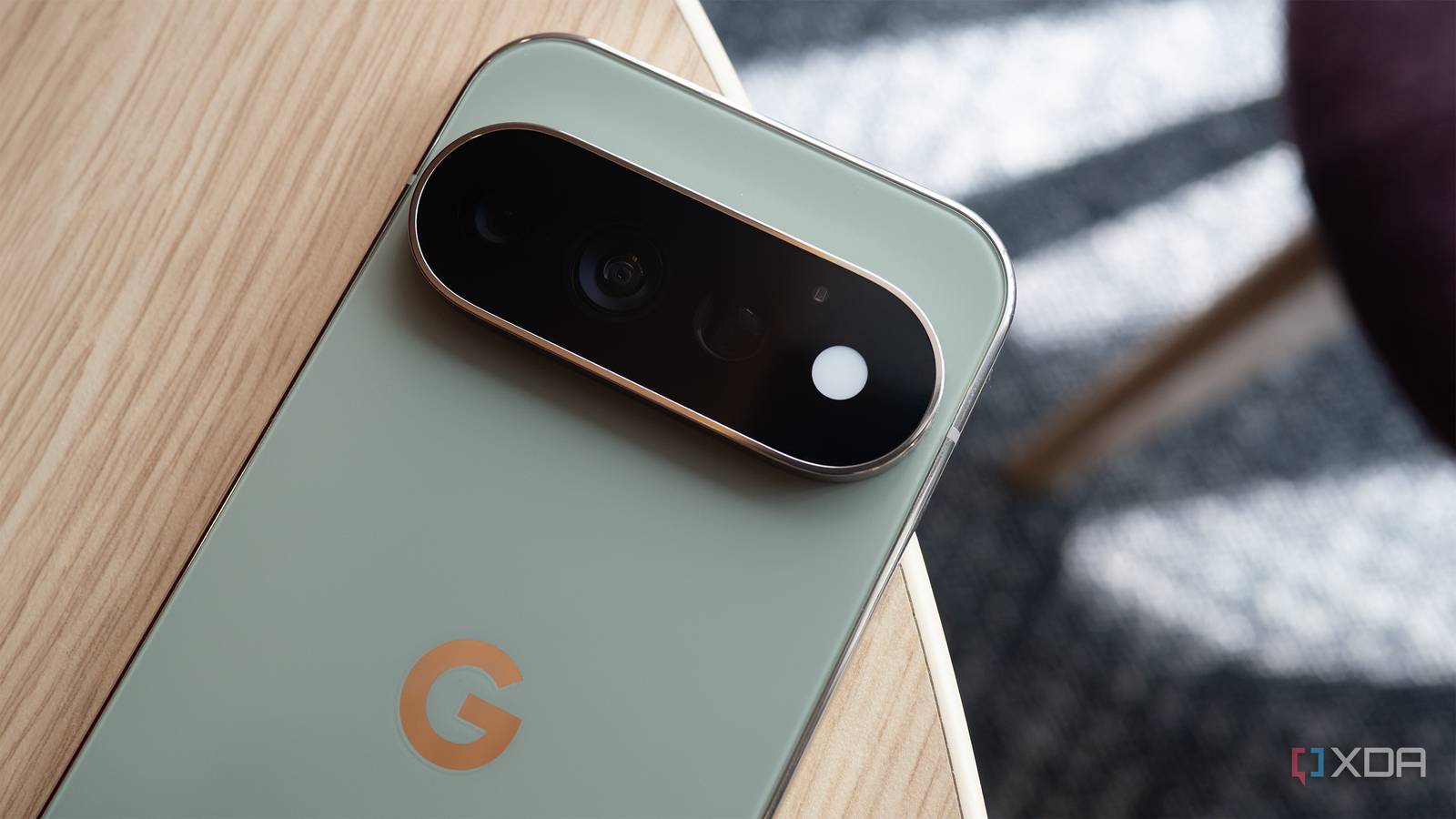
Published Aug 12, 2026, 10:10 AM EDT Patrick O'Rourke is XDA's News Editor and Entertainment Segment Lead. Previously, he was Pocket-lint's Editor-in-Chief, the Editor-in-Chief of Canadian tech publication MobileSyrup, and earlier in his career, he worked as the technology editor at the Financial Post and Postmedia. He's based in Toronto. Over the past 15 years, he's written thousands of articles. Patrick has also interviewed dozens of tech industry executives and covered GDC, E3, Gamescom, WWDC, Apple keynotes, Samsung Unpacked events and more. Patrick has a BA in journalism from Toronto Metropolitan University. Sign in to your XDA account Like clockwork, Google is rolling out its Pixel 11 series in late August, including the base Pixel 11, the Pixel 11 Pro/Pixel 11 Pro XL, and the Pixel 11 Pro Fold. Across the lineup, there are several familiar upgrades, like a flashy redesigned camera bar with edge-to-edge glass, fresh and vibrant new colors, and the Tensor G6 chip, but for the most part, none of Google's smartphones are a dramatic upgrade over their predecessors, both in terms of design and specs. However, there is one key feature that's caught my attention with the Pro devices: HiLight. Borrowing a page from Nothing's Glyph Interface, an array of ambient LED lights built around the rear camera's flash offers visual cues related to notifications and specific contacts when the Pixel 11 Pro, Pixel 11 Pro XL, and Pixel 11 Pro Fold are face down. You can set specific colors to appear when certain contacts message or call you, offering glanceable, timely notifications you can easily triage. The HiLight light also lights up when you're interacting with Gemini and the phone is face down. To be clear, I haven't used HiLight myself yet, and I've only watched it in action briefly (Google didn't offer the chance to try it out at its preview event). Still, I feel like the feature holds a lot of promise, especially if you're like me and looking to disconnect from your smartphone more, but still want to know when notifications come in from specific contacts. I'm looking forward to testing HiLight to see if it's actually useful when I get my hands on Pixel 11 Pro review units. There's also the new Tensor G6 chip across the entire lineup. Google says it offers 25% faster web browsing and 15% quicker app launching. The tech giant also claims that the new chip offers 50% more TPU compute with the latest Gemini Nano Model. Coupled with the Tensor G6 is the new M3 Titan security chip, which is also featured across the entire Pixel 11 lineup. Despite Google's lofty claims, will the Tensor G6 benchmark above Qualcomm's Snapdragon 8 Elite Gen 5? Probably not. Is that going to frustrate anyone really into smartphone specs? You bet. At the same time, I doubt the Tensor G6 will suffer from any significant slowdown issues under real-world performance, making it not that big of an issue since smartphone chips are already ridiculously powerful for what most people do with their devices. I'm more interested in potential improvements in thermal performance and battery life offered by the G6. Additionally, new Camera Looks, which seem to be Google's take on Apple's Photographic Styles, are available across the entire Pixel 11 series lineup. I really like this feature with my iPhone 17 Pro, so I'm interested in how Google handles image processing at the sensor level with the Pixel 11 line. Lastly, all Pixel 11 series devices now feature Qi2.2, an upgrade from last year's Qi2 that features wireless charging speeds of up to 25W. With all of that out of the way, let's take a look at what's actually new this year with each of Google's Pixel 11 series devices (spoilers: there isn't much). I briefly tried out the Pixel 11 series' upgraded cameras at Google's hands-on event, but I didn't spend enough time with any of the devices to determine if the camera sensor quality upgrades are as substantial as Google claims. I'll have more on the smartphones' camera performance in my upcoming coverage of the Pixel 11 series. There's also a slew of new software features like a built-in teleprompter app and Magic Capture, which combines both photos and videos to create short, shareable clips. I watched both features in action, and while they look useful, I didn't get to try them for myself. The Pixel 11 Pro and Pixel 11 Pro XL feature blindingly bright displays There's also a "redesigned" telephoto camera As far as the 6.3-inch Pixel 11 Pro and the 6.8-inch Pixel 11 Pro XL are concerned, it feels like there's barely anything new. First off, storage now starts at 256GB, a bump up from last year's 128GB. Additionally, to get 16GB of RAM this year, you'll need to go for the 512GB or 1TB model, with the 256GB storage configuration featuring only 12GB of RAM. This is a disappointing downgrade given that last year all storage configurations offered 16GB of RAM — I guess the RAMpocalypse has claimed yet another victim. On the plus side, the display is brighter at 3,600 nits, an increase from last year's 3,300 (in person, the Pixel 11 Pro's screen looks ridiculously bright). Google claims that there's a new anti-scratch coating that makes the Pixel 11 Pro's display more scratch-resistant, though of course, I didn't test this out at Google's hands-on event, so I'll need to take Google's word on that one. The key upgrade this year seems to be that the phone offers 120x Pro Zoom thanks to its "completely redesigned" f/1.7 48-megapixel telephoto camera with a larger 1/1.95-inch sensor. Google also claims that the main f/1.68 50-megapixel camera sensor has been improved, too. On the design front, the new camera island features glossy aluminum sides that match the phone's equally shiny edges, while the Pixel 11's camera bump has matte edges. I prefer the latter option because it's a little more subdued. Other than these changes, the Pixel 11 Pro and Pixel 11 Pro XL feel like a very minor improvement over last year's Pixel 10 Pro and Pixel 10 Pro XL, despite feeling like overall solid smartphones during my brief hands-on time with both devices. The Pixel 11 Pro and Pixel 11 Pro XL are available in Canyon, Olive, Fog, and Obsidian. One thing worth noting is that Obsidian features matte black edges, a first for the Pro series, which usually only includes glossy edges (the Obsidian Pixel 11 Pro Fold also features matte sides to match its matte back). Since I hate fingerprints on my phones, I'm a fan of this change, and it would definitely make me more strongly consider the more subdued color option. This year, the Pixel 11 Pro starts at $1,100, and the Pixel 11 Pro XL starts at $1,300, marking a $100 increase over last year's phones. Both devices are available to pre-order now and release on August 20th. Pixel 11 Pro Brand Google SoC Google Tensor G6 Display 6.3-inch Super Actua display RAM 12 or 16GB Storage 256GB, 512GB, or 1TB Battery 4850 mAh Ports USB-C 3.2 Dimensions 6.0 in (height) x 2.8 in (width) x 0.3 in (depth) Weight 7.2 oz IP Rating IP68 Colors Canyon, Olive, Fog, Obsidian Operating System Android 17 Display dimensions 20:9 Display resolution 1280 x 2856 Wi-Fi connectivity Wi-Fi 7 Bluetooth Bluetooth v6 Year of release 2,026 The Pixel 11 features a redesigned main camera sensor I really like the new Pistachio color Then there's the new base Pixel 11. The phone features the same 6.3-inch OLED display, 12GB of RAM, and overall look as the Pixel 10. A key difference on the specs side is the new starting storage of 256GB, an increase from 128GB. Google also says the phone's main f/1.7 48-megapixel 1/1.56 sensor is capable of gathering 56% more light. Additionally, the f/3.1 10.8-megapixel telephoto lens can now handle up to 5x optical zoom (30x Super Zoom), which is impressive for an entry-level phone's camera. The rest of the phone's camera specs appear to be identical to the Pixel 10's, though. Similar to the matte aluminum sides, the redesigned camera island also has matte edges. I prefer this look to the Pixel 11 Pro's glossy camera bump. During my brief hands-on time with the Pixel 11 at a recent Google preview event, the smartphone felt solid and well-made, just like the rest of the Pixel 11 series. I'm particularly fond of the new green-like Pistachio color — it pops in a really fun way when you hold it in your hand. Beyond that, there aren't many upgrades this year for the Pixel 11. This year's colors include Frost Pistachio, Hibiscus, and Obsidian, complete with color-matched matte sides. Pricing starts at $900, which is a $100 price hike over last year's Pixel 10. The phone is available to pre-order now and releases on August 20th. Pixel 11 Pro Brand Google SoC Google Tensor G6 Display 6.3-inch Super Actua display RAM 12 or 16GB Storage 256GB, 512GB, or 1TB Battery 4850 mAh Ports USB-C 3.2 Dimensions 6.0 in (height) x 2.8 in (width) x 0.3 in (depth) Weight 7.2 oz IP Rating IP68 Colors Canyon, Olive, Fog, Obsidian Operating System Android 17 Display dimensions 20:9 Display resolution 1280 x 2856 Wi-Fi connectivity Wi-Fi 7 Bluetooth Bluetooth v6 Year of release 2,026 The Pixel 11 Pro Fold is 1mm thinner and 10% lighter than last year Google's foldable offers a few minor upgrades over its predecessor By now, you might be noticing a theme, and of course, that continues with the Pixel 11 Pro Fold, yet another phone that doesn't have a lot of upgrades over last year. Still, there's an argument to be made that Google's foldable has more new features than the rest of the Pixel 11 lineup. First, Google says that the Pixel 11 Pro Fold is 3x more durable than the Pixel 10 Pro Fold, which, given how fragile foldables can be, is definitely a good thing. Other upgrades include being 1mm thinner and 10% lighter than its predecessor (when actually holding the foldable, I didn't notice much of a difference). Like the Pixel 11 Pro, the Pixel 11 Pro Fold features notably brighter inner and outer displays that hit 3600 nits of peak brightness. In person, the brightness level is pretty blinding, just like it is with the Pixel 11 Pro. The foldable also starts at 256GB of storage and features 16GB of RAM. Lastly, the Pixel 11 Pro Fold features a sensor upgrade with its f/1.7 48-megapixel lens, allowing it to pull in 56% more light, along with support for 30x Super Zoom with its telephoto lens. Some aspects of the Pixel 11 Pro Fold's overall design features feel a bit dated at this point, especially compared to the sleek-looking Galaxy Z Fold 8, including its sizable bezels, noticeable foldable display crease, and somewhat plastic-feeling glass screen. While the foldable generally feels solid and looks great, to continue to compete with Samsung, Google will really need to step up its game next year with the Pixel 12 Pro Fold because this design will look very dated next year. The Pixel 11 Pro Fold is available in Obsidian and Olive, and starts at $1,900. Like the rest of the Pixel 11 lineup, the Pixel 11 Pro Fold is available to pre-order now and releases on August 20th. Pixel 11 Pro Fold Brand Google SoC Google Tensor G6 Battery 4750 mAh Ports USB-C 3.2 Dimensions 6.1 in (height) x 3.0 in (width) x 0.4 in (depth) folded; 6.1 in (height) x 5.9 in (width) x 0.2 in (depth) unfolded Weight 8.4 oz IP Rating IP68 Colors Olive, Obsidian Operating System Android 17 Wi-Fi connectivity Wi-Fi 7 Bluetooth Bluetooth v6 Cover display 6.5-inch Super Actua display Interior display 8-inch Super Actua Flex display Google also revealed the Pixel Watch 5 and AirTag-like Pixel Tag Bluetooth tracker. XDA will have more on the Pixel 11 series in the coming days.
The Pixel 11 series is full of expected upgrades, but one new feature stands out to me
Full Article
Original Source
Read the full article at Xda-developers →KhanList aggregates and links to publicly available news content. We do not host full articles from third-party sources. Always verify important information with original sources.