I pass a mother heaving in grief while her son’s heart monitors flatline. It is the last time she will ever hold his hand. For me, this is another day on call in the intensive care unit as a pediatric physician. For her, this is the day her life shatters.Later that night, a striking, charismatic surgeon from work treats me to an exquisite meal. Served outside a trailer, humidity barreling through our scrubs, the food is neither extravagant nor decadent. It is, however, the most succulent Texas barbecue brisket I will ever taste. This is the night I rest my head on his shoulder and he doesn’t flinch. This is the night an “us” was born.A shared humanity links doctors and chefs. We both craft life’s most tender moments. Some will ricochet off your brain for years, dull with ache. Others will leave you heady, craving more. The television series The Pitt has garnered well-deserved praise for its excellent depiction of an emergency room staff battling insurance companies, mass shootings and mental health crises. In fact, I was one of many healthcare providers who shared my insight for The Pitt, and consulted to help craft narratives true to reality, so I deeply respect its advocacy for destigmatizing mental healthcare for physicians.And yet, I have never been more convinced that The Bear is actually the reigning television show for accuracy in its depiction of hospital medicine. From the delayed gratification of abusive, humiliating training to the chaotic intensity of its work-hard-play-hard ethos, training for chefs is, in many ways, comparable to physician pedagogy. Both professions spend infinite hours mastering minutiae no one will ever discern. Both lose themselves in the relentless pursuit of precision, and in their dedication to service, an art form few will appreciate.We inhabit two of the last true apprenticeships, marred by years of exploitation, insults and chronic sleep deprivation. It is the perfect recipe for both professions to suffer from disproportionately higher rates of depression, anxiety, addiction, and even suicide. On The Bear, Jeremy Allen White’s Carmy once described his former boss at an elite restaurant as: “Very, probably, mentally ill. Dead inside. Cold. Never turns it off. Accomplishes more by 10am than most people do in a lifetime. I don’t think he sleeps. I don’t think he eats. I don’t think he loves.” Ask any doctor about their most feared mentor in residency, and they’d sputter these words out with the same cadence.In one scene, this boss berates his employees for their slowness and orders them to repeat: “Chef, I’m so tough,” while he taunts: “You are not tough ... You are talentless … You should be dead.”It brought to mind the first day of gross anatomy class in medical school. One of our professors joked that if we were to attempt suicide, as many doctors do, that we should at least not shame the profession by surviving. They would gladly show us on a cadaver how to “do it right” so at least we weren’t total failures.We – doctors and chefs - dissolve into our professions chasing illusions of perfection. For me, it is the chance to save your life or to assuage your pain. For a chef, it is the hope that the couple who got engaged at his restaurant retells their proposal story breathlessly for years to come, that he enshrined that memory with the tenderness it deserves.While The Pitt is what you might desire from your ideal physician, it’s the frenetic back-of-the-house pulsing turbulence in The Bear that I recognize. The audience gets glimpses of the staff’s camaraderie, which, similar to hospitals, is airtight. These are the only people who truly comprehend the grueling mess it takes to make this look this easy.I remember one night in the ER, a child had been brutally beaten and was dead on arrival. I meticulously washed matted blood from her hair, cloaked her in a hospital blanket and tried to restore some of her dignity. I gave her body, cradled, to her mother, where she lay one last time. And then I hurried along. My next patient was already angry about the wait. This is the raw reality that public-facing professions grapple with. Whether we are wearing scrubs or chef’s uniforms, we serve as punching bags; society has license to exorcise its demons onto us.But The Bear is not only an exacting look in the mirror – not just the mental health woes, not just life’s most dramatic days. It is also a celebration of the joy of the ordinary, luxuriating in the perfect bite. The Bear gets even the most cynical of us to revel in the purest of humanity: offering comfort to another human, hoping that our presence will make their pain more bearable in some way. We show up for life’s most gutting times, but also at its most promising: the moment a baby’s first cry reverberates, or just as the candlelight across the table flickers ever so gently. Food, when done right, offers healing too.The Bear also captures the intimacy of a shared language and bodily familiarity unspoken amongst both doctors and chefs. After working decades alongside one another at godforsaken hours of the night, we know each other’s eyebrow arch. We recognize a vocal tremor infinitesimally longer than it should be. We pick each other up when we fail. We have no choice. It’s a bond borne of collective fatigue, and one of sharing abject frustration and sacred silences in the same day.As for my handsome surgeon, he would later ask me to meet him at a Michelin starred restaurant. I would get my hair done and wear lace. An hour and two glasses into the evening, I would take off my heels as the waiter asked me if I wanted to call it a night. I don’t remember much about that relationship, unceremoniously pronounced dead when he stood me up that night. But I will never bid goodbye to the exquisite flavor of that Texas brisket, which remains a glimmer of magnificence in an otherwise harrowing day. My memories return far more to the taste of that barbecue than to the taste of his kiss, so all things considered? Worth it. Seema Jilani is a pediatric hospitalist who has treated critically ill children on medical evacuation flights. Her humanitarian work has taken her to Afghanistan, Lebanon, Syria, Iraq, Ukraine, Bosnia, Gaza and the West Bank, and on refugee rescue boats off the coast of Libya. Her radio documentary, Israel and Palestine: The Human Cost of the Occupation, was nominated for the Peabody Award
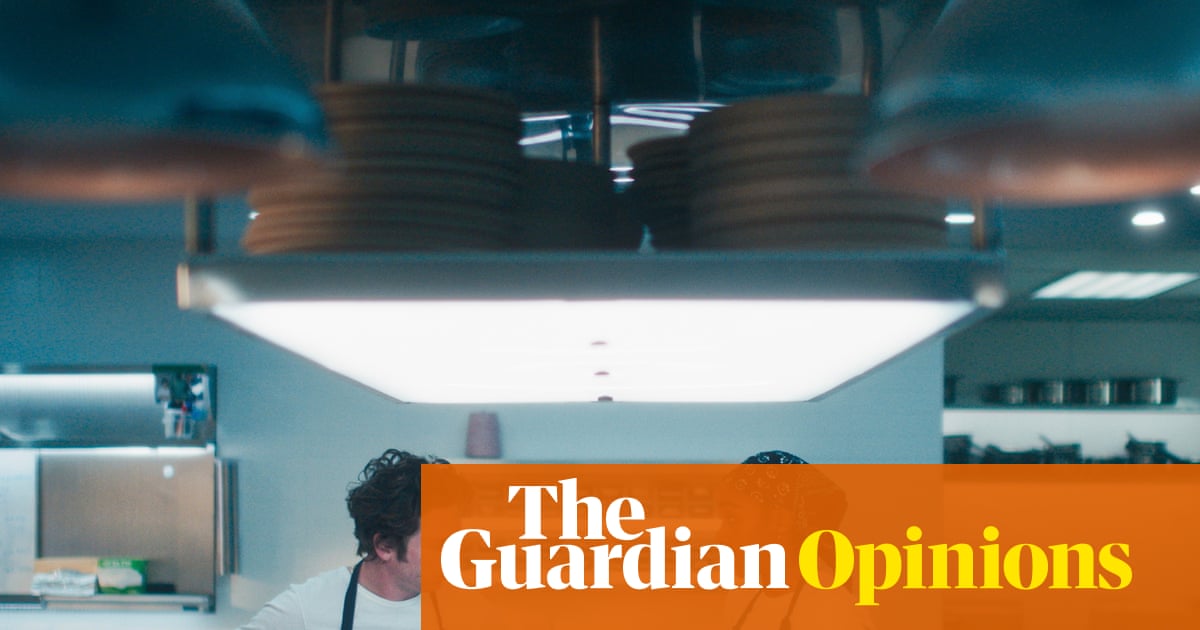
The Pitt is powerful – but it’s the rawness of The Bear that truly portrays hospital work
Full Article
Original Source
Read the full article at Theguardian →KhanList aggregates and links to publicly available news content. We do not host full articles from third-party sources. Always verify important information with original sources.