
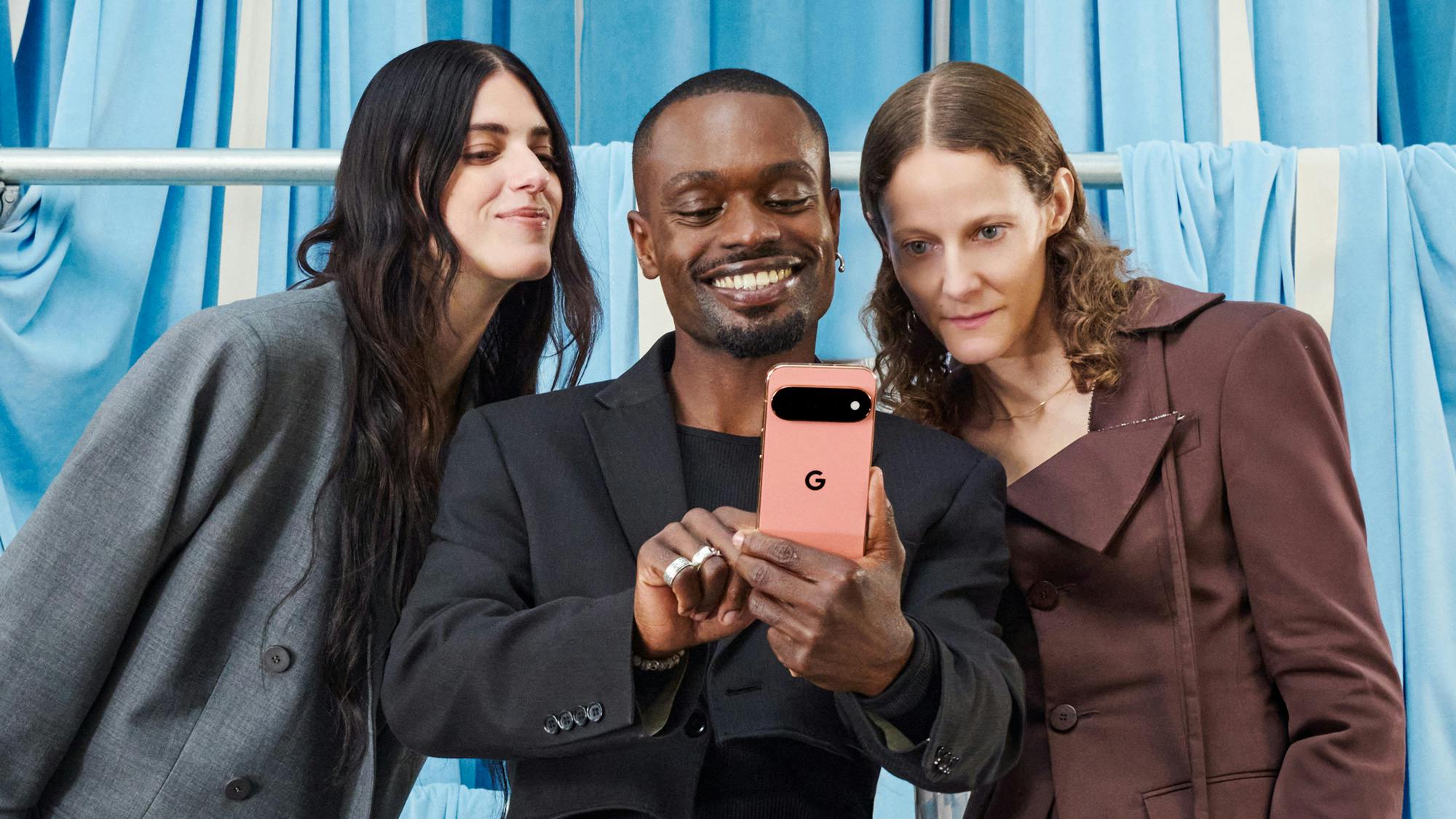
Fashion never stands still for long, and neither did the people making it. Between designing collections, building businesses and keeping up with the constant demand for new imagery, independent creatives had plenty on their plates. Launched earlier this year, The Pixel Institute of Fashion and Technology (PIFT) set out to give some of the industry's most distinctive talents new ways to tackle those challenges. Launched by Highsnobiety and Google Pixel, the year-long programme brought together a cohort of some of the most exciting designers on the scene to explore what happens when fashion meets technology in the middle of the creative process.And here at the intersection of fashion, technology and independent thinking, the first class of PIFT has spent a demanding academic year putting new ideas to the test. Now, their final projects are ready to take centre stage.This spring, PIFT made its debut during Milan Design Week, setting the tone for a program built around experimentation rather than instruction from the sidelines. The event introduced the Class of 2026 and offered a first look at the thinking behind the initiative.But Milan was only the start of a demanding but rewarding academic year. Afterwards, our fastidious students developed individual assignments rooted in their own creative practices. Each brief presented a different challenge, from rethinking the construction of an everyday object to pushing a visual identity into unfamiliar territory. Google Pixel, Gemini, Deep Research, and Nano Banana became critical working tools throughout the process, helping the designers research, develop, test and communicate their ideas.In November, the fruits of their labor will be presented at an event at Highsnobiety's UDL location, where the students' completed assignments will be brought into the real world. Ahead of that gathering, the projects offer a closer look at how the Class of 2026 approached the brief and what happened when established creative habits met new possibilities.Highsnobiety, HighsnobietyFor Matthias Schweizer, co-founder of OBS, the assignment began with a change in materials. Until now, the brand's bags had been made entirely from leather. This time, the challenge was to develop a new design that combined leather and textiles in a functional construction. The project resulted in OBS's first bag made from heavy cotton canvas, following experiments with different materials, shapes, dimensions and details. For Schweizer, the most rewarding moment came when an idea became a physical sample. “That’s when you can really see if a design works, how it feels on the body and whether it serves its purpose,” he says. Gemini and Nano Banana help Schweizer move between digital exploration and physical development, opening up different routes for a product that needs to work beyond the screen. The exercise brings a new material language into the OBS studio while keeping the practical demands of bag design firmly in view.Highsnobiety, HighsnobietyLou de Bètoly takes a different route, focusing on the world surrounding her accessories and clothing. With e-commerce and social media playing an increasingly important role in how independent labels present themselves, her assignment looks at ways to make that world more engaging. Using Pixel, Nano Banana and Omni, she explores surreal visual scenarios in which mannequins break out of their usual stillness. A figure might suddenly strike a yoga pose, a gust of wind might catch their hair. The familiar language of product imagery became something stranger and more exciting, with movement and unexpected gestures giving the collection a new digital life. For de Bètoly, the appeal of working with Pixel also lies in its portability, noting “it’s so nice to work with a small tool that is professional and fits in your pocket.” Highsnobiety, HighsnobietyFor Lukas Krob, the starting point was a single flower. Its shape and details informed the development of a dress, with Gemini and Nano Banana helping him test different silhouettes before deciding which prototype deserved to move forward. The process allows him to explore several interpretations of the same natural reference without losing sight of the garment itself. Rather than treating the initial idea as a fixed destination, Krob uses digital mock-ups to investigate how it might translate into a final piece. The project also helped him see how AI could complement his hands-on approach to design. “In the beginning, I was hesitant about using AI in my workflow because I’m very hands-on,” he explains. “Once you trust the process, you’ll learn where and how to use it properly.”Highsnobiety, HighsnobietyOttolinger's Christa Bösch and Cosima Gadient turned their attention to an established signature. The Berlin-based label's mesh T-shirt provided the foundation for a new iteration intended for an upcoming collection. Their assignment centred on pushing a single Gemini prompt through repeated rounds of experimentation to develop the shirt's print. Each adjustment offers another possibility, giving the designers a way to explore how a familiar piece could evolve without abandoning the visual codes that made it recognisable. Working with Google Pixel and Gemini, they prompted, edited and reworked images directly on their phones before translating the results onto mesh. The process brought an unexpected element of collaboration into the studio, as the designers discovered that prompting could become a conversation in its own right. “The best results came when we stopped trying to control it and let it surprise us.”Highsnobiety, HighsnobietyChet Lo approached the development of his Fall/Winter 2026 collection through Deep Research in Gemini. Research had always been central to his process, with small, seemingly unrelated observations often providing the starting point for a new body of work. This season, those sparks came from shadows cast by blinds and the colour palettes of 1980s anime. Using Deep Research, Lo was able to investigate these references in greater depth, with Gemini exploring relevant sources across the web, identifying connections and synthesising its findings into a detailed research report. The results gave him a more developed foundation for his next capsule collection, helping him move from initial visual cues towards a clearer creative direction.Across these projects, the assignments reflected the range of questions facing contemporary fashion creatives. Product development, digital storytelling, material experimentation, print design and research each demanded a different approach. There was no single formula to follow, and the technology took on a different role in every studio. What connected the projects was the opportunity to test ideas quickly, explore alternatives and carry creative decisions into new territory.That was the promise behind PIFT from the beginning. Fashion education rarely ends at the point of making something beautiful. Designers also need to understand how to present their work, build an audience and turn creative ambition into sustainable businesses.Now, with a year of experimentation behind them, the Class of 2026 is preparing to show just how much PIFT has impacted their respective practices. Their assignments reveal five distinct approaches to a shared challenge: finding new ways to make, develop and communicate fashion without losing the ideas that made each practice individual in the first place.Follow our channels for a closer look at each student's assignment as the projects unfold, and stay tuned for the grand finale of an incredible year at PIFT.Your Highsnobiety privacy settings have blocked this Vimeo video.
The PIFT Class of 2026 Has Something To Show You
Full Article
Original Source
Read the full article at Highsnobiety →KhanList aggregates and links to publicly available news content. We do not host full articles from third-party sources. Always verify important information with original sources.