
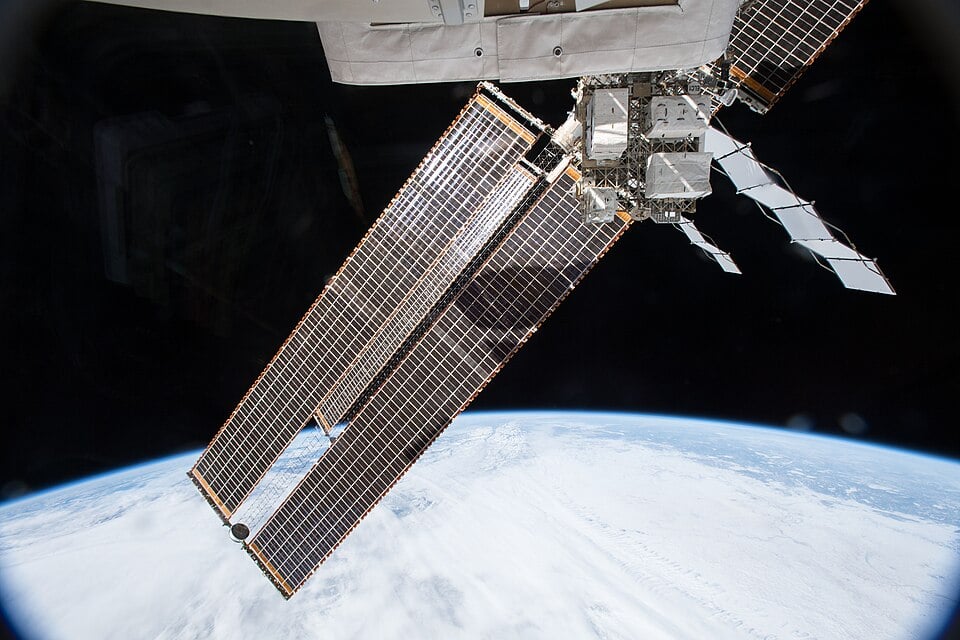
Basing entire business plans on back-of-the-envelope calculations might not seem like the best idea. However, according to a new paper available in preprint on arXiv by Dr. Slava Turyshev of NASA’s Jet Propulsion Laboratory, that is precisely what the companies touting orbital AI data centers are doing. While on paper, the math looks good, the physical constraints of actually utilizing all the processing power and free energy of the Sun that orbit provides is prohibitive in a number of ways - and it will be a long time before we have the technology to truly capitalize on the advantages of space-based AI. First, let’s dig into what the back-of-the-envelope calculations say. Research from Lawrence Berkeley National Laboratory suggests that U.S.-based data centers could consume 580 terawatt-hours of electricity over a five-year window, an increase of around 17-46 gigawatts compared to modern levels. But land-based data centers are running into plenty of bottlenecks, from newly elected hostile politicians to hard caps on the electrical grid’s ability to supply all that additional power. So the solution seems obvious - launch the data centers into orbit, where they will be beyond any individual NIMBY protesters, have access to essentially unlimited free solar power, and not have to deal with water cooling systems. Sounds pretty good. Until the actual physics of what that means comes into play. Fraser addresses the idea of data centers in space. There are three main physics hurdles that all culminate into a giant economic one facing data centers, and it all comes down to scale. Size and weight are the first major obstacle. Dr. Turyshev uses a baseline 1-megawatt orbital processing facility as an example. It would hold roughly the processing power of a small commercial server room. But in space it would require 5,640 square meters of deployed solar panels, even in a “dawn-dusk” orbit designed to minimize the time it spends in Earth’s shadow. That’s roughly the size of an American football field. On top of that, the spacecraft would need around 2,500 square meters of radiator panels to stop the electronics from frying themselves. Combining the power generation and cooling equipment required would already bring a spacecraft up to 30 metric tons. Adding in structural trusses, control thrusters, and radiation shielding brings the total mass of 1 MW of orbital data capacity is likely between 34 and 59 metric tons. For the purposes of practicality, Dr. Turyshev then drops down to a 100 kW center, since a 1 MW data center would not even fit in many modern rocket fairings. Arguably, since each 100 kW data center wouldn’t be exactly 10% of the weight of a 1 MW data center, he uses a rough estimate of around 5 metric tons for a single spacecraft of that size. The problem is, to keep up with demand, we would need to launch between 170,000 and 461,000 of them over the course of five years. And each Falcon 9 can only launch at most four of them. That would require almost 9,000 Falcon 9 launches over the next five years - or roughly 33 of them per week. Fraser talks about turning the Moon into a data center. Even if we had the launch capacity for that sheer scale, there is another bottleneck to contend with - getting the data back to Earth. As we reported earlier this week, we’ve made great strides in high-speed optical communications down from orbit lately. However, the headline number of 200 gigabits per second is a single point in time. These “high speed” links realistically deliver around 13 to 26 gigabits per second continuously, in part because they require a direct line of sight to the ground station they’re communicating with, and they also can’t communicate through clouds. Even if we flooded major parts of the Earth’s surface with ground stations, those speeds would severely hobble any interactive cloud apps or data-heavy training runs that require continual syncing with anything on the ground. But even if we solved the communications problem, there’s still the problem of that omnipresent menace in space - radiation. Cosmic rays are famous for flipping single bits in computer memory, constantly forcing processors to run error-checking algorithms, and thereby eating into usable computer time. According to the paper, over a five-year mission, the cumulative radiation damage and micrometeoroid impacts would continually degrade both the electronics and solar panels, driving up the cost of every calculation completed. With all that in mind, the economic hurdle becomes very clear. On Earth, a high-end AI data center costs between $10,000 and $40,000 per kilowatt of computing capacity. In order for a 40-kilogram per kilowatt orbital satellite to match that pricing, it would need combined launch and manufacturing costs of between $250 and $1,000 per kilogram. For comparison, current dedicated Falcon 9 launches work out to roughly $3,360 per kilogram. So the launch cost alone is three to thirteen times more expensive than the entire combined launch and manufacturing cost of a single data center. Video from Astraveo arguing the same physics as what Dr. Turyshev talks about in the paper. Credit - Astraveo YouTube Channel With all that said, there are some niche applications for orbital computing in the near future, according to the paper. The first is space-native processing, where satellites crunch the raw imagery for Earth-observation satellites or sensor data before broadcasting high-value insights back down to Earth. Another is communications-based edge computing, where processors piggyback on existing constellations like Starlink that already pay for solar arrays, lasers, and ground stations. But ultimately, despite this paper, various organizations are moving forward with their plans for data centers in orbit. Even today (November 25th) the FCC approved SpaceX’s application to launch one million “Starmind” orbital data centers by 2040. Earlier this month, Google booked a flight on a Blue Origin rocket for a test of its Project Suncatcher computing constellation. Until the real economics of the situation catch up with them, it might be a while before these efforts realize what hard physical limits they’re going up against. Learn More: S. G. Turyshev - Orbital Data Centers: Spacecraft Constraints and Economic Viability UT - Elon Musk Lays Out a New Vision of AI Satellites as SpaceX Acquires xAI UT - Could We Put Data Centers In Space? UT - Space Lasers Are Fast, But Clouds Still Rule the Forecast
The Physics Wall Facing Orbital AI Data Centers
Full Article
Original Source
Read the full article at Universetoday →KhanList aggregates and links to publicly available news content. We do not host full articles from third-party sources. Always verify important information with original sources.