
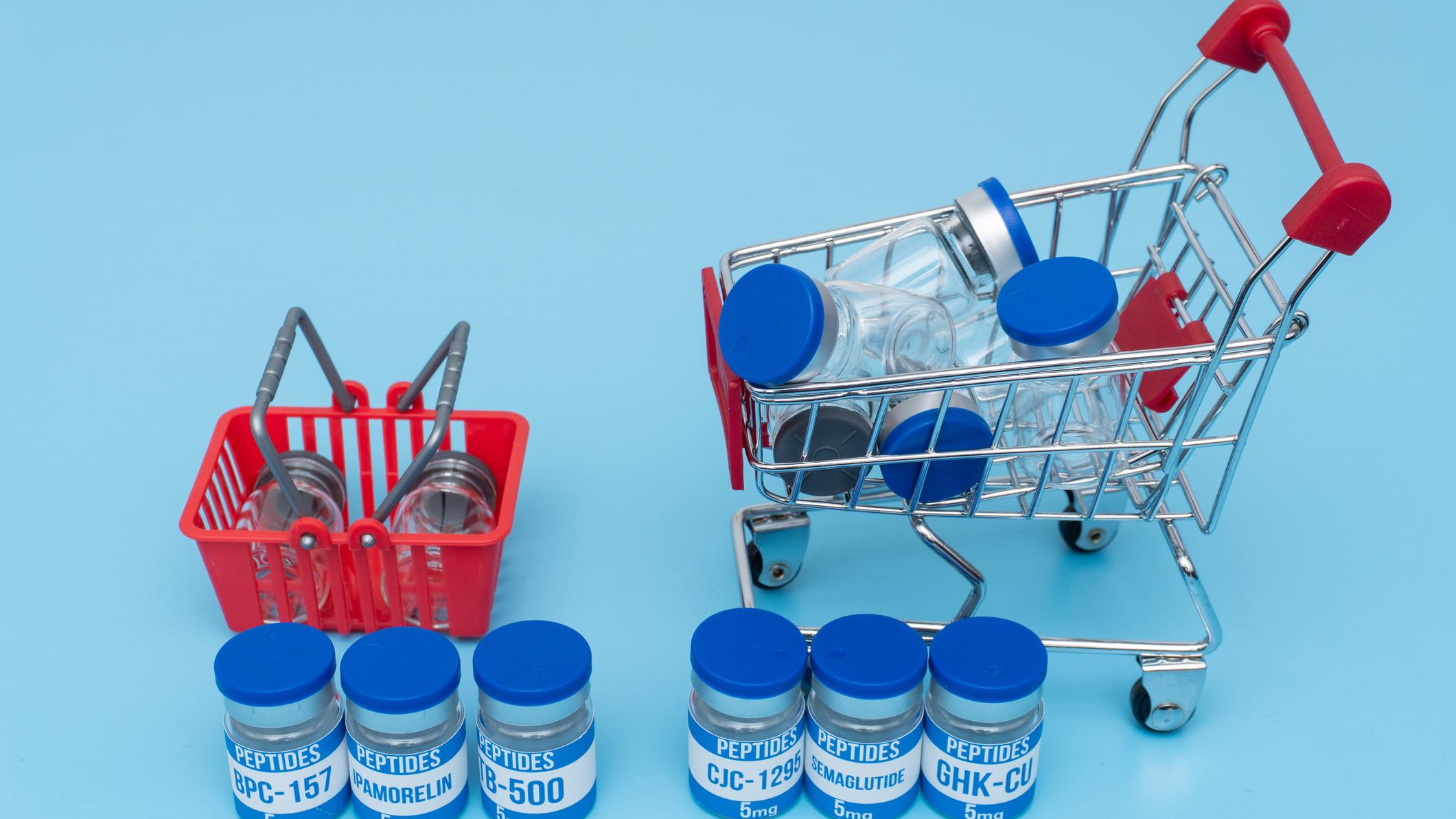
The U.S. Department of Health and Human Services (HHS) will not take action against licensed pharmacists who dispense certain unapproved peptides to consumers, according to a new policy published Oct. 28 in the Federal Register. Peptides are short chains of amino acids that people inject into their bodies. HHS Secretary Robert F. Kennedy Jr. has said in the past that he is a “big fan” of the unapproved drugs, whose benefits are largely scientifically unproven. The U.S. Food and Drug Administration (FDA) essentially banned peptides in 2023 because of safety concerns. But an FDA committee met in July to review the evidence on peptides and recommend whether or not to take the highly unusual step of allowing pharmacies to dispense them absent scientific review. The committee was made up of new appointees who consulted with or were employed by companies that were interested in promoting or dispensing peptides; it recommended allowing specialty pharmacies to dispense six peptides, despite FDA staff advising against the move. The new policy—which was signed by Kennedy—says that after the July meetings, HHS believed there was “significant interest” in the use of obtaining these peptides from compounding pharmacies. “Therefore, to expand and improve patient access, HHS does not intend to take enforcement action against a State-licensed pharmacy, Federal facility, or licensed physician compounding a drug product using a peptide bulk drug substance found in Appendix A,” the notice said. The policy said that it was going to be published in the Federal Register on Oct. 30. The peptides listed in Appendix A were BPC-157, Epitalon, KPV, MOTS-c, Semax, and TB-500—the same ones the committee recommended allowing this summer.A separate document posted on the HHS website says that after reviewing the recommendations of the committee that met in July, “the Secretary has determined that the policy advances patient choice and freedom while appropriately protecting patient safety.” The decision to allow the compounding of peptides is a boon for companies like Hims & Hers, which had reportedly been preparing to offer peptides in 2026. Analysts have said the market for peptides could be as high as $3.3 billion. Hims stock shot up 5% after the Oct. 28 announcement.The move “represents a vital step toward eliminating the unsafe gray and black markets, restoring safe patient access through legitimate, physician-supervised care,” said Lee Rosebush, chair of the American Academy of Peptide Medicine, a new advocacy group, in a statement. Other public-health professionals raised alarm about the decision, which they say allows compounding pharmacies to dispense these medications absent scientific evidence. “American consumers should not be treated like guinea pigs,” said Fred Mills, chief policy officer for Americans for Safe and Effective Medicines, in a statement. “It is possible to advance both patient safety and access to legitimate medicines, but this is not it.” At the July hearings, consumer advocacy groups including the Center for Science in the Public Interest had argued that allowing peptides to skip a rigorous evidence-based FDA approval process would be unprecedented and dangerous to consumers. Many physicians have spoken up against allowing peptides to be compounded. “The peptides under consideration here are untested and poorly characterized experimental drugs that should not be allowed in compounded products,” said Dr. Adriane Fugh-Berman, a professor of pharmacology and physiology at Georgetown University Medical Center, at the public comment portion of the July meeting, reminding the committee that two women had required emergency treatment after receiving peptides at a Las Vegas festival. Critics also expressed concern that people were turning to compounding pharmacies for untested drugs. Compounding pharmacies are often used to fill specific prescriptions from a doctor, but in recent years, they have mass-produced drugs like GLP-1s for patients looking to save money. The peptide boom will put even more pressure on compounding pharmacies to quickly make drugs for telehealth sites, said Annie Lambert, a pharmacist and clinical program manager for compliance solutions at Wolters Kluwer Health."Compounding can and should play a legitimate clinical role, from hospitals to home infusion to filling gaps during drug shortages. But it is not a substitute for FDA-approved manufacturing, and that distinction is where a lot of today's risk sits,” she said in a statement. “My concern is that pharmacies rushing into this space will move to make a dollar faster rather than make sure they meet every requirement, from ingredient sourcing and facilities to staff training and sterility testing.”Shortly after the new notice was published, a number of telehealth websites were already marketing the six peptides, each for a price of anywhere from $199 to $249 a month.
The Peptide Rush Has Begun
Full Article
Original Source
Read the full article at Time →KhanList aggregates and links to publicly available news content. We do not host full articles from third-party sources. Always verify important information with original sources.