
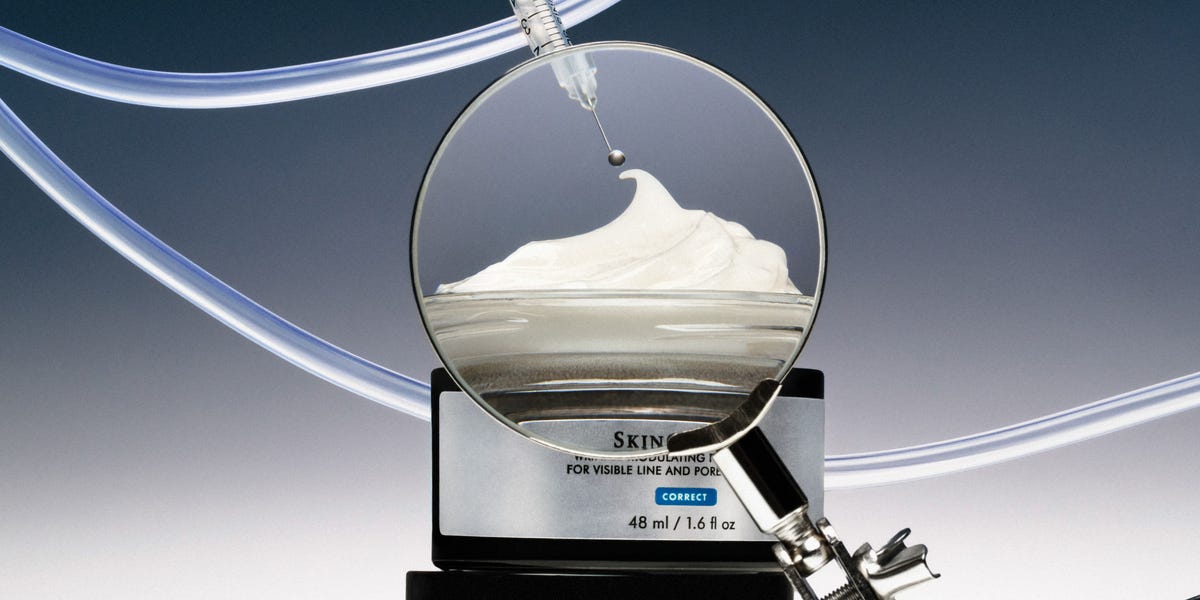
3 min readYOU’VE HEARD ALL about the kinda-sorta-illegal new world of supposedly health-transforming injectable peptides. But what’s wild is that topical peptides are totally legal and have long been hanging out in the grooming aisle—and some are actually backed by science. Yes, the right peptide-powered products can soften wrinkles, fade dark spots, and moisturize well beyond the traditional stuff. Are they worth your time and money? Possibly. Is there a lot to unpack before you slather them on? Definitely.What are peptides, anyway?THEY’RE PROTEINS. OR, more specifically, “chains of amino acids that vary in length,” says Carl D’Ruiz, a senior manager of business development at global bioscience company DSM-Firmenich. “Peptides can be classified by the length of their chain—tripeptides feature three amino acids, pentapeptides have five, and so on—or their biological function.” To create peptides for grooming products, technicians either construct them in a cosmetics lab or pull them from natural materials such as yeast, E. coli, or animal cells.What can peptides do for your skin?LOTS. BUT HERE’S the thing: Because many brands use proprietary, patented peptides or peptide blends, independent research on specific products is scarce. Yet in general, there is some data to support the use of certain peptides for skin health. Three types of peptides are the most well studied:SIGNAL PEPTIDES: “These work to reduce the appearance of fine lines over time by telling your skin to make more collagen and elastin,” says dermatologist Antony Nakhla, MD, who has a skin care line, Eighth Day. One of the more popular combinations is Matrixyl 3000. In one small study by independent researchers, participants who regularly applied a cream that contained this peptide combo reduced deep wrinkles by 44 percent and improved skin tone by 15 percent versus a placebo.NEUROTRANSMITTER INHIBITOR PEPTIDES: Argireline is one example. Also known as “Botox in a bottle,” this peptide can slow the neurotransmitter signals that cause muscle contractions, which reduces the appearance of wrinkles. Some research does show argireline improved the appearance of fine lines around the eyes when compared with a placebo. But no cosmetic product comes close to having true Botox-like effects, says New York City dermatologist Kunal Malik, MD.CARRIER PEPTIDES: These compounds “deliver trace elements to support wound healing and overall repair,” says Dr. Nakhla. The most popular is a copper peptide known as GHK-Cu. A short peptide chain bound to a copper ion, GHK-Cu “is really good for preventing the breakdown of collagen,” says Dr. Malik. One study found that copper peptides repaired skin tissue by restoring healthy cell communication, which is why your derm might recommend carrier peptides to speed recovery after microneedling or laser treatments. Dr. Malik says peptide products are generally safe and effective—and they play well with retinoids, hyaluronic acid, and sunscreen.For your hair?“THE DATA IS less robust than what we have for skin, but certain peptides show promise for hair health and can improve density with consistent use,” says Dr. Nakhla. A recent research review found that short-chain peptides, particularly GHK-Cu, improved hormone-related pattern hair loss. The theory is that, again, by improving cellular communication, peptides tell follicles to retain hair longer or grow thicker. Peptides aren’t as effective as proven hair-strengthening ingredients like minoxidil or finasteride. But they seem to carry fewer side effects. (Topical minoxidil can cause itchy-as-all-hell contact dermatitis in some patients; compounded topical finasteride products, which are not FDA approved, may cause insomnia, erectile dysfunction, and anxiety.)Peptide Products For Skin & HairThe high concentration of peptide-packed plasma is designed to shrink pores, erase wrinkles, and clear up dark spots.Retinol combines with Matrixyl 3000 in this serum to roll back the appearance of wrinkles and even out skin tone.This clinically formulated gel-cream contains tripeptide, the smallest unit of collagen fiber, and helps to reduce lines and wrinkles by improving skin elasticity. You use it twice a day, and it’s compatible with sunscreen.Made by four scientists, this stuff targets cellular senescence, which is when healthy cells start to age and release inflammatory factors that cause hair and skin issues.This daily supplement includes saw palmetto extract, which may block the hormone DHT, a common cause of male hair loss.Photographs by River ChadProp Stylist: Nicole Louie for Walter Schupfer.Brian Underwood is beauty director at Women’s Health, where he oversees content strategy for the brand across all platforms, including digital, print, and social. Underwood previously served as beauty and wellness director at Oprah Daily and O, The Oprah Magazine. During his tenure leading beauty content for the Oprah brand at Hearst, stories Underwood commissioned were awarded the Skin Cancer Foundation Media Award and a Fragrance Award for Editorial Excellence (his second). He was the launch Beauty Director of Dr. Oz THE GOOD LIFE, and has held additional editorial positions at Fitness, Organic Style, Good Housekeeping, Life & Style Weekly, and Woman’s Day and has written for Self, Shape, Seventeen, Redbook, Cosmopolitan, and many more. Underwood previously served on the Skin Cancer Foundation’s gala committee and as partnerships director of the Trans Beauty Clinic, a New York-based charitable organization that provided beauty services and workshops to the city’s trans community.
The Peptide Revolution Has Hit Your Grooming Routine
Full Article
Original Source
Read the full article at Menshealth →KhanList aggregates and links to publicly available news content. We do not host full articles from third-party sources. Always verify important information with original sources.