
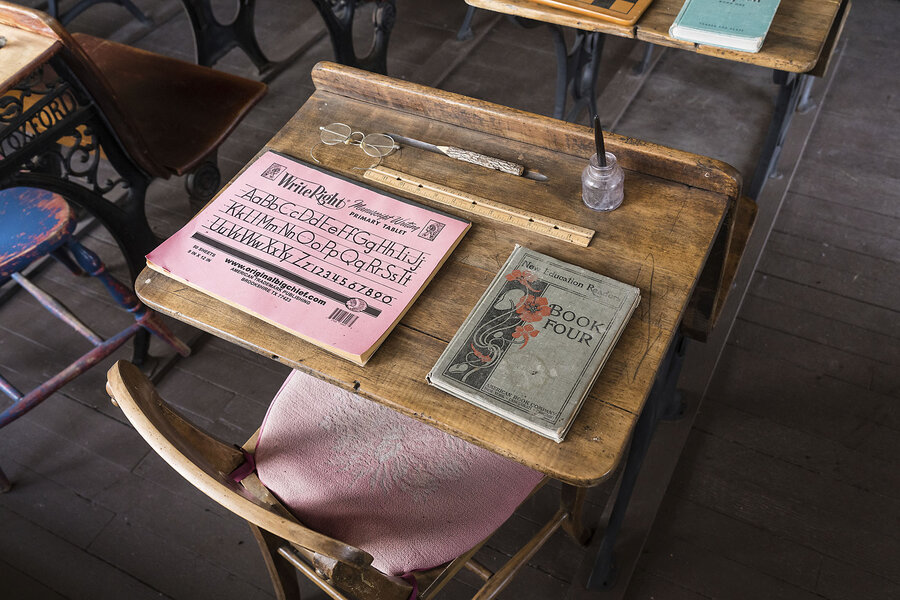
My eighth grade English teacher required all her students to write their coursework with a fountain pen. Even lefties. I smudged and learned. Enchanted by the romance of it, I kept the ink flowing through a variety of nibs for many years.I was reminded of this youthful passion when I uncapped “The Pen: A Human History,” in which Simon Garfield does for the history of handheld writing instruments what he did for printers’ typefaces in his 2011 book, “Just My Type.” Garfield leaves no page unturned in this robust account of “how the pen became a necessity, an industry, a frustration for the user, a nightmare at the patent office, an obsession for the collector, an affectation for the fogey, and a rediscovered pleasure after years pounding the keyboard.”Garfield spills a lot of ink charting the pen’s progression through the centuries – from quills to fountain pens, ballpoints, rollerballs, and gel pens. (He mostly skips over felt pens and markers, finding their stories “as dull as their tips.”) He tells us, “Every pen manufacturer had two aims: a smooth writing experience and a clean one.” Kenneth Parker, who made a splash with his sleek Parker 51 in 1945, defined pens as “a controlled leak.” Innovations in their manufacture have always involved devising ways to control the flow of ink. “The Pen” is a paean to a writing device that has been largely superseded – but not altogether vanquished – by keyboards. The Apple Pencil cleverly eschews both ink and graphite. Garfield admits that it delivers an appealingly smooth and clean writing experience, but dismisses it as “a plastic tube filled with electronics, masterful in its precision on glass and its ability to create the experience of traditional writing.” Karen Norris/Staff The book’s charming chapter titles feature elegant calligraphy accented by splotches of ink. An indefatigable researcher, Garfield cites Jane Austen’s many letters to her sister Cassandra, in which she complained about her pesky quills. He asks fellow ink-stained wretches (aka writers) about their tools of choice. Ian Fleming wrote longhand with a fountain pen, and his James Bond movies feature many pens weaponized with poison, explosives, or daggers. Philip Pullman’s “His Dark Materials” was written with a ballpoint. A 2022 photograph reproduced in this book captures King Charles III and Queen Camilla grappling with a leaky pen. The caption: “It’s going everywhere!”The word “pen” is derived from the Latin for bird’s wing. Early examples, like the goose quills used to write the Magna Carta in the 13th century, were plucked from geese, swans, turkeys, ducks, and eagles. In the 19th century, steel nibs (many manufactured in Birmingham, England) were applied to the end of quills for a more durable tip that didn’t require constant cutting and reshaping with a penknife. Garfield, who loves a good statistic as much as he loves a beautiful writing instrument, reports that between 1830 and 1914, Birmingham produced some 70 billion steel nibs.Fountain pens appeared simultaneously in multiple countries during the 19th century. Many pioneers filed patents for refinements of nibs, caps, reservoir plungers, and filling mechanisms. Countless pens accompanied letter-writing soldiers to the trenches, and when the wars ended, fountain pens were deployed in the signing of peace treaties. Waterman’s Ideal Fountain Pens were used at the signing of The Peace Treaty of Versailles in June, 1919, because, in a marketing coup, the company had handed them out to many of the participants. Lyndon Johnson favored an Esterbrook dip pen for the signing the Civil Rights Act of 1964. Seventy Esterbrook pens were distributed among congressmen and senators who had campaigned for the legislation. Deepen your worldviewwith Monitor Highlights.Politics with respectGet political stories with respectful analysis.There‘s a world of new ideas in everyBooks newsletter.There‘s more to life, enrich yours withCulture & Learning weekly.Follow humanity‘s discoveries withScience & Nature stories in your inbox.Gain a spiritual perspectivefrom the stories in your inbox.Want to understand the deeper impact of critical events? Learn the Monitor‘s insight.Already a subscriber? Log in to hide ads. Garfield visits several pen manufacturers, including a largely automated Bic factory east of Paris which, in 2024, turned out 3 million disposable pens every day. He also visits several companies that have stayed afloat despite the incursion of keyboards by offering handmade, luxury writing instruments with special cachet. Among them is Montblanc, which Garfield calls “the company that put the pen in expensive.”In addition to its popular Meisterstück 149, Montblanc’s limited legacy editions – encrusted with gems and named for famous people including Vincent van Gogh and Virginia Woolf – have become “confirmation, not necessarily of good taste, but certainly of status and wealth,” Garfield writes.“The Pen,” awash with stories of bygone writing instruments, is at times as overwhelming as the jumble of abandoned pens in my desk drawer. More illustrations would have helped to keep them straight. So might some judicious edits. Yet Garfield’s enthusiasm is winning, and long before I perused his list of the pens he used to write this book, I dug out an old favorite Pilot Vanishing Point and ordered new ink cartridges for it. ALREADY A SUBSCRIBER? LoginReal news can be honest, hopeful, credible, constructive.The Christian Science Monitor was founded in 1908 to lift the standard of journalism and uplift humanity. We aim to “speak the truth in love.” Our goal is not to tell you what to think, but to give you the essential knowledge and understanding to come to your own intelligent conclusions. Join us in this mission by subscribing.
‘The Pen: A Human History’ spills ink on a fascinating topic
Full Article
Original Source
Read the full article at Csmonitor →KhanList aggregates and links to publicly available news content. We do not host full articles from third-party sources. Always verify important information with original sources.