
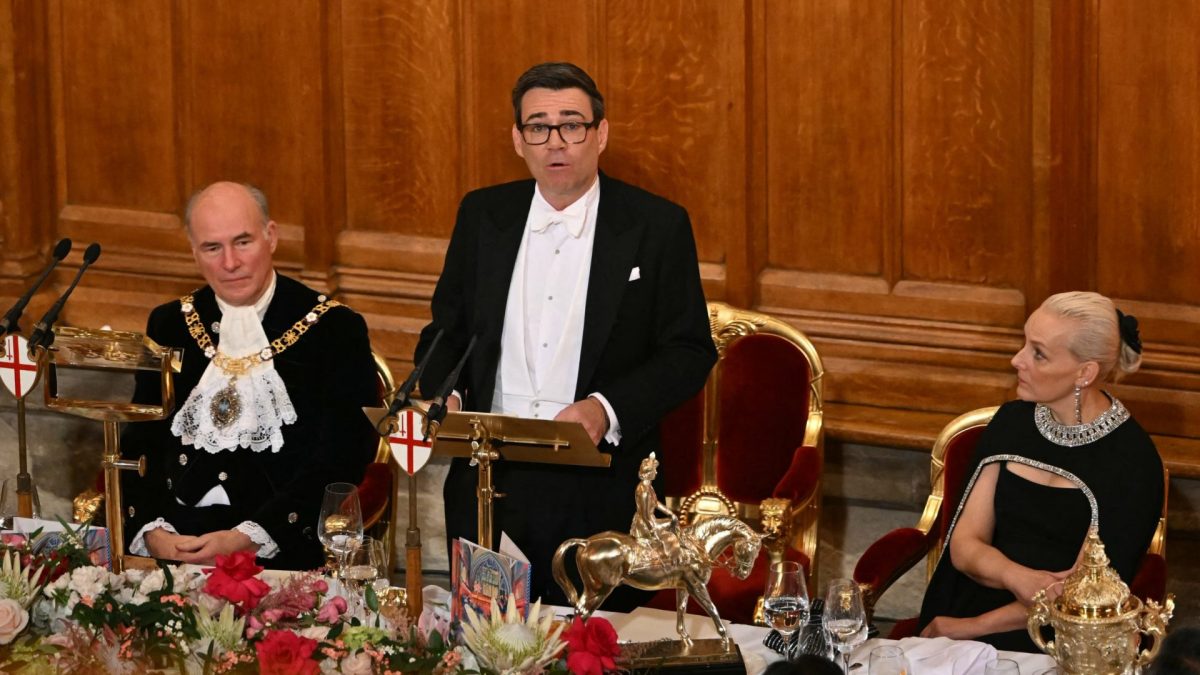
is a journalist, author of What Women Want, and co-convenor of the Battle of Ideas festival In his speech at the Lord Mayor’s Banquet this week, Andy Burnham made clear his desire for a closer relationship with the EU and to reopen conversations around rejoining, much to the delight and relief of the metropolitan elite reclining in golden seats around him. Our Government’s plans to use closer regulatory alignment with the EU as a means of boosting the economy are now uncontested. Even if we might still be waiting for the details of exactly how close and how cosy our return to the warm embrace of Ursula von der Leyen might be following talks at the end of the week. In the opening of his speech, Burnham acknowledged the “Makerfield test”. But despite Labour’s so-called “red lines” and promises not to reopen the Brexit wars, the speech and the various radio interviews conducted by Cabinet ministers all point to one conclusion – it’s time to armour up. Some have tried to argue that 10 years following a single vote is enough time to rethink – that democracy is all about minds changing and flux. But it’s worth reflecting on what the Brexit vote meant for many voters across the country. Indeed, it’s worth thinking about how “Leave voters” came to know themselves as “Brexiteers” – why this transformation of one plebiscite into an entire political identity became so potent. The answer lies in different governments’ petulant refusal to implement the rejection of the Remain campaign that millions of voters demanded. Brexit is no longer simply a question of EU membership but a reframing of the entirety of British politics, revealing nasty class divides that had lain dormant over years of political apathy, and bringing clarity to an unspoken “us and them” mentality within the British political establishment.Burnham’s justification for his anti-Brexit stance during his speech at the Lord Mayor’s Banquet was suitably emotional for the “vibes” Prime Minister. He bemoaned the “more populist approach” that followed Theresa May’s “softer Brexit deal”, with Britain “eventually leaving on bad terms with bad feeling”. Burnham may be the first politician to so openly frame Brexit in such personalised terms, describing it like a bad break-up, but he’s certainly not unique in arguing that a “hard” – or complete – Brexit was not what voters wanted. Perhaps the only thing that has united politicians of all rosettes over the last decade has been a deep and undying hatred of Brexit, from the out-and-out rejoiners, to the ones who will nod to democratic consent but salivate at the chance to explain any political or economic problem through the lens of the B word. Indeed, Burnham’s message to his working-class constituents in Makerfield that he hears their pain but will decide what’s best for them is the kind of patronising claptrap that Leave voters have come to know well. Tread carefully. The Labour Party is conscious of how thin the thread is that their support in the Red Wall hangs on, and so rather than coming out and saying “you thickos didn’t know what you wanted”, Burnham is fluttering his eyelashes to convince Makerfielders that the Prime Minister is giving them what they really wanted all along. They actually think it’s going to work, too. In an interview with Radio 4’s Today programme earlier this week, Ed Miliband was positively giddy when talking about the impending summit – audibly excited at the prospect of putting all this silly Brexit nonsense behind them. The message is an old but no less infuriating one: Leave voters didn’t know what they were voting for and should be saved from the consequences of their own actions by the adults in the room. In his speech, Burnham claimed that “in the decade since Brexit, our standing in the world has diminished”. The question is, whose fault is that? Were the 17.4 million voters who decided to leave the European Union and the millions of Remain voters who were willing to accept the result of a fair and free referendum the ones who supposedly showed us up to the world? Or was it the behaviour of our political elite, who stamped and screamed and dragged their feet through years of heartache and hardship? Does the failure of the British economy really boil down to one balmy day in June 2016? Or are our ideas-light political leaders, once again, passing the buck when it comes to explaining why nothing like progress seems to be possible for our country? Through a general election, a referendum or other means, perhaps it’s time we reminded our political leaders who is really in charge.
The patronising insult at the heart of Britain’s Brexit reset
Full Article
Original Source
Read the full article at Inews →KhanList aggregates and links to publicly available news content. We do not host full articles from third-party sources. Always verify important information with original sources.