
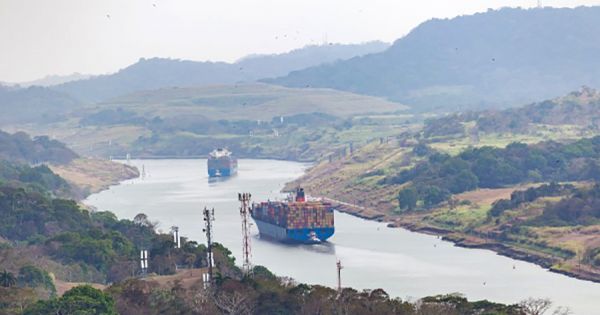
Monday, August 31st 2026 - 08:46 UTC Panama has eleven watersheds under water stress and declared an emergency last week, alongside Honduras and El Salvador The Panama Canal will reduce the number of vessels allowed to cross from 38 to 34 a day from September 3, and to 32 from the 15th, as well as imposing new draught restrictions, because of falling water levels linked to El Niño. According to the waterway's authorities, rainfall since May has been 34% below the historical average and inflows to the basin have dropped 44%. Around 5% of world maritime traffic passes through the canal. Panama has eleven watersheds under water stress and declared an emergency last week, alongside Honduras and El Salvador. In Tegucigalpa, the sources supplying the Honduran capital reached critical levels and authorities introduced a water supply rota varying between every ten and twenty days. The event was declared in June. According to the bulletin published on August 13 by the United States National Oceanic and Atmospheric Administration, there is a probability of more than 90% that it will reach “very strong” intensity between September and early 2027, the highest of the four categories. That classification applies when the ocean surface at a specific point in the equatorial Pacific warms around 2°C above normal; declaring a “weak” event requires just 0.5°C over three months. The agency also puts at 69% the chance that between October and December it will exceed the intensity of every episode recorded since 1950. The effects are already visible in South America. Colombia recorded wildfires in August concentrated in Tolima department, with more than 50,000 hectares affected. In Peru, the production ministry has repeatedly suspended anchoveta fishing seasons since May, because warming waters push adult fish into deeper water or southward. In Chile, President José Antonio Kast declared a state of catastrophe in the Atacama and Coquimbo regions after July's storms, and the Cristo Redentor border crossing with Argentina remained shut for more than thirty days because of a storm that left up to four metres of snow. In the Caribbean, conditions associated with the phenomenon tend to break up hurricanes. The US agency forecasts a 55% probability that the Atlantic season will be below normal, though that may worsen drought on islands such as Jamaica and Puerto Rico, deprived of a customary source of rainfall. Bárbara Tapia Cortés, of the World Meteorological Organization, warned that intensity alone does not determine consequences. “Not every strong El Niño means the impacts will be strong,” she said, stressing that preparedness and pre-existing vulnerability weigh as heavily as the phenomenon itself. “There is still time to prepare,” she added.
The Panama Canal will cut daily transits from Wednesday because of drought
Full Article
Original Source
Read the full article at En →KhanList aggregates and links to publicly available news content. We do not host full articles from third-party sources. Always verify important information with original sources.