
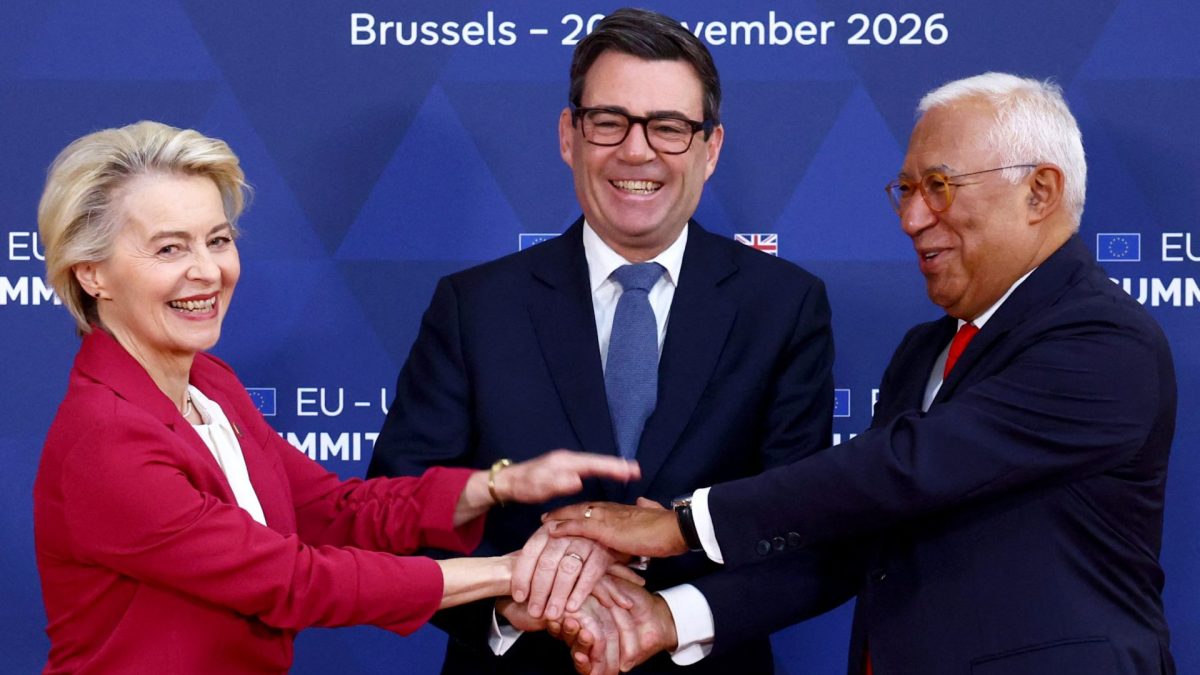
Overshadowed by agreements on youth mobility and reducing trade barriers at Friday’s Brussels summit was a commitment between the EU-UK to more work closely on Channel crossings. At the summit, the two sides set up a “structured dialogue” on migration. It is not a returns agreement, but it could provide the framework for one. The joint statement says the talks will cover “returns to third countries”, with new joint work backed by “financial contributions” where appropriate. Speaking to reporters on Thursday, Prime Minister Andy Burnham called closer collaboration on immigration “a really big win potentially”. Burnham is expected to set out his wider plans for Europe in a major speech in December. Until then, these are the main options for how a returns deal could work. Option one: a migrant swap Britain has had no mechanism to send Channel arrivals back to Europe since its “one in, one out” pilot with France ended in September. Under the scheme, each migrant returned to France was swapped for an asylum seeker sent to the UK. However, 1,087 people were returned to France between August 2025 and June 2026, Home Office figures show. That is fewer than four per cent of the 27,920 people who crossed the Channel in small boats during the same period. Small boat crossing numbers have fallen, however, from a peak in 2022. About 36,000 people arrived by small boat in the year ending 31 May 2026, 13 per cent lower than the same period the year before. After the breakthrough reset deal, some EU countries are open to a deal with Britain that could help tackle the small boats crisis, The i Paper understands, with one source describing a returns arrangement as the “long-term direction of travel”.One possible model is an expanded version of the original “one in, one out” deal. Britain would take in migrants from mainland Europe and, in return, send back those who cross the Channel, removing the incentive to make the dangerous journey. However, other sources cautioned that under such a deal “the UK will have to accept a lot of migrants”. Option two: return hubs abroad Return hubs are centres in another country where rejected asylum seekers are held before being deported home. Britain has tried a version of this before. Boris Johnson’s government announced a scheme in 2022 to send Channel arrivals to Rwanda to have their asylum claims processed there, but the Supreme Court ruled it unlawful in November 2023. No deportation flights ever took off, and only four volunteers went before Labour scrapped it in 2024. Now five EU countries – Austria, Denmark, Germany, Greece and the Netherlands – have announced plans for a return hub of their own in Rwanda. The details are still under negotiation, but reports suggest they aim to begin deportations in 2027. Crucially, the EU deal would see migrants sent to Rwanda if their asylum claims have already been rejected and therefore not pursuing asylum claims or those who have no legal right to live in the EU. It is hoped up to 100 people could be sent to Rwanda from early next year to test the model. Burnham told Friday’s press conference that ministers want to “get closer to those discussions that are happening in Europe around third-country returns” – hinting that the UK could be open to a similar scheme. “We would be interested in finding out where Europe is up to on that,” Burnham told the press conference. Britain has been looking for a host country of its own since at least May 2025, when former prime minister Keir Starmer said talks were under way. Option three: joining the EU’s asylum pact The Liberal Democrats want the UK to sign up to the EU’s Migration and Asylum Pact – rules that decide which country is responsible for each asylum seeker and share them out between member states. The pact came into effect in June. It replaced the Dublin Convention, which allowed countries to send asylum seekers back to the first EU country they reached. Under the pact, the European Commission must propose at least 30,000 relocations from frontline states to less-exposed countries. The new agreement would see irregular arrivals face mandatory screening and faster processing, while countries under strain, such as Greece, Spain and Italy, would receive additional financial support. Human rights organisations have expressed concern over detention periods and risks to the right to seek asylum. The Government has not said it is considering joining. But Lib Dem leader Ed Davey said in August: “We can end small boat crossings and have a humane and cost-effective asylum system by joining the EU’s new pact.” The party said joining would grant Britain “sweeping new powers to return small boat arrivals”.
The options for a UK-EU small boats deal – including ‘return hubs’ in Rwanda
Full Article
Original Source
Read the full article at Inews →KhanList aggregates and links to publicly available news content. We do not host full articles from third-party sources. Always verify important information with original sources.