
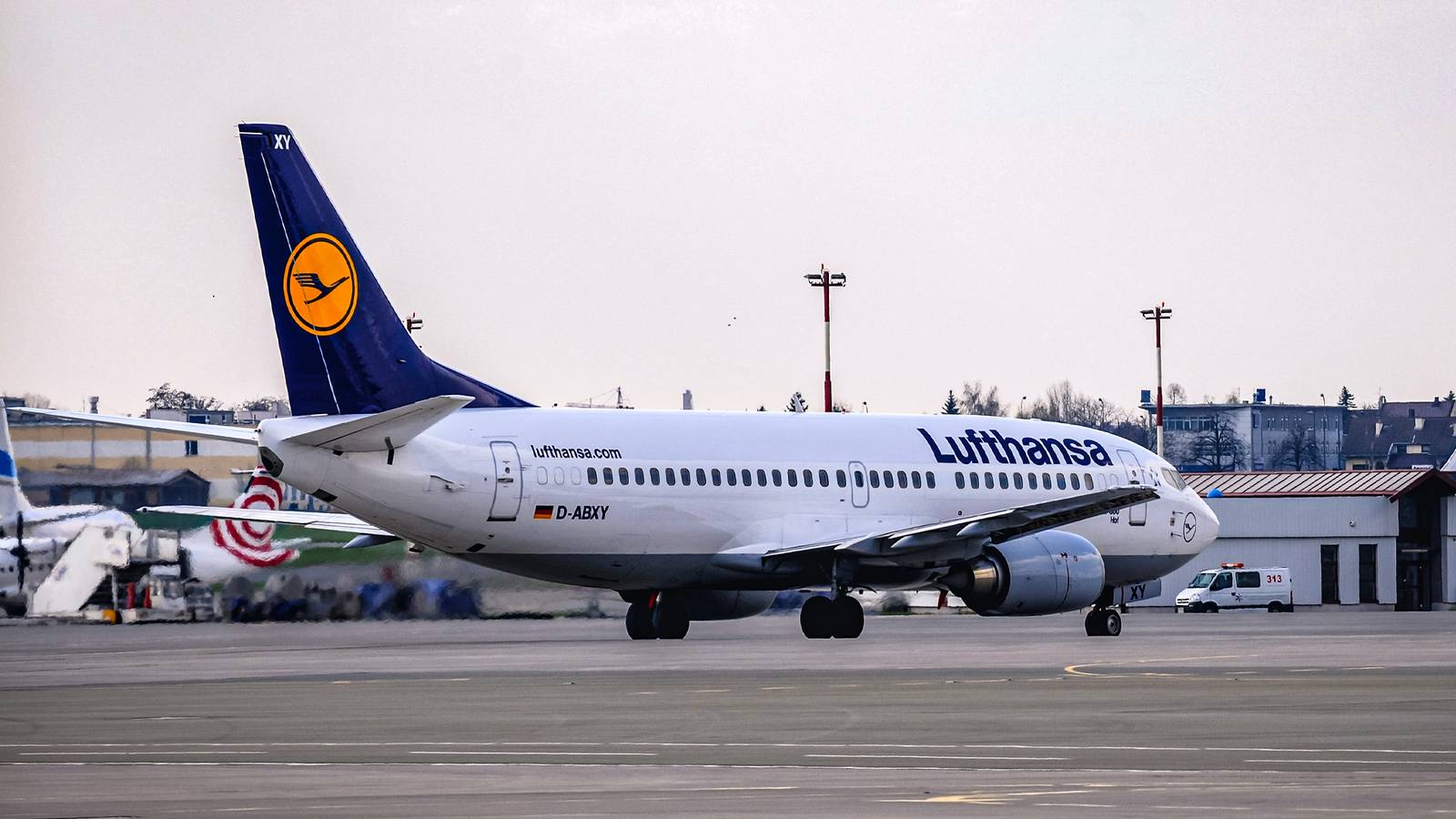
Today, the aircraft is known for being the second-best-selling commercial jetliner of all time, behind only the competing Airbus A320. In the late 1970s, however, the Boeing 737 was not the dominant narrowbody that everyone knows it to be today. That was the Boeing 727, a larger, three-engined aircraft used for medium-length flights around the world, similar in size to modern 737 variants. Back then, the 737 was Boeing's small narrowbody, essentially used like a large regional jet, while the 727 dominated the industry. In the late 1970s, however, the 727's three-engined layout was increasingly becoming obsolete, as the plane burned too much fuel for its size and range. Boeing would respond by developing an all-new, twin-engined layout that essentially did everything the 727 did but better. At the same time, there was demand for an improved 737 after the success of the 737-200. As such, Boeing began studies on a new 737 variant in 1979, and in 1984, the company released the massively successful 737-300. What The 737-300 Brought To The Table Credit: Robin Guess I Shutterstock By 1979, the 737 line was essentially the 737-200 Advanced. Slightly stretched from the original 737-100, the 737-200 became a popular choice worldwide for regional routes, competing against the McDonnell Douglas DC-9. The Advanced became the production standard in 1971, incorporating aerodynamic and technical improvements to improve payload and range. It was a massive success, but the 737 was also aging by the late 1970s, creating demand for an improved version. The most noticeable difference with the 737-300 was its extended fuselage, increasing passenger capacity and lowering unit costs. The aircraft's wing was tweaked for better aerodynamics. Boeing swapped out the 1960s-era Pratt & Whitney JT8Ds for the new CFM56-3 high-bypass turbofan, and the plane received a new vertical stabilizer design, while the cabin and flight deck were modernized. As a whole, the 737-300 was a significantly more capable, more efficient, and more advanced version of the already popular 737. The 737-300 proved to be a very successful aircraft, with Boeing receiving hundreds of orders for the type after its entry into service in 1984. At this point, the aircraft was competing mainly against the McDonnell Douglas MD-80, but it was more fuel-efficient while carrying slightly fewer passengers, and it was used by many airlines to replace older 727s as well. In the 1980s, the market also lined up well for the 737-300 to become a core part of Boeing's narrowbody offering alongside the 757. The 737-300 And The 757 Credit: Robin Guess I Shutterstock By the late 1970s, both of Boeing's two narrowbody products were popular, but aging. The 737 was revitalized as the 737-300, while the airframer decided on a clean-sheet twinjet to succeed the 727. The 757 carried more passengers and payload than the 727, while having superior takeoff performance, a longer range, and better fuel burn. It was an appealing aircraft for airlines wanting an aircraft larger than the 737, and it also proved effective in replacing 707s and DC-8s on transcontinental flights in the US, given its range. However, the 757 wasn't as desirable as Boeing may have hoped when it debuted in 1983. The US market began shifting towards smaller aircraft, and the 757 seated more passengers than the 727. Fuel prices also dropped, and the 757 was an expensive aircraft to buy. Many airlines chose to simply keep their depreciated 727s longer, while others bought the cheaper MD-80, which also entered service earlier than the 757. The 737-300 became a crucial aircraft, as it occupied this space of being more fuel-efficient than prior jetliners, while also being smaller and cheaper to buy than the 757. It became a popular replacement for the 727 as a result. Orders for the 757 picked up in the late 1980s, and the aircraft went on to be a successful program. However, it was during this time with the 737-300 that the aircraft started transitioning towards becoming the core of Boeing's narrowbody lineup, whereas it was the 727 that dominated sales in the past. This shift only became more apparent as Boeing was able to further iterate on the design by releasing an even larger variant as well as a smaller version that could directly succeed the 737-200. Derivatives Of The 737-300 Credit: Robin Guess I Shutterstock While the 737-300 was stretched by about three seat rows over the 737-200, the 757 could seat an additional 60 or 70 passengers compared to the 737-300. This left a major hole in Boeing's narrowbody lineup, especially as the MD-80 was larger than the 737-300. With strong demand from airlines for a larger 737, Boeing stretched the airframe by about three to four rows, creating the 737-400. Debuting in 1988 with Piedmont Airlines, the 737-400 also proved to be an attractive aircraft like its older sibling. What makes a stretch aircraft like the 737-400 attractive is its low per-seat costs, since the plane burns almost the same fuel as the 737-300 while offering significantly more seats. However, not all airlines need an aircraft that can seat as many as 188 passengers, and even the 737-300 was larger than the first-generation 737. As such, Boeing shrank the fuselage to create the 737-500, which entered service in 1990 to directly succeed the 737-200. Not only was the aircraft smaller, but it had the best range and takeoff performance of any 737 variant. On its own, the 737-300's sales might not look all that impressive, as Boeing sold 1,113 examples. However, the 737-300 transformed the 737 into a family, with the 737-400 and 737-500 variants each offering something different to appeal to a wider range of customers. The 737-400 received 486 orders, while the 737-500 received 389 orders, bringing the 737 Classic up to 1,988 sales in total. In contrast, the 757 (including the later 757-300) received 1,049 orders, while the competing MD-80 received 1,191 orders. Upstaged By The Europeans Credit: ODIN Daniel I Shutterstock European newcomer Airbus had made a name for itself in the 1970s with its A300, a medium-sized twinjet widebody that outsold both of its rivals (the McDonnell Douglas DC-10 and Lockheed L-1011 TriStar). It also later developed the A310 as a smaller derivative with better range, to more limited success. After years of design studies, it officially launched the clean-sheet single-aisle A320 in 1984. But to truly be successful, Airbus couldn't just build a plane as good as what the Americans had made; it needed to make a better one. The A320-100 entered service in 1988 with Air France, with the improved A320-200 following shortly afterwards (this became the production standard). The aircraft was larger than the 737-400, which entered service the same year, and it could fly farther than any 737 variant while also cruising faster. In addition, the A320 was a significant step forward in terms of technology, introducing innovations such as a full glass cockpit, digital fly-by-wire control systems, and sidestick controls. 1980s Narrowbody Types Entry Into Service McDonnell Douglas MD-80 1980 Boeing 757 1983 Boeing 737 Classic 1984 Airbus A320 1988 The 737 Classic was an appealing aircraft to 737 operators and those loyal to American manufacturers, but Airbus was ruthless with its A320. It notably sold the aircraft to Northwest Airlines, followed by United Airlines, which was widely expected to order the 737-400 at the time. The loss of the United order in particular prompted Boeing to revisit the 737 to better match the A320. What followed next was the most competitive 737 generation that Boeing had turned out yet. Improving The 737 Again Credit: VanderWolf Images I Shutterstock The 737NG was the most significant overhaul to the 737 line yet. Boeing slightly stretched the aircraft to create the 737-700, while also upgrading the engines to the CFM56-7. In addition, the wing was fully redesigned for the 737NG, while the interior and flight deck were significantly modernized. The 737-700, positioned as a successor to the 737-300, proved to be a valiant competitor against the similarly sized Airbus A319-100. However, it was the 737-800, which succeeded the 737-400, that became the superstar of the family. The 737-800 would compete directly against the A320-200, and it actually held some advantages. The aircraft was lighter than the A320-200, yet it could carry more passengers, and the 737-800 also had transcontinental range. The 737-800 ended up slightly outselling the A320-200, despite debuting about a decade later. Boeing would also stretch the aircraft to create the 737-900 and the later 737-900ER, but both of these proved ineffective at competing against the A321-200. Boeing 737 Original (1968) Boeing 737 Classic (1984) Boeing 737NG (1997) Boeing 737 MAX (2017) 737-100 737-300 737-600 737 MAX 7 737-200 737-400 737-700 737 MAX 8 737-500 737-800 737 MAX 9 737-900/900ER 737 MAX 10 Boeing reengined and lightly improved the 737-800 and 737-900ER to create the 737 MAX 8 and 737 MAX 9, while the other MAX variants have more differences from prior models. However, these variants are very similar to their predecessors. The 737NG, however, was a much more thorough improvement compared to its predecessor, necessitated by the arrival of a competitor that was designed to render the 737 Classic obsolete.
The One 737 Variant That Saved Boeing's Narrowbody Line
Full Article
Original Source
Read the full article at Simpleflying →KhanList aggregates and links to publicly available news content. We do not host full articles from third-party sources. Always verify important information with original sources.