
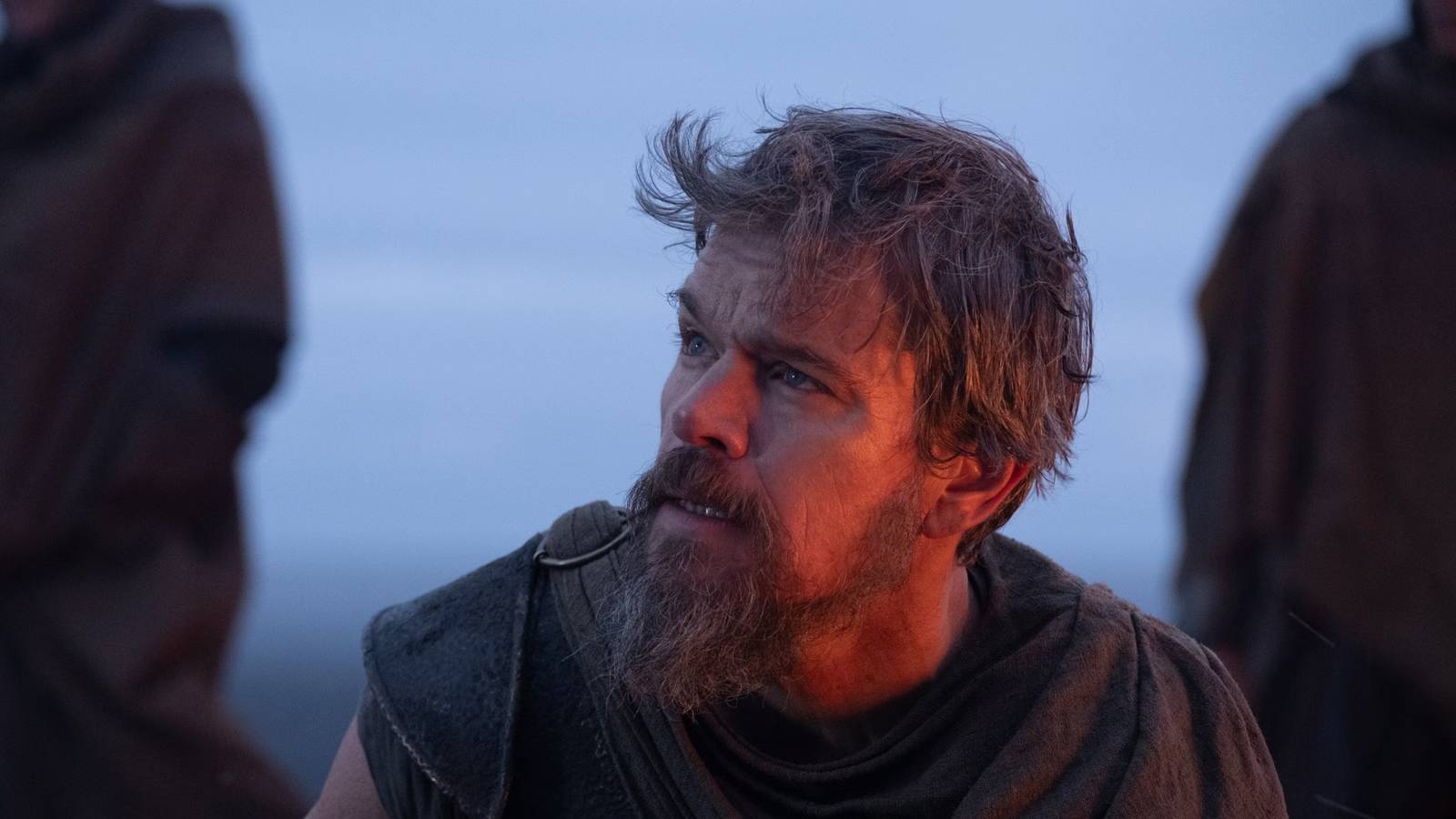
Published Nov 16, 2026, 3:00 PM EST Christopher Nolan and his team reveals how silicone, magnets, and Samantha Morton's performance brought a disturbing transformation to life. The Odyssey's disturbing pig transformation was pulled off with a surprisingly simple trick Christopher Nolan and his team reveals how silicone, magnets, and Samantha Morton's performance brought a disturbing transformation to life. Image: Universal Pictures She led them in, sat them on chairs, and blended them a potion of barley, cheese, and golden honey, mixed with Pramnian wine. She added potent drugs to make them totally forget their home. They took and drank the mixture. Then she struck them, using her magic wand, and penned them in the pigsty. They were turned to pigs in body and voice and hair; their minds remained the same. — The Odyssey, Emily Wilson translation Christopher Nolan's The Odyssey arrives on digital, 4K Ultra HD and Blu-ray on Nov. 17, giving audiences another opportunity to experience the filmmaker's ambitious adaptation of Homer's epic poem. Among the story's many memorable encounters is Circe, a powerful sorceress who turns Odysseus' men into pigs. Played by Samantha Morton, Circe is responsible for one of the film's most unsettling sequences, which involves a human head being transformed into that of a pig. It's the kind of effect you'd assume required extensive computer-generated imagery. As it turns out, the filmmakers accomplished almost the entire transformation using practical effects, some silicone, and a few strategically placed magnets. Speaking with Polygon ahead of the film's home release, visual effects supervisor Andrew Jackson and special effects supervisor Scott Fisher explain how the sequence came together, revealing that the secret wasn't some elaborate digital trick. Instead, it was finding a way to let Morton perform the transformation herself. I didn't understand at that point how much technology in that world has advanced. Emma Thomas, Nolan's wife and longtime producing partner, admits that several moments in the screenplay left her wondering how they could possibly be accomplished, but the Circe sequence stood out. "I loved that sequence when I read it, and I knew he wanted to make it feel very grounded," Thomas tells Polygon. "I knew that he wanted to try and do it with makeup effects to the extent that he could." Thomas wasn't initially sure how that would work, particularly given the limitations she assumed existed with practical makeup effects. "I didn't understand at that point how much technology in that world has advanced," she says. Her confidence grew once she began meeting with the makeup, special effects, and visual effects teams, including makeup and creature effects artist Conor O'Sullivan. "That was the point at which I really realized: Oh my goodness, these guys are gonna come up with a way that each can contribute their talents and their skills with the best of technology from within their own disciplines and make a seamless sequence." Of course, getting there required a little trial and error. A skull, some silicone and a few magnets Image: Universal Pictures According to Jackson, the team knew early on that the key to the sequence would be allowing Morton to physically interact with the heads and manipulate their transformation. "We had various ways that we were gonna try and achieve that, with heads with kind of clay layers that she could manipulate," Jackson says. They even built some of those early versions, but the results weren't particularly promising. The transformation took too long, making the effect difficult to incorporate into the scene. "We both were looking at it and going, 'Yeah, that's not really gonna work in Chris's world,'" Jackson recalled. Rather than abandon the practical approach, the team came up with a different solution, working alongside O'Sullivan to develop a skull beneath a layer of soft silicone skin. The idea was that Morton could manipulate the skull through the skin, physically changing the shape of the head. But O'Sullivan had another trick up his sleeve. "Conor came up with this great idea of having it pre-broken and stuck back together with magnets so she could do whatever kind of manipulation she wanted to and just keep going," Jackson says. Image: Universal Pictures The skull was already separated into pieces, with magnets holding everything together. That allowed Morton to squeeze and reshape the head as part of her performance, rather than wait for a complicated mechanical effect to do the work. And because the prop didn't require constant resetting, Morton could continue performing without interruption. "The idea that there was no resetting, so no kind of breaking her performance, was why that scene was so compelling," Jackson says. "She just had this prop that she could really go to town on." For an effect involving a human head becoming a pig's, giving an actor that kind of freedom might sound like a strange creative priority. But it meant the transformation wasn't simply something happening to a character through movie magic. Morton was physically making it happen. How much CGI was actually involved? Image: Warner Bros. Pictures Surprisingly little. "Ultimately, in what ended up in the film, there is very little visual effects affecting what was actually shot," Jackson says. The visual effects team made some adjustments, including manipulating the eyeballs to make their movements more frantic. Jackson also notes that an ear transformation required combining two camera angles and slight of hand. But the majority of the sequence was accomplished in-camera. "Essentially all our involvement was prior to the shoot, and then once the shoot happened, that was kind of it in camera," Jackson says. The visual effects team wasn't absent from the process. Its expertise helped develop the practical solution in the first place. It's also consistent with Nolan's broader filmmaking philosophy, and the director notes that even sequences requiring visual effects benefit from capturing as much real material as possible. "Even where we know we're absolutely gonna have to avail ourselves of visual effects, really try to give the compositors as much as possible to work with," Nolan tells Polygon. In the case of Circe's transformation, that collaboration resulted in an effect that required very little digital assistance once filming was complete. Image: Universal Pictures For Thomas, the finished sequence demonstrates just how much could be accomplished when different effects departments combine their expertise. What initially seemed like one of the screenplay's biggest technical challenges became an example of practical and digital artists working together to find a solution. And for audiences revisiting The Odyssey at home, the sequence offers something worth examining a little more closely. Beneath all that unsettling movie magic is a surprisingly straightforward idea: a silicone-covered skull held together with magnets, and an actress given the freedom to do the rest. The Odyssey arrives on digital, 4K Ultra HD and Blu-ray on Nov. 17
The Odyssey's Most Disturbing Scene Barely Used Any CGI. Here's How They Pulled It Off.
Full Article
Original Source
Read the full article at Polygon →KhanList aggregates and links to publicly available news content. We do not host full articles from third-party sources. Always verify important information with original sources.