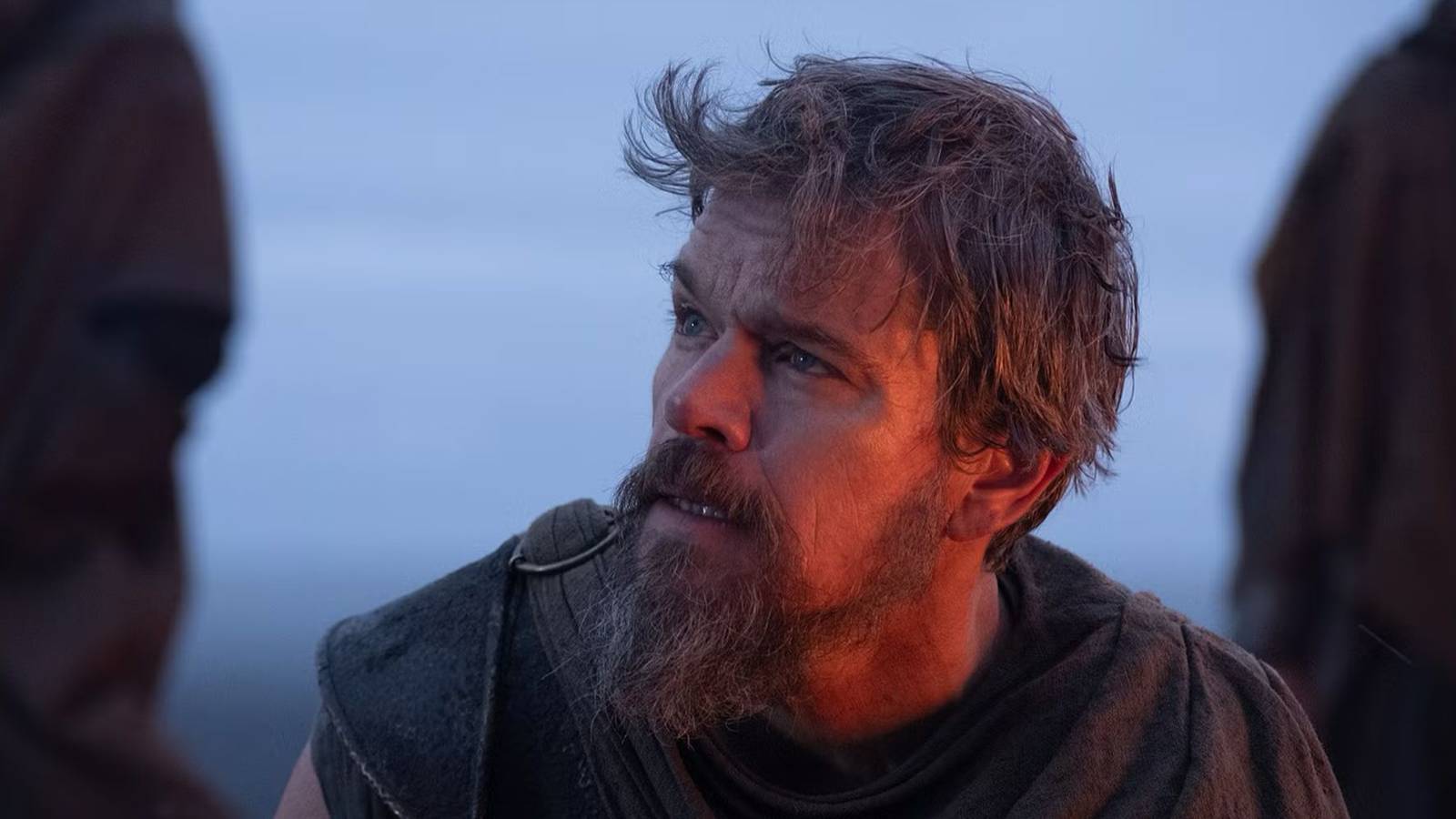
Published Jul 27, 2026, 7:11 PM EDT Julio is a Senior Author for Collider. He studied History and International Relations at university, but found his calling in cultural journalism. When he isn't writing, Julio also teaches English at a nearby school. He has lived in São Paulo most of his life, where he covers CCXP and other big events. Having loved movies, music, and TV from an early age, he prides himself in knowing every minute detail about the things he loves. When he is older, he dreams of owning a movie theater in a small countryside town. Walking out of The Odyssey without being moved is pretty difficult. But while some critics and audience members are calling it a massive change in Christopher Nolan's body of work, the film actually continues an old tradition of his, giving widely-known and beloved stories a modern and more realistic take. This has been enough for some people to compare The Odyssey to Nolan's previous work, the Oscar-winning hit Oppenheimer. Though the former certainly has its fair share of fantastical elements, the similarities between Odysseus (Matt Damon) and J. Robert Oppenheimer (Cillian Murphy) are what make The Odyssey work almost like a spiritual sequel to Oppenheimer — or at least the perfect double feature. In Both ‘The Odyssey’ and ‘Oppenheimer,’ Seemingly Great Men Wrestle With Their Demons Image via Universal Pictures At first, Odysseus and Oppenheimer don't have much in common. One is a mythological hero, the other is the creator of the atom bomb, and both lived in completely different times. But Nolan's knack for modernizing stories and building archetypes brings both these men closer together than anyone thought possible, building a bridge between them using one of humanity's most overpowering feelings: guilt. By the end of The Odyssey and Oppenheimer, both of them feel like extensions of the same character. Of course, that hasn't always been the case with Odysseus. Homer originally portrayed him as a proud, ingenious, and often boastful leader — in short, not at all what he's like in Nolan's The Odyssey. Instead, Nolan's Odysseus struggles with the reality of his actions in Troy and its consequences, and this is what defines his journey home. He is forced to confront different aspects of his deeds at every stop, but can't undo them, and remains haunted by them until he reaches Ithaca. In his movie, Oppenheimer wrestles with similar demons. He shares many traits of Homer's Odysseus and is determined to make his contribution to science the greatest, until he is finally confronted with the reality of it beyond his ambition. Like Nolan's Odysseus, Oppenheimer comes to regret his life's work due to the evil it unleashed, to the point of becoming an open advocate against it in the following year. As much as they might try to atone, both men are forever haunted by their accomplishments. Odysseus’ Journey Is All About Overcoming His Guilt Image via Universal Pictures Another aspect tying The Odyssey and Oppenheimer together is how unusual they are within Christopher Nolan's filmography. Many were curious to see how the director would tackle the fantastical elements in the former and the biopic aspect of the latter, but he knocked both out of the park. Still, for The Odyssey, fantasy is the predominant genre, and, considering how Nolan made even Batman feel realistic, it felt like the bigger challenge. His answer was to modernize Odysseus' tale, too. Right at the beginning of the movie, Nolan tells us that the story is set in "a time of apparent magic," all but confirming that what we are seeing onscreen is actually not just Odysseus' journey home, but also his journey to cope with his guilt. The metaphor is clear, then, with the best example being him seeing Athena (Zendaya) as the Trojan priestess his men killed. His ingenuity and will to return home as soon as possible won the Mycenaeans the war, but he still carries all the weight with him. In the end, there is nothing magical about Nolan's take on The Odyssey, and everything can be explained as Odysseus trying to cope with different aspects of his guilt. His violating Zeus' Law again, or trying to forget what he had done, or trying to mitigate some of it, or regretting it entirely upon meeting the dead... All magic is only "apparent," but his guilt is real. So is Oppenheimer's in his movie, but, like Odysseus, the evil has already been unleashed. Christopher Nolan Cleverly Reverses the Character Roles of Odysseus and J. Robert Oppenheimer Objectively speaking, both The Odyssey and Oppenheimer are about humanity's capacity to destroy itself, and Odysseus and J. Robert Oppenheimer embody this idea. As close as they are in narrative terms, however, their archetypal roles are ironically reversed by Christopher Nolan: Odysseus is a mythological hero who is portrayed as a real and flawed man, while Oppenheimer is a man written as a mythological archetype. Everything about both of them is monumental, but their essences are reversed. In Oppenheimer's case, it's particularly ironic that Nolan's movie adapts a biography titled American Prometheus: the Triumph and Tragedy of J. Robert Oppenheimer. The parallels are obvious, as Prometheus steals the fire from the gods and gives it to humanity, whose members then begin using it to destroy one another. Oppenheimer did essentially the same, with his ambition and ingenuity leading to the creation of the deadliest weapon ever designed. So, Oppenheimer is effectively a modern version of the myth of Prometheus. Odysseus, on the other hand, has always been portrayed as a myth, a man caught in the middle of a larger-than-life conflict between men and gods. What Nolan does is strip all this from Odysseus and reduce him to an ordinary man, allowing us to finally look at him beyond the myth. As we've seen, there is nothing magical or supernatural about his journey in The Odyssey, only deeply human emotions and feelings. So, he and Oppenheimer are effectively two sides of the same coin, and their stories complement themselves. The Odyssey is currently in theaters. Oppenheimer is available to rent on Prime Video. Oppenheimer Release Date July 21, 2023 Runtime 181 minutes
‘The Odyssey’ Is More Than Just Christopher Nolan's Newest Epic — It's A Secret Sequel to This Hit
Full Article
Original Source
Read the full article at Collider →KhanList aggregates and links to publicly available news content. We do not host full articles from third-party sources. Always verify important information with original sources.