
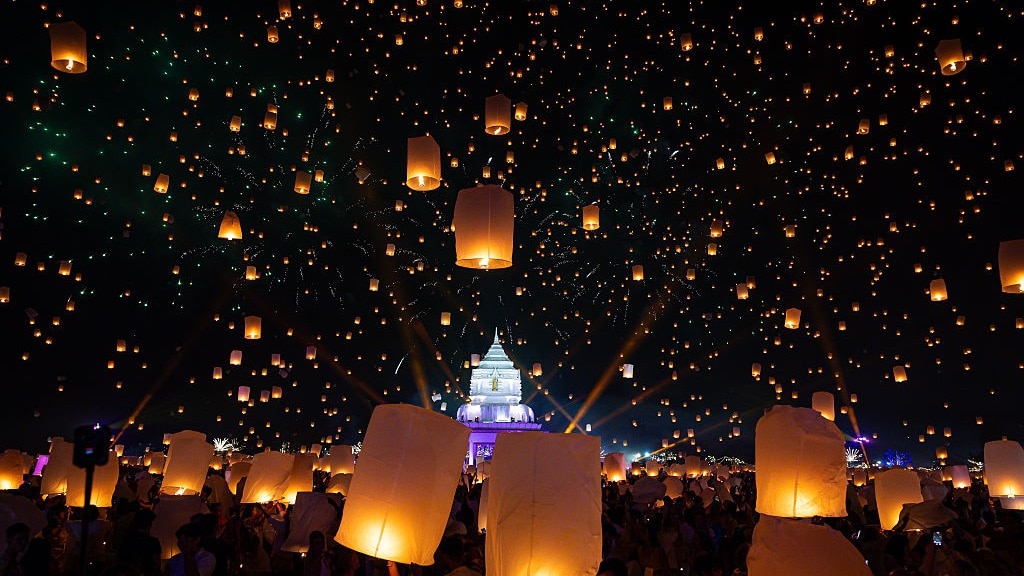
As thousands of paper lanterns slowly float upwards during the Yi Peng festival carrying wishes, hopes and perhaps a few things people want to leave behind, the night sky over Chiang Mai, Thailand, looks breathtakingly unreal.It's beautiful, it's cinematic, and it's everything a travel Reel needs to go viral. No points for guessing it already has.Before we move ahead, have a look and decide for yourself. The magical Yi Peng festival in Thailand (Photo: AP) Dreamy, right. In fact, people associate this festival with that beautiful scene from Disney's Tangled where Rapunzel and Flynn Rider sit in a boat, surrounded by thousands of floating lanterns. And that's exactly why this experience has made it to travel bucket list.But this time, Thailand's Yi Peng festival is also stirring conversations about responsible tourism. The magical scene from Tangled that got everyone mesmerised. (Photo: Tangled/IMDb) Influencers and travellers are now taking to social media to highlight the less glamorous side of the festival – overcrowded venues, hours-long queues and growing concerns over safety and the environment.So, what is the real cost of this picture-perfect travel experience?First, about the Yi Peng FestivalThe Yi Peng festival, celebrated from November 23 to 25 this year in Chiang Mai, is a centuries-old tradition rooted in northern Thailand's Lanna culture.The name itself has a significance. 'Yi' means second and 'Peng' refers to the full moon. The festival marks the full moon of the second month of the traditional Lanna lunar calendar.The floating lanterns, locally known as khom loi, have religious and spiritual significance. Releasing them is associated with paying homage to Buddha, letting go of misfortune and making wishes for the future. From couples living their fairytale moments to travellers ticking off a bucket-list experience, Thailand's Yi Peng festival has become a sought-after travel experience. (Photo: AP) The city's traditional celebrations also include illuminated temples, hanging lanterns, earthen lamps and cultural processions. There is a lot more to the festival beyond that one Instagrammable moment when everyone releases the lanterns together.But social media being an unofficial travel agent, the growing hype around such cultural experiences has also given rise to privately organised, ticketed events. Travellers can choose from a range of packages that may include shuttle services, buffet meals, cultural performances, traditional activities and, of course, the much-awaited lantern release.This year too, the festival videos have taken over feeds, but people are increasingly talking about the other side – the chaos that leads up to it and the aftermath.Instagram vs reality of Yi Peng FestivalSocial media is teeming with videos of this festival and how mesmerising it looks. But a lot happens behind the scenes.Ahead of this year's celebrations, airlines reportedly cancelled around 108 flights, rescheduled 80 and added 105 additional services for the November 21–28 period, according to Chiang Mai airport authorities. Officials anticipated the release of over two lakh sky and smoke lanterns within the airport's aviation safety zone. Operating hours were consequently reduced to minimise risks to aircraft.Coming to the festival time, of course, everything is packed. Places are overcrowded to the extent that people have documented waiting hours simply to enter the venues. Then, comes the part just while firing up the lanterns. This is the risky bit where lanterns land on people's heads, treetops or simply perish even before going up. Patches of grass also have a chance to catch fire.So, yes the risks are real.And what goes up must come down.Burning lanterns can contribute to air pollution, water pollution, pose fire hazards and leave behind debris.The burnt lanterns land everywhere. The next day, locals go around cleaning it all up, and if we are to go by the videos, some people resell the lanterns as well to earn money.While tourism helps keep traditional craftsmanship alive and supports local livelihoods, it also brings us to the question of travelling responsibly.Travel today is increasingly becoming about experiences, and new-age travellers don't mind splurging on them. But as India Today explored earlier about destination gatekeeping and overtourism, social media can be both a blessing and a bane for tourism. What makes a destination desirable can also become the very thing that overwhelms it.The idea, of course, isn't to strike a beautiful cultural experience off your travel bucket list. It's about balancing tradition with its Instagram appeal, respecting local regulations and being mindful of what you leave behind.- Ends
The not-so-magical side of Thailand's viral lantern festival
Full Article
Original Source
Read the full article at Indiatoday →KhanList aggregates and links to publicly available news content. We do not host full articles from third-party sources. Always verify important information with original sources.