
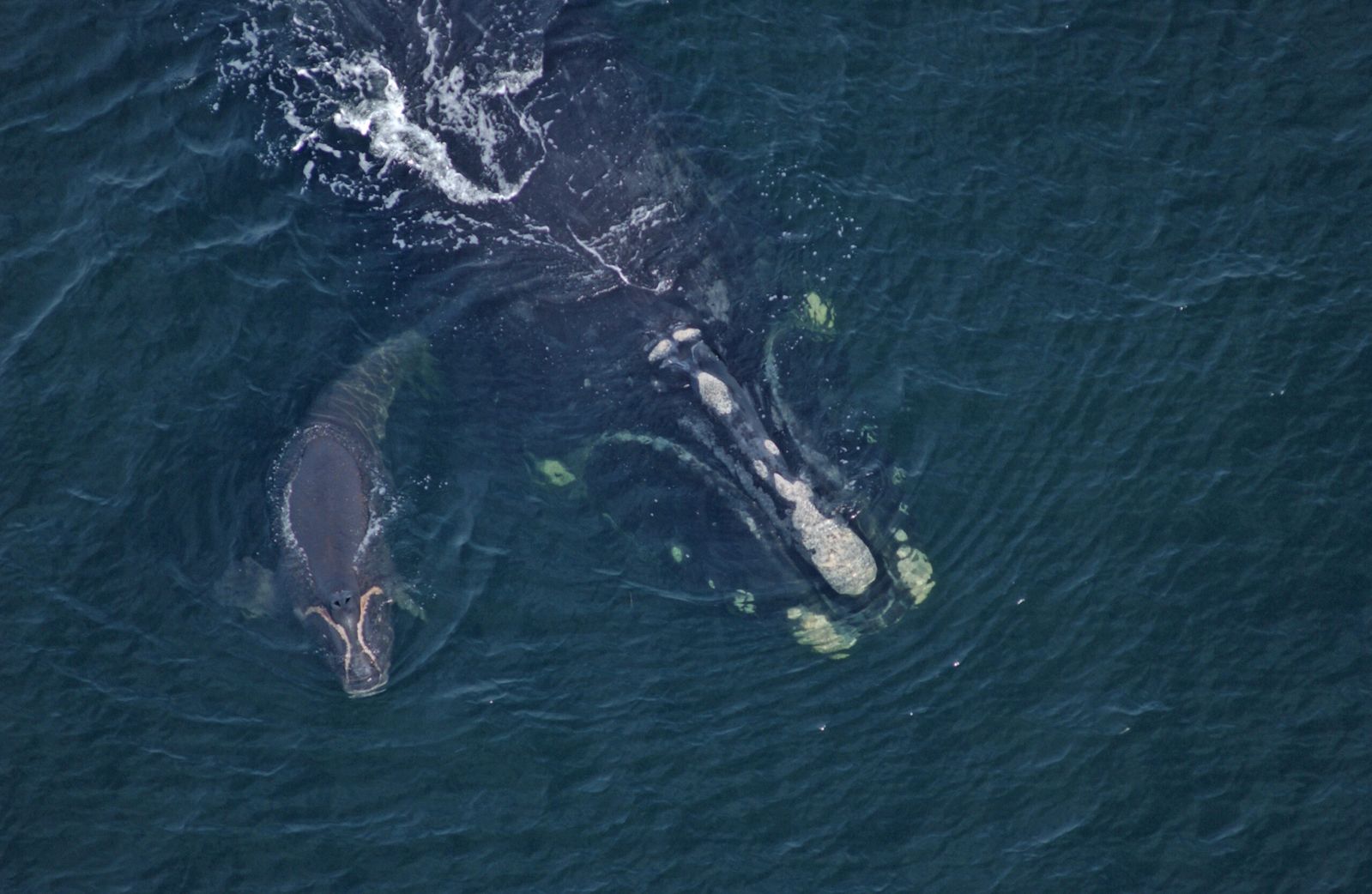
The massive marine mammals are dying from ship strikes, fishing gear entanglements and other causes, which is affecting the species’ ability to grow its numbers. The animals were hunted to the brink of extinction around 100 years ago November 19, 2026 10:00 a.m. North Atlantic right whales can weigh up to 140,000 pounds. New England Aquarium The North Atlantic right whale population shrank slightly in 2025, raising concerns about the future of the critically endangered species. Scientists counted 382 individuals last year, according to new numbers released this week by the North Atlantic Right Whale Consortium. That’s a 1.8 percent decrease from the 2024 estimate of 389 whales. Meanwhile, the number of reproductive females held steady at 73, according to the consortium, which is made up of scientists from the New England Aquarium’s Anderson Cabot Center for Ocean Life and the National Oceanic and Atmospheric Administration (NOAA). North Atlantic right whales are massive marine mammals that can weigh as much as 140,000 pounds. They spend their winters in the shallow waters off North Carolina, South Carolina, Georgia and Florida, where they give birth and raise their calves. Then, they swim more than 1,000 miles north to spend the spring, summer and fall feeding in the food-rich waters off New England and Canada. Scientists counted 382 North Atlantic right whales in 2025. Lauren Owens Lambert They’re one of three species of right whales, along with the North Pacific right whale and the Southern right whale. All three species are what’s known as filter feeders, meaning they use their baleen—flexible, comb-like plates that hang from their upper jaws—to tiny creatures called copepods from the water. Commercial whalers hunted right whales to the brink of extinction by the late 19th and early 20th centuries, dubbing them the “right” whales to go after because they were relatively easy to kill and retrieve. All three species have been protected under the U.S. Endangered Species Act since 1970. Still, the colossal creatures have been slow to recover—and their populations remain small today. Right whales can die or suffer life-threatening injuries after being struck by boats or becoming tangled in fishing gear. “Imagine if you were wrapped in rope that moved as you moved … literally sawing into your body,” Philip Hamilton, a biologist with the New England Aquarium, tells CBC News’ Leila Beaudoin. “It is really painful. They don’t have arms. The pain is … kind of unimaginable.” Climate change, noise pollution and oil and gas development also threaten the whales. Rising ocean temperatures are particularly dangerous for the massive animals. As the North Atlantic heats up, copepods are moving toward cooler waters, prompting the whales to follow them into areas where they’re not protected from ship strikes and entanglements. “We know that this population can and will move around to find food, and if we aren’t protecting them throughout their range, we may see another situation where we have this tremendous decline again,” Heather Pettis, chair of the North Atlantic Right Whale Consortium and a biologist at the New England Aquarium, tells Patrick Whittle of the Associated Press. Over the past decade, North Atlantic right whales have been experiencing high rates of deaths and serious injuries, a period NOAA has dubbed an “unusual mortality event.” The primary causes have been vessel strikes and entanglements, with 177 total individuals getting killed or injured between 2017 and 2026. The true number is likely higher, as NOAA notes that only about a third of right whale deaths are recorded. The deaths are affecting the species’ ability to grow its numbers. The 2025 population estimate is 20 percent lower than the high of 483 in 2011, according to the consortium. Did you know? Southern right whales Southern right whales are also struggling. Hundreds of calves have washed up dead along Argentina's coast in recent months, likely due to a bacterium that can cause skin infections. Scientists and conservationists are calling for stronger protections to prevent North Atlantic right whales from disappearing, including stricter vessel speed limits and measures to reduce entanglements in commercial fishing gear. “Right whales cannot afford to wait any longer,” Pettis says in the statement. There was one bright spot in the data: The 2025-26 calving season was the best since 2009, with 24 babies born. Three females gave birth for the first time. But Nora Ives, a marine scientist with the nonprofit conservation group Oceana, notes in a statement that “these whales can’t survive if the very safeguards and laws that protect them are constantly under attack. We must give them a fighting chance for a future.” You Might Also Like Get the latest stories in your inbox every weekday. More about: Animals Atlantic Ocean Climate Change Oceans Pollution Ships Whales Wildlife
The North Atlantic Right Whale Population Has Shrunk, Raising Concerns About the Future of the Critically Endangered Species
Full Article
Original Source
Read the full article at Smithsonianmag →KhanList aggregates and links to publicly available news content. We do not host full articles from third-party sources. Always verify important information with original sources.