
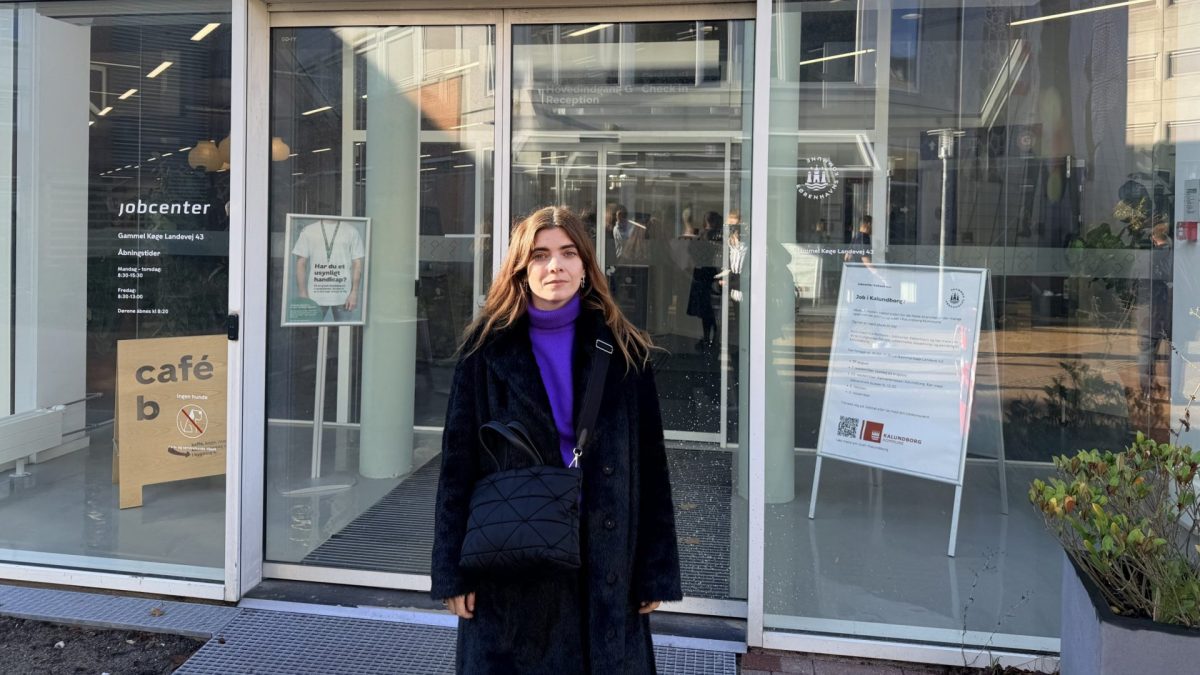
Everything is better in the Nordics. Or, so the statistics say. Denmark is among the countries which consistently rank near the top of global quality-of-life, happiness and social-trust registers. The Danes also have less income inequality, which, in part, is thought to be the result of their welfare system, which includes universal healthcare, childcare and education grants and subsidies. And that’s not all. If you become unwell, injured or have a disability which reduces your ability to work in Denmark, a generous social security system kicks in, which connects you with state-subsidised jobs that suit your skills and capabilities. Work and Pensions Secretary Pat McFadden is looking to the Danes for new ways to reset the UK’s welfare system to focus less on cash payments and more on job support. Visiting Copenhagen to study Denmark’s ‘Fleksjobs’ scheme and learn from the country’s welfare system, he told The i Paper: “What we’re going to have to do is change the way the [British] system works so that it gives people a future, not just an income.” Denmark is among the countries which consistently rank near the top of global quality-of-life (Photo: Getty Images) The Cabinet minister made it clear that on his watch “a big reset” of Britain’s welfare state will follow the incoming reports of Alan Milburn on youth unemployment and Sir Stephen Timms on disability support (PIP). McFadden told The i Paper he was very interested in the Danish approach and said that he was struck by their system, which is focused on what a person “can do” as a contrast to Britain’s system, which he says “too often asks what you can’t do” and, as a result, creates “a binary divide between work or no work at all”. ‘We’ll meet them in the park if we need to’ Over coffee in a light-filled modern Copenhagen job centre complete with an in-house cafe, large garden, indoor plants and HAY designer chairs, McFadden heard from social workers and work coaches about how Fleksjobs worked. Introduced in its current form in 2013, Fleksjobs is thought to be the reason why Denmark’s employment rate for people with disabilities rose from 44 per cent in 2012 to 61 per cent in 2024, becoming one of the highest in Europe. The UK’s rate is around 52 per cent. For those with major disabilities, Denmark’s rate rose from 27 per cent to 41 per cent. “We work all inclusively to deliver a holistic approach,” 59-year-old jobs coach Stine Jensen explains while McFadden tours the job centre which, in Britain, you might mistake for a university campus. “If it’s needed, we don’t talk about jobs at all with our citizens; we might talk about their sick relatives or other struggles – everything we do is about building a relationship and making sure that people feel we are working with them,” she adds. “If it is needed, I will meet a person wherever they need me to – their house or the park – if they are too nervous to come to a public building.” Stine Jensen, a Fleksjobs support worker in Copenhagen (Photo: Vicky Spratt/The i Paper) The cafe in the job centre is used to train people who have social anxiety so that they can “practice” working in a “safe environment” before they enter a job. There are no cubicles or Perspex barriers, as you might see in older British job centres; everything is “open” – including a wall of job listings – to “encourage conversations”. Stine and her team say that sanctioning people is rare and a “last resort” as most clients engage with the services the job centre offers because they “want to work”. ‘I feel part of society again’ There is growing concern about the cost of Britain’s benefits bill. Total welfare spending is forecast to increase from £353 billion this year to £431 billion in 2031/32. However, it is worth noting that just under half of this figure is spent on the state pension, which Prime Minister Andy Burnham has pledged to remove the triple lock on. In the 10 years since 2013/14, the estimated number of disabled people has increased by 4.9 million (41 per cent), and there has been a particular uptick in the number of young people reporting disabilities, which include physical conditions, ADHD, autism and mental health conditions like anxiety. Claus, a former police officer and Fleksjobs worker at Frederiksberg Gardening and Roads Service in Copenhagen (Photo: Vicky Spratt/The i Paper) The Danish Fleksjobs model is available for people of all ages. Denmark has also set a goal of getting 15,000 more disabled people in employment by 2030. Fleksjobs can be modified depending on a person’s needs – their hours can go up or down depending on their condition. If things worsen, they may work less, but if things improve, they may eventually become full-time. At Frederiksberg Gardening and Roads Service – a municipal groundskeeping and maintenance arm of the local government in Copenhagen – three Fleksjobs employees work 17, 33 and 12 hours a week, respectively. Tenja Paulsen, 49, suffers from bipolar disorder and told of how her Fleksjob doing “odd jobs” at the service had “stabilised” her condition and given her back “dignity.” Tenja Paulsen, a Fleksjobs worker at Frederiksberg Gardening and Roads Service in Copenhagen (Photo: Vicky Spratt/The i Paper) Anna Hechmann, 40, who suffers from anxiety, said that before she got her role as a gardener here, her “world had become really small” so that it was just her “and the cat” in the end. She felt she now “had a life and colleagues”. 64-year-old Claus, a former police officer who had been forced to stop working after an incident on the job which led to him being diagnosed with PTSD, said his job driving a forklift truck made him feel like he was “contributing” and “part of society” again. “If I wasn’t doing this, I would be watching TV all day and possibly getting worse,” he said. Where does the money come from? Since taking over as Work and Pensions Secretary following a major rebellion over proposed welfare cuts by Labour MPs, McFadden hopes he has started “a different conversation” about what “[Britain’s benefits] system is for”. The Government is currently investing £3.5bn in disability employment support through schemes like Connect to Work, which provide personalised support to help disabled people and those with more complex barriers get into work. The Jobs Guarantee scheme, offering six months of subsidised work for young people who are out of work, will also open to young disabled people and give them priority access next year. However, both Denmark and the Netherlands, where McFadden is also drawing inspiration from, currently spend more on employment and education support for young people and people with disabilities than Britain does as a percentage of their GDP. Many Nordic countries are high-tax, high-spend nations. According to a UK government report, Denmark spends around 2 per cent of GDP on active labour market programmes compared to the UK’s investment of approximately 0.3 per cent of GDP. This means that a new system could cost Britain billions of pounds in the short term, even if it shifted the welfare spend burden over time. The i Paper’s Vicky Spratt visiting Fleksjobs employers with Pat MacFadden in Copenhagen (Photo: Vicky Spratt/The i Paper) Speaking after meeting with Tenja, Anna and Claus, McFadden said “we are spending too much on consequences” and “not enough on opportunity”. He hopes to “change that equation”. Until now, the Work and Pensions Secretary said that he feels that the debate Britain has been having about welfare “is too small”. Change will not simply be a case of picking a “level of cuts” and saying when they will happen. “It’s not going to work like that,” he said. “What we’re going to have to do is change the way the system works so that it gives people a future, not just an income. That is going to mean a much more active approach to getting people into work.” McFadden said he agrees that Britain needs to “invest” in employment support and changes to the welfare system. “There’s always an argument about money, and there’s always a discussion about money,” he said. “I’ll do whatever I can in the forthcoming spending review to make the case for investment. But that will all become clearer later in time.”
The Nordic nation the UK wants to model its benefits revamp on – but there’s a catch
Full Article
Original Source
Read the full article at Inews →KhanList aggregates and links to publicly available news content. We do not host full articles from third-party sources. Always verify important information with original sources.