
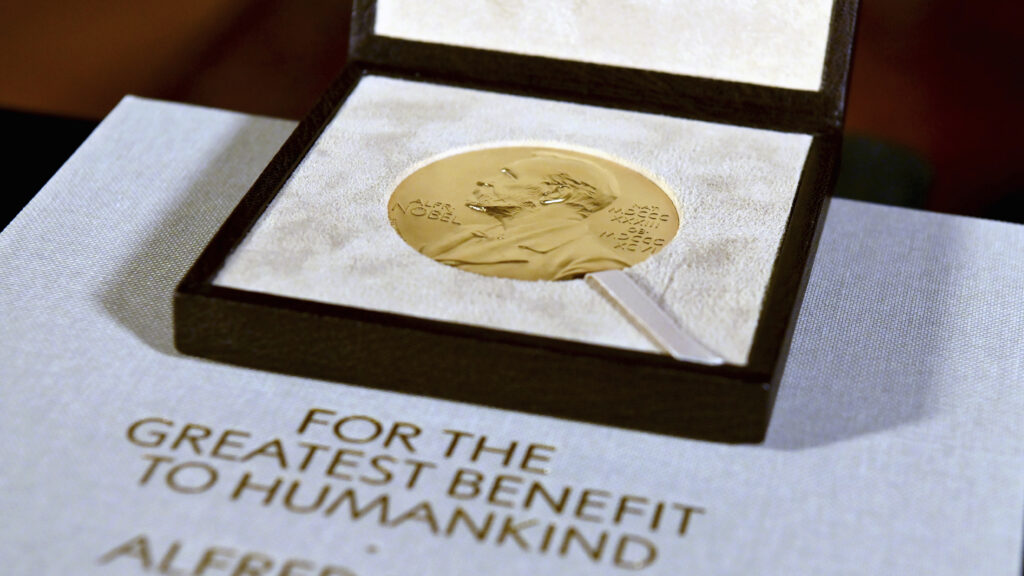
Get your daily dose of health and medicine every weekday with STAT’s free newsletter Morning Rounds. Sign up here. If you’re into online gambling, I think it’s worth mentioning that STAT predicted optogenetics’ success and a potential Nobel almost a decade ago. We said, “it hasn’t won a Nobel yet, but it’s been on some informal watchlists for a few years.” Skip Kalshi, subscribe to STAT, instead. This algorithm wants your mammogram If you have $249 on hand, you can upload a recent mammogram to a website and receive a prediction of your five-year breast cancer risk. Would you do it? Digital health company Everlywell has launched Clairity Breast, part of a growing collection of direct-to-consumer, AI-based risk prediction algorithms for medical images. Many AI tools for X-rays and other medical images have been slow to reach patients as companies try to sell them, one by one, to practices around the country. Doctors are often uncertain of the clinical value of an early-stage technology before its real-world impact has been studied. For more on this, check out STAT’s Katie Palmer’s excellent addition to her timely series Paying for AI, which examines how new clinical AI tools influence the affordability of health care and patients’ long-term health. The Nobel boys club Yesterday, the winners of the last of the three science Nobels were announced. (You can read about the chemistry laureates here). All six awardees in physiology or medicine, physics, and chemistry this year were men. This is not uncommon — women make up 4% of laureates since the award’s inception, though that has inched up to 12% in the past decade. I wrote about the systemic barriers women face in conducting innovative research and getting credit for that work in 2024, when all the laureates were men. That year, furor over the gender imbalance in the Nobels reached a fever pitch because of the feeling that Rosalind Lee, the collaborator and spouse of Victor Ambros, should have also been honored. The lack of diversity in the 2026 cohort raises the question about how quickly things are changing for female scientists. Under the Trump administration, women have had their NIH grants terminated at a higher rate and seen their odds of success fall more than men. You can revisit my stories, but I also highly recommend you read my colleague Megan Molteni’s moving profile of Lee and Ambros. — Anil Oza Let there be light Earlier this week, Stanford University researcher Karl Deisseroth and his colleagues won the 2026 Nobel Prize for medicine for developing optogenetics, a suite of tools that can treat conditions like chronic pain or deafness by using light to control neurons. This approach could also offer relief to some people who are blind. Optogenetics has clinical potential for people with retinitis pigmentosa, according to a new study published yesterday in the New England Journal of Medicine. The genetic disorder causes degeneration of the light sensing cells in the retina, which can degrade peripheral and night vision so much that patients can become legally blind by young adulthood. Roughly half of the 10 patients in the study had some vision restoration after researchers injected them with a gene to make their retina produce a light-sensing protein so that it could be manipulated. What could they see? Read Annalisa Merelli’s story. 337 What if your daughter had an extremely rare disease, a disease so rare that it was basically nonexistent in the scientific literature? If you’re Deepa Fernandes, you go on an epic quest to find her “people.” In 2025, Fernandes embarked on a worldwide journey to help connect her daughter Maya to some of the 337 people with Nicolaides-Baraitser syndrome. Scientists are only just starting to get a handle on the disease, which can lead to seizures, stunted physical growth, language challenges, and intellectual disability. This mother-daughter quest features pitstops in a Cypriot mountain village and arboretums across the United States, but it also digs into the “deep phenotyping” work happening so that scientists can create treatments for the syndrome. Read more. Trump tariffs causing havoc for biotech companies President Trump promised biopharma companies that they would be able to get exemptions from the tariffs that took effect at the end of September. Some of them are still waiting for clear instructions on how to do that. The biggest U.S. drugmakers struck agreements that have kept them temporarily free of these levies, but smaller biotech firms are still on the hook for these payments. Insiders say they are unsure on how to invest in their research and development — as well as how they might afford bringing products to the U.S. — when they might have to pay tariffs at varying percentages. Read more from STAT’s Chelsea Cirruzzo. More health news roundup Lots of other news today: Pew Research Center released a report Wednesday on health and wellness influencers. It’s kind of staggering: 92% of influencers promote a product or service in their posts, they found. The promotion is particularly rampant in men’s health and nutrition spaces. Check out the rest of the report. Canada will no longer expand its medical-assistance-in-dying program to people with mental illness as their sole condition. You will need to have a terminal incurable disease to apply. STAT mostly covers U.S. health issues, but Canada’s program has been a model for some U.S. states who have MAID policies. What we’re reading Trump administration proposes $70,000 fee for popular international student work program, STAT HIV research networks face uncertain future amid funding delays, New York Times ‘Medicare for All’ message attracts voters buckling under medical bills, KFF Health News NYC moves to spend nearly $9M of gender-affirming care fund for minors, Gothamist
The Nobel boys club (again)
Full Article
Original Source
Read the full article at Statnews →KhanList aggregates and links to publicly available news content. We do not host full articles from third-party sources. Always verify important information with original sources.