
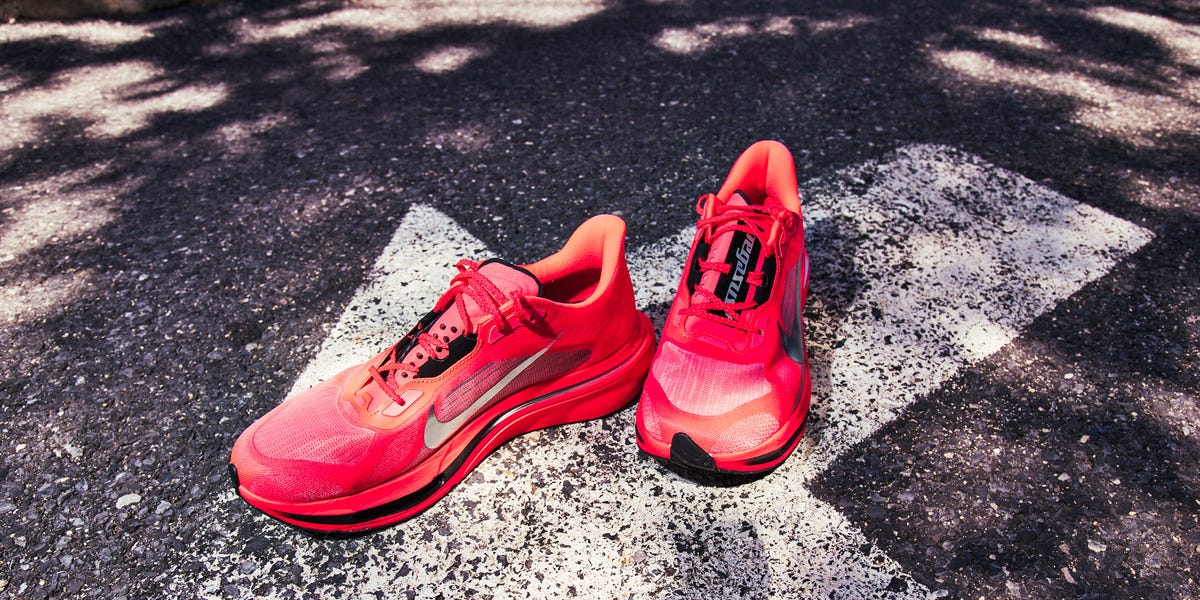
Nostalgia is a hell of a drug. That partly explains why runners like me desperately plead for the resurrection of the Peg Turbo—released in 2018, it was the first daily trainer to bridge the gap between utility mileage and super-shoe speed. There was magic in that midsole. At least that’s how I remember it.With the launch of the Pegasus Plus 2, Nike is hoping I’ll forget all about the Turbo—and certainly quit asking when they’re going to bring it back. The Peg Plus 2 is intended to do exactly what I loved about the Turbo: deliver race-day thrills without sacrificing easy running comfort.I’ve been testing a pair of the Peg Plus 2 for a month ahead of the shoe’s announcement and have put it through everything from slow morning jogs to a four-mile tempo run, and even an afternoon double that quickly turned into a sprint for shelter from an oncoming thunderstorm (I lost).Here’s a look at what’s new and how the shoe performs, to help you decide whether it’s the right speed trainer for you.ProsZoomX foam delivers a soft landing in the heel.The roomier forefoot boosts comfort for runners who historically found Nike too narrow.The exposed Air unit makes toe-off snappy.ConsThe shoe is a smidge heavy for a performance trainer.Some runners will want a softer forefoot.DetailsPrice$170Weight9.3 oz (M10), 11.0 oz (M12)Drop10 mmHeel height38 mmForefoot height28 mmCushioningPEBA-based ZoomX foam and Air unitWhat’s New for the Peg Plus 2?The most obvious change from version 1 is the exposed Air unit in the forefoot. Nike has held firm that Air is its best option for responsive cushioning and energy return in its flagship models. The Air unit here takes some learnings from the one we saw in the Pegasus 42, but it’s limited to the forefoot only—the base model has an Air bag that runs the full length of the shoe.Like in the Peg 42, the Air unit in the Peg Plus 2 takes on a curved shape. The idea in this model is to help ease the transition through your stride. Air bags are fairly rigid structures—though not as stiff as a carbon-fiber plate—and we find that it can make for a jarring transition from the soft foam in the back half of the shoe. The curved shape smooths out that junction of materials so you get the best of both worlds.That Air unit is also larger now, and exposing it “allows the Air to breathe,” said Deepa Ramprasad, senior director of Nike Running footwear, when she gave me insight into the shoe’s development. What does “breathe” mean? Well, when you stomp on the Air, that unit squishes and deforms. If it’s glued inside a foam tomb, there’s nowhere for it to expand. But, when it’s exposed, the Air unit can shape-shift a little to boost cushioning yet still deliver the familiar pop it’s known for. That pop is, apparently, considerable, as Nike reports an 18 percent boost in energy return versus the previous model.winston zhouThe Pegasus Plus 2 has 18 percent more energy return than the Peg Plus 1.To ensure the sensation is felt somewhat equally among all runners, Nike is using three differently sized and tuned Air units. The idea is that bigger shoes are worn by bigger runners and, thus, bigger Air units with greater gas pressures are required. So, shoes any smaller than a women’s 7.5 (M6) get an Air unit that’s 9.5 mm thick with 15 psi. Moving on up to a men’s 10.5 (W12), the bag gains 2 mm thickness. And, those of us with larger feet sit atop the 11.5mm-thick unit pumped up with 20 psi.Also following suit from the Peg 42 is the new upper. Nike used the same updated last shape that gives runners just a little bit more wiggle room. But, the shoe doesn’t feel sloppy because, after all, it’s meant for uptempo sessions, when you don’t want any wasted energy from unnecessary movement. We found the heel and midfoot still have a sporty, snug lockdown, but the pinky and big toes don’t feel cramped at all.How the Pegasus Plus 2 PerformsWhen my test pair arrived, I was eager to see just how speedy the trainers actually were. I’ve fallen into a routine—probably not unfamiliar to many of you—where workout days call for racing shoes and easy jogs are basically done atop marshmallows. The versatile, do-it-all shoe has kind of gone missing.So I was thrilled when a buddy texted that he had a “not crazy fast” four-mile tempo on the schedule for lunch. In that workout, we nudged the pace down south of 6:30—not too shabby for a couple of masters runners on a miserably muggy summer day. My first observation was that the extra weight was noticeable compared to what I’d otherwise have laced up for the run. My size 12 is 11 ounces even, which is just a few ticks heavier than the Asics Novablast 6, Brooks Ghost Amp, and Mizuno Neo Zen 2. Those are all fun daily trainers and are no slouches if you get frisky at the end of a jog, but they’re nothing I’d really reach for specifically for a workout.That said, I found the shoe to be incredibly responsive the faster I turned over my feet and as I got more onto my forefoot. That Air unit pushes back against you quickly, letting you feel snappy with your stride. Sure, it’s heavy, but in that instance it doesn’t feel slow.winston zhouIf I speed up enough to get onto my forefoot, the shoe feels incredibly snappy.On the opposite end of things, I really had to chill and slide back onto my heels to enjoy the ride at a leisurely pace. When I’d touch down and settle into the ZoomX foam, I could feel it compress and let me roll up onto the Air unit fairly smoothly. I mostly liked this for morning jogs, when I crawl out of bed and get rolling about 90 seconds slower in the first mile or two.It’s on the in-between runs where I need to spend more time with this shoe. I feel like when I’m touching down onto my heel and forefoot at the same time, there’s a little bit of disconnect between that squishy midsole foam and the rigid Air unit. I get the sensation that I have to work just a little harder to get up off my heel and into the push-off phase. And I say “I need more time” because I’m heavy into marathon training, logging upward of 100 miles a week in the August heat on the East Coast, so there’s a good chance it’s just my cooked legs that are the problem. Most runs lately have been a slog, and those in-between efforts tend to be the worst anyway.(A note: We received my size only for testing so far. We’ll get the full run on our wear-testers so we have even more evaluations to reference.)Who’s the Peg Plus 2 For?Are you tired of running on über-thick stacks of foam? Are you tired of lacing up $250 kicks for laps around the track? Do you want just a little more ground feel without actually taking the beating that the ground delivers? Well then, consider the Nike Pegasus Plus 2. It’s a reasonably priced shoe that is entirely happy just going out for spins around the neighborhood. It’s also the kind of shoe that reminds you how much fun it is to run fast every now and then. Dare we call it a “workhorse?”Buy Men’s at nike.com | Buy Women’s at nike.comOther Great Performance TrainersAdidas Adizero Evo SL ShoesAsics MegablastNew Balance FuelCell Rebel v5Jeff is Runner-in-Chief for Runner’s World and the director of product testing. He has tested and reviewed running shoes, GPS watches, headphones, apparel, and more for nearly two decades. He regularly tests more than 100 pairs of shoes each year, and once had a 257-day streak running in different models. Jeff can usually be found on the roads, racing anything from the mile to a marathon, but he also enjoys racing up mountains and on snowshoes. When he’s not running, you’ll probably find him hanging from a ladder making repairs and renovations to his house (he’s also director of product testing for Popular Mechanics).
The Nike Pegasus Plus 2 Reminds You That Running Fast Can Be Fun—Any Day of the Week
Full Article
Original Source
Read the full article at Runnersworld →KhanList aggregates and links to publicly available news content. We do not host full articles from third-party sources. Always verify important information with original sources.