
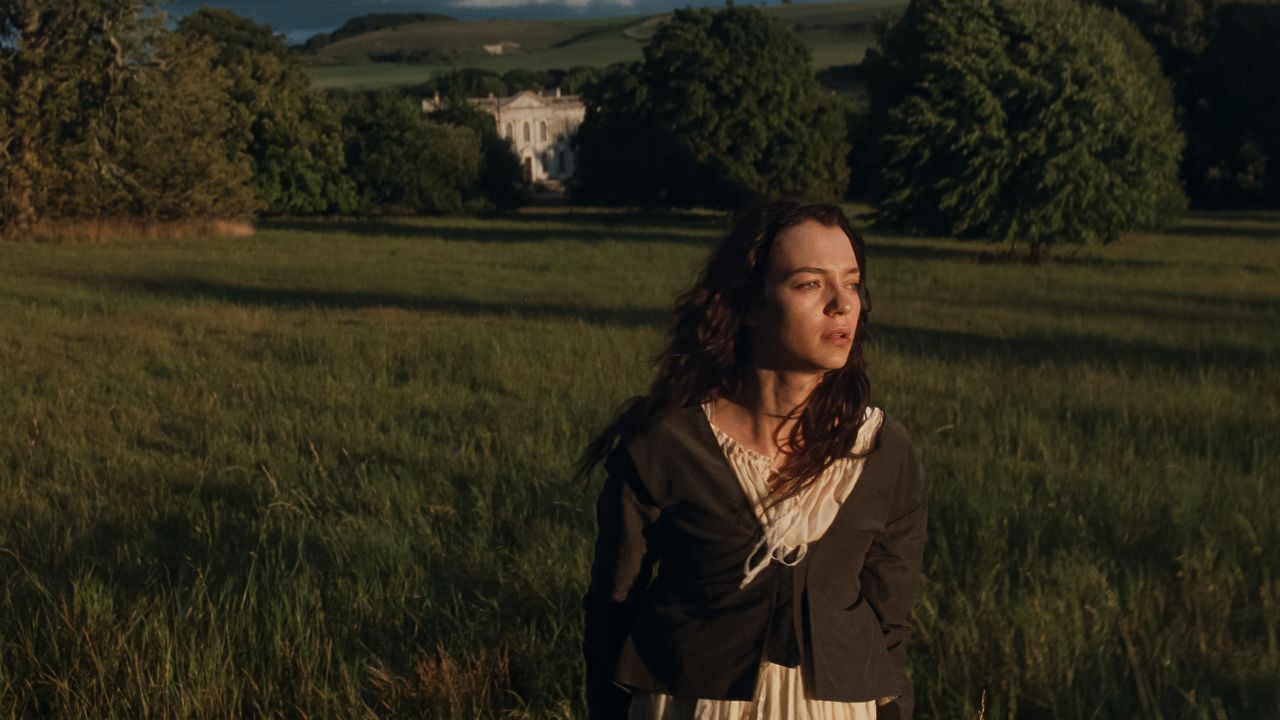
The New Sense and Sensibility Film Takes Us to Bucolic Devon and Dorset: “It Was a Lovely Time Making a Beautiful Movie”“It was a lovely time making a beautiful movie,” says location manager Ian Hutchinson of working on the latest Austen adaptation.2026 FOCUS FEATURES LLCOn Location peels back the curtain on some of your favorite films, television shows, and more. This time, we ask: where was Sense and Sensibility filmed?Jane Austen’s Sense and Sensibility is a tale of contrasts. Sisters Elinor and Marianne Dashwood have wildly different approaches to love, family and happiness, with reserved and practical Elinor falling for the understatedly charming Edward Ferrars, while the more impulsive Marianne becomes swept up in her feelings for the charismatic but impish John Willoughby. As romance gives way to heartbreak, misunderstandings and difficult choices, the sisters may not always see eye to eye. But if differing opinions are a theme throughout the film, things were more aligned behind the scenes: one thing the cast and crew could all agree on was that“Dartmoor is always a good idea.”“We just fell in love with the West Country, Devon and Dorset,” says location manager Ian Hutchinson, of his time working on set. “It was a lovely time making a beautiful movie.”Daisy Edgar-Jones plays Elinor Dashwood in Georgia Oakley's 2026 adaptation of the classic novel Alex Bailey / © 2026 FOCUS FEATURES LLCIt’s a fitting sentiment for a film in which landscape plays such an important role. Austen’s story follows the Dashwood sisters after they are forced to leave their family home in Sussex when their father’s death leaves them and their mother in a precarious financial position. After moving to a more modest home in Devon, the sisters find themselves navigating the very different expectations of love and marriage in Regency society – with the grand country houses, windswept moors and historic landscapes around them providing a sumptuous backdrop to their changing fortunes.The result is predictably lush. Viewers are swept through the country estates of Dorset to the wilds of Dartmoor, before heading into Regency London and out to the palaces of Buckinghamshire. England’s winding lanes, rain-soaked woodlands, imposing stately homes and windswept landscapes almost become characters in their own right. Below, Ian talks about the places that made it onto the screen, his painstaking search for the perfect properties, and the surprising challenges of filming Austen’s world in our own.Edward Ferrars, played by George MacKay, with the Dashwood sisters at Norland Park Alex Bailey / © 2026 FOCUS FEATURES LLCKingston Maurward House and Parnham Park, DorsetThe Dashwoods’ vast and beloved Norland Park, which they lose following their father’s death, is set in Sussex in the book. For the film, however, the team used two separate sites in Dorset to recreate the romantic magic. The interior and exterior architecture of Kingston Maurward House provided the main backdrop for the grand home; its characterful 16th-century interiors and expansive grounds fit so well with the brief that it was an obvious starting point.But it didn’t have everything the production was looking for—namely, that all-important lake at the back of the garden where the sisters often gathered. Nearby Parnham Park provided that missing piece, with its quaint wooden bridge and glassy lake completing the Dashwoods’ idyllic estate. Ian wasn’t especially sentimental about this park but, after they started filming, he was pleased when he quickly realised: “This is not just a body of water, this is a sea of wildlife!”It allowed them to really exaggerate the scenes filmed there, enhancing them considerably from what was originally conceived. “We were always hungry for more,” he says.Barton Cottage was set in the romantic wilderness of Dartmoor National Park in Devon Getty ImagesDartmoor National Park, DevonThe fun really began when the team moved to Dartmoor to film the Barton Cottage scenes, the considerably more modest home the Dashwood women are forced to relocate to after their bereavement. It wasn’t easy to find the right place. The production team searched through around 50 remote properties across the region to find one that felt suitably isolated, in a process that started three months before production even began.“A lot of properties in the area have had a lot of money spent on them to modernise them,” says Ian. “We were like, ‘How do we bring that look down?’"They eventually settled on a completely derelict stone shell, devoid even of doors and windows, deep within the national park near Plymouth. Its insides were full of rubble so, to make it work, the crew built a custom two-storey stage set inside the ruined walls; a decision that allowed director Georgia Oakley to film characters seamlessly as they moved between the home’s tight interiors and out to Devon’s wilds without need to cut the scene. “We built a false floor to create an upper ground, created the stairs, and built a box within a box,” says Ian. “It created that massive contrast between Barton and Norland.”It wasn’t without its challenges. For one, there was the bats’ nest to contend with, which required a bat specialist who had to spend three nights in the property to gauge how many bats flew in and out. If any were near the filming area, they wouldn't have been able to shoot.“Bats are very protected!” says Ian. “We had to do a whole ecological survey of the area. A lot of conservationists said, "No, you shouldn't be filming there," but we put measures into place – which takes time and is quite costly—and once we convinced everyone we wouldn't disturb anything, we were given a permit.”The remote location presented some logistical hurdles, too. “One moment we’d have glorious blue sunshine, and the next we could have driving rain with thunder and lightning,” says Ian. “Then we had mud to deal with, and we were 40 to 50 minutes away from any civilisation in Plymouth. Getting the lunches, even, was a challenge.”Dartmoor’s famous tourist spot Haytor, with its sea of unusual jagged, rustic rock faces, also served as the backdrop for one of the film’s key travelling montages. The team brought a horse and carriage to rumble along its steep granite tracks at dawn. "Not many people get to film there, and not many get to go there at dawn,” says Ian. “Standing there at four in the morning with the first light in the sky... I did stand there and think, 'This is why I love my job.'"The Gothic interiors of Broughton Castle set a sombre mood during one sad twist in the tale Getty ImagesKnebworth House and Broughton Castle, Hertfordshire and OxfordshireIn one of the film’s pivotal points, Marianne famously takes a walk in the rain in the surrounds of Cleveland House – after which she falls gravely ill. The mood of the film darkens, and the interiors follow suit. The team paired the iconic Gothic exterior of Knebworth House in Hertfordshire with the interiors of Broughton Castle, near Banbury, to represent this sad twist in the tale, ensuring the ominous feel was retained both inside and out.“In that time period there were lots of different architectural styles. Knebworth has a very Gothic exterior, but feels different inside—there’s lots of wood panelling, which makes it feel like a different era,” says Ian. “Whereas inside Broughton, the interiors very much feel like a Gothic castle.”To avoid reliance on set dressing, the production team prioritised old buildings that retained their period character throughout the film 2026 FOCUS FEATURES LLCRainham Hall and Lincoln’s Inn, LondonTo evoke the tight, claustrophobic atmosphere of Georgian London without relying on modern set builds, the team looked for period locations in and around the capital that have been altered minimally since they were built. National Trust property Rainham Hall in Havering doubled for the interiors of Mrs Jennings’ house at Portman Square—an especially good fit as its historic rooms are literally now preserved as a museum.“We wanted real locations with genuine age,” says Ian. “We didn’t want people to question on screen whether it’s a build or not. We wanted it to feel real.”For the street scenes and exteriors, the crew filmed at Lincoln’s Inn in Holborn. This part of London retains a great variety of period features without many additional modern elements. It meant they didn’t need to build anything artificial in a studio.“There was the odd electrical line going from building to building, a satellite dish, and road markings that we had to paint out, but it was nice to use a part of London that was still real old London,” says Ian. “All the way through the film, in terms of locations, we strived not to recreate anything, but to try and take what was already there and make it fit our world.”West Wycombe Park in Buckinghamshire proved amply lavish to use as the setting for the Ferrars' home Getty ImagesWest Wycombe Park, BuckinghamshireThe decadent, Italianate architecture of West Wycombe Park provided the right visual shorthand for the immense wealth and rigid social standing of the Ferrars family. Again, the historic Palladian house required virtually no set dressing from the art department.“We knew that was the look we wanted to go for because it’s a contrast to everything else in the film,” says Ian. “Visually, it raises the class with beautiful Italian curtains and wallpaper; it sets a clear contrast. We were very much about contrast throughout the film – using locations to tell the story of the characters’ different levels of wealth and lifestyle through the properties they lived in.”It took five months to find the right location for one hero shot, with the team finally settling on Blenheim Palace Getty ImagesBlenheim Palace, OxfordshireSometimes, the simplest shot can prove the hardest to pull off, proven here by the search for a specific hero image requested by the director: a carriage reflected perfectly in a body of water as it travels across the grounds. “Believe it or not, that was hard to find," says Ian. "If the bridge is too high and the water is too low, you never get the full reflection.”The team finally found it after a five-month search in the estate grounds of Blenheim Palace in Woodstock. It took the entire duration of the film to locate. The result was worth the effort—the scene is one of the loveliest in the film.“It was probably only about three hours of waiting for the right light to shoot when we eventually found the right bridge,” says Ian. “I kept looking while carrying on with all the other important stuff. We found it right at the end, and it was one of the last things we shot.”A version of this story originally appeared on Condé Nast Traveller UK.Charley is the Commerce Writer at Condé Nast Traveller. She has worked as a commerce journalist for five years, joining Condé Nast in 2023 from her prior position as one of Hearst's shopping editors, where she covered homes and interiors. She has a Master’s degree in Journalism & Media Studies ... Read More
The New Sense and Sensibility Film Takes Us to Bucolic Devon and Dorset
Full Article
Original Source
Read the full article at Cntraveler →KhanList aggregates and links to publicly available news content. We do not host full articles from third-party sources. Always verify important information with original sources.