
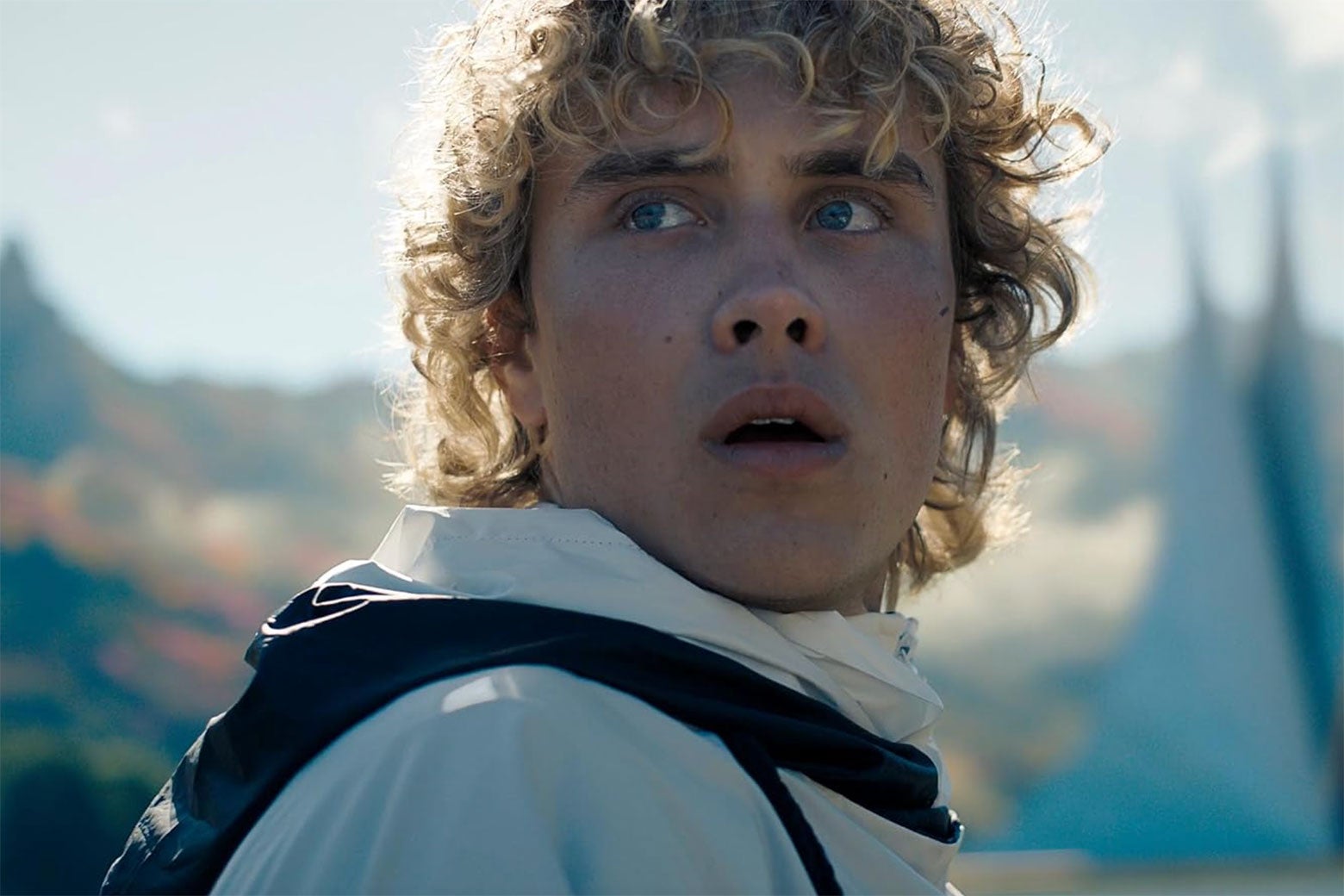
Movies Sunrise on the Reaping, the novel, is incessantly bleak. The film adaptation tries to brighten it up with a surprise. By Enter your email to receive alerts for this author. Sign in or create an account to better manage your email preferences. Unsubscribe from email alerts Are you sure you want to unsubscribe from email alerts for Rebecca Onion? Nov 20, 20262:36 PM Lionsgate Sign up for the Slatest to get the most insightful analysis, criticism, and advice out there, delivered to your inbox daily. This article contains spoilers for The Hunger Games: Sunrise on the Reaping. When Suzanne Collins’ second Hunger Games prequel, Sunrise on the Reaping, was published last year, it provoked waves of devastation on BookTok, in which readers broadcast their huge reactions to one of the saddest stories in this brutal YA juggernaut. Sunrise, which went on to become an instant bestseller and move millions of copies, tells us how Haymitch Abernathy, the mentor figure played by Woody Harrelson in the movies, won his own Hunger Games, lost everyone he loved, and became a bitter, angry, misanthropic alcoholic. Imagery from and references to Edgar Allan Poe’s “The Raven” are threaded throughout. Now, the adaptation, The Hunger Games: Sunrise on the Reaping, the sixth movie in the franchise, is in theaters, and we can see how 16-year-old Haymitch’s trauma looks when you apply a PG-13 filter. It’s a challenge to make this tale fun for anyone but true fans, because the story is one of false hope and relentless devastation. Francis Lawrence, the director of this movie and the other four most recent Hunger Games installments, described this second prequel as a “return to form” for Hunger Games fans: Just as in the very first film, you get a Reaping where the games’ tributes are selected, a train ride from impoverished District 12 to the excess of the Capitol, makeover scenes, chariot rides—all the stuff that, as Lawrence notes, “people really like.” The arena for the games in Haymitch’s year, which is about 24 years before Katniss Everdeen volunteers as tribute, is brightly colored and alpine but built to be toxic, from the flowers to the streams. It’s beautiful to look at, popping off the screen in all its deadly glory. I’m not spoiling anything for book readers when I say that every single one of Haymitch’s friends and allies, from his fellow District 12 tributes to the other kids he gangs up with in a failed attempt to sneak into the bowels of the arena and “break” the games, dies in this movie, some in horrible ways. But however bad it is in the movie, it was worse in the book. Louella (Molly McCann), a spunky tween tribute from District 12 and a strong Haymitch ally, dies in a chariot accident at a pregames parade, before she even gets into the arena. In the movie she looks placid in death; in the book you hear about how her skull “cracked open” when she hit the pavement. In another memorably gruesome death softened for the screen, Ampert (Percy Daggs IV), an ally from District 3, gets set upon by “mutts” (mechanical animals) programmed to kill him. His fate in the movie is awful, with him getting swarmed while Haymitch helplessly tries to bat them away, but in the book, the mutts leave Ampert a “small white skeleton, stripped clean to the bone.” Apparently, small white skeletons are a bit much for a four-quadrant blockbuster. Joseph Zada, who plays young Haymitch in his first lead role on the big screen, portrays this rebellious and idealistic young man with ample panache, so it barely matters that Zada looks so little like Harrelson and doesn’t exude the same undercurrent of avuncular humor. (Very few actors do.) Zada played Cal Trask, also known as the James Dean part, in the recent Netflix adaptation of East of Eden, and he brings some of that moodiness and intensity to Haymitch, which works well for this grim tale. The production stuck Zada’s Haymitch with a bleached broccoli haircut, maybe because when Haymitch is interviewed before the games and makes a play for sponsorship by leaning into a reputation as a “bad boy,” hair slicked back straight and affecting an Elvis accent, the effect is simply too powerful. Despite containing romance, the Hunger Games movies have never been sexy. This is, after all, YA. Haymitch must fall into ruins before we leave the theater. Although Lawrence did some serious compressive work with the postgames section of Collins’ story, we still must see our hero arrive home to find that his mom and brother have died in a house fire, courtesy of the Capitol, which has vowed to punish him for his attempted disruption of the games. He reunites with his girlfriend Lenore (Whitney Peak), only to find that she has eaten a poisoned gumdrop; she dies in his arms. Katniss Everdeen’s parents are Haymitch’s only friends—we get a glimpse of baby Katniss at one point—but Haymitch descends into such a maelstrom of suffering that he drives the couple off by throwing bottles at them. He’s vowed to be “the worst victor in history,” and he succeeds. It’s hard to watch, so much so that when Plutarch Heavensbee (Jesse Plemons) visits Haymitch to try to talk him out of his funk and, after weathering Haymitch’s destructive table-clearing tantrum, Plutarch, in an understated gesture, rights a single flipped-over cup, my theater laughed in unison, desperate for any comic relief from all this pain. The filmmakers likely felt the need to leave us on a happier note, so they tacked on a star-studded epilogue to remind us that in the long sweep of the series, Haymitch will taste success, after his years of dissolute mourning. Harrelson, Jennifer Lawrence (with Katniss-brown hair dye), and an extremely reluctant-looking Josh Hutcherson gather and gaze upon the vine-covered facade of Haymitch’s abandoned house, his toxic recompense for winning the games. It’s years later, after the collapse of the regime, and these three allies are reminiscing, reassuring us that, despite all we’ve just witnessed, everything turns out OK … ish. How much did they pay Woody Harrelson to say the line about how there will be no more Hunger Games, “… nevermore,” with a straight face? Not enough, because I swear he looked as if he were about to break. After watching this movie, I was right there with him. Books Movies The Hunger Games Page to Screen
The New Hunger Games Movie Contrives a Funny Solution to the Book’s Biggest Problem
Full Article
Original Source
Read the full article at Slate →KhanList aggregates and links to publicly available news content. We do not host full articles from third-party sources. Always verify important information with original sources.