
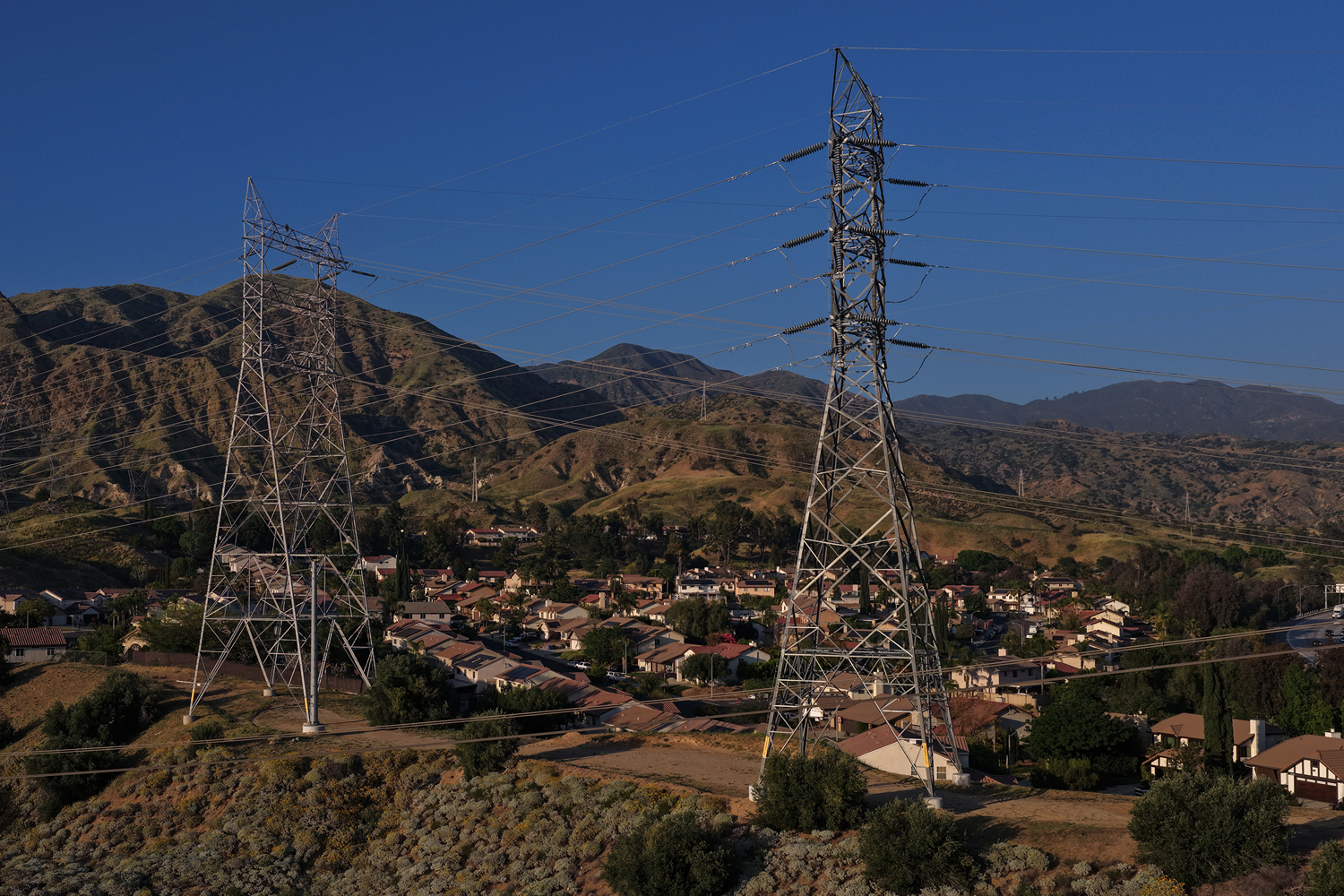
Power prices in the United States remain among the most affordable in the world, but any rate payer can tell you that electricity costs have been spiking across the country in recent years, due in large part to growing demand from data centers. That’s a problem not just for overstretched households but national security: for an advanced economy to be competitive globally depends on access to reliable, affordable electricity. The United States has an array of projects ready to add electricity capacity to the grid and enable the country to distribute and store it better—but that doesn’t help when they’re stuck in a vast backlog. At the end of 2025, there were about 8,200 projects in the so-called interconnection queue—the backlog of projects waiting to be connected to the grid—representing some 1,312 gigawatts (GW) of generation capacity and 749 GW of storage capacity. Power prices in the United States remain among the most affordable in the world, but any rate payer can tell you that electricity costs have been spiking across the country in recent years, due in large part to growing demand from data centers. That’s a problem not just for overstretched households but national security: for an advanced economy to be competitive globally depends on access to reliable, affordable electricity. The United States has an array of projects ready to add electricity capacity to the grid and enable the country to distribute and store it better—but that doesn’t help when they’re stuck in a vast backlog. At the end of 2025, there were about 8,200 projects in the so-called interconnection queue—the backlog of projects waiting to be connected to the grid—representing some 1,312 gigawatts (GW) of generation capacity and 749 GW of storage capacity. That’s about double the generation capacity of the entire U.S. grid. If even a fraction of this can be added, it would push down energy prices for companies and consumers alike. This backlog, which is largely a function of limited high-capacity transmission lines and delays in federal permitting, isn’t simply an economic problem—it’s a national security risk for the United States, which is falling dangerously behind China in its rate of electrification. According to Grid Strategies, between 2021 and 2025 China built on average about 14,800 miles of high-capacity transmission per year while the United States built only 400 miles a year. The United States cannot expect to compete successfully with China in advanced manufacturing, artificial intelligence, or defense production without expanding its ability to generate, transmit, and reliably deliver electricity. Critiques of the U.S. permitting process have reached a crescendo in recent years, memorialized in books such as Ezra Klein and Derek Thompson’s Abundance and Dan Wang’s Breakneck: China’s Quest to Engineer the Future, which contrasts America’s legal culture with China’s engineer-led society. This indictment of the U.S. inability to build has adherents on the left and right, making it the rare policy area where there is the prospect of bipartisan cooperation. There’s even a “Build America” caucus in the House of Representatives focused on enhancing and expanding U.S. infrastructure. But until recently, it looked as if permitting reform would remain a legislative pipe dream. The Trump administration’s animosity to renewable energy made it unlikely that Democrats would trust President Donald Trump to apply enhanced permitting powers evenhandedly. However, on Sept. 30, Democratic Sens. Martin Heinrich and Sheldon Whitehouse alongside Republican Sens. Mike Lee and Shelley Moore Capito introduced the Bipartisan American Affordability and Jobs Act, or BAAJA. The since revised 494-page bill, which is slated for amendment and a vote on final passage in the Senate this week, would revolutionize how energy infrastructure gets built and paid for in the United States, including AI data centers. The bill aims to accelerate approvals for high-voltage transmission lines and the permitting of individual projects in several ways. First, it would speed up interstate transmission by putting into statute previous guidance from the Federal Energy Regulatory Commission (FERC), which requires grid operators to standardize regional and joint interregional transmission planning processes. Under BAAJA, if state or local grid operators failed to act on developers’ applications within a year, FERC would have the ability to approve important interstate power lines. Proponents of clean energy see these provisions as critical to increasing the share of renewables in the national energy mix. Solar and wind energy often need to be transmitted from where they are generated—open, rural land, or offshore—to where the demand is: cities and technology and manufacturing hubs. The bill also sets limits on which projects require review under the National Environmental Policy Act and would speed up the process for both agency review and citizen lawsuits, which Heinrich described as a “shot clock.” This is the part of the bill that worries environmentalists the most, as it would reduce citizens’ ability to employ the courts to delay, and exercise oversight of, energy projects. Responding to concerns that data centers are driving up consumers’ utility rates, the bill would require data centers to pay the full cost of the energy they are drawing from the existing grid, as well as the expense of expanding grid capacity for their further build-out. Because their primary objective has been the speed with which they can gain assured access to power, data centers have been increasingly installing noisy, polluting, and expensive off-grid natural gas generators to run their operations. Doing away with these climate-damaging “behind the meter” approaches by requiring data centers to draw power from the grid itself is one area where we’d like to see this bill improved—or fixed by subsequent legislation. But advocates believe the additional energy supply that BAAJA would unlock would increasingly bring data centers into the grid without the need for further legislative intervention. Finally, the bill’s language on permitting certainty would limit the federal government’s ability to cancel projects from sources of electricity it opposes. If compared with the previous 10 years developers can show a pattern of disparate treatment of their class of projects, whether renewables or fossil fuels, they can sue and recover costs. Unfortunately, the bill still includes a provision that would empower the current administration, or future governments, to block or rescind permits for specific projects upon asserting that they would be harmful for U.S. national security. This sort of waiver language is common to much of the legislation that Congress passes. Under normal circumstances, this is a reasonable ask, but the current administration has abused these mechanisms to target renewable energy projects, especially wind generation, without explanation. At present, the Defense Department runs a Siting Clearinghouse that reviews proposed energy projects to ensure they don’t interfere with military readiness, training, flight paths, radar, or testing. Over the past two years, the Trump administration has stalled its review of hundreds of wind projects, including at least 35 that had already undergone the review process and were just waiting on a final signature from department officials. When courts found these delays to be without justification, the administration offered developers some $4 billion to cancel their projects anyway. Clean energy backers argue that this de facto moratorium on processing reviews for a particular class of projects is without precedent. If the Trump administration intends to use national security arguments to delay or obstruct renewables projects even if BAAJA passes, as his recent remarks on the topic would suggest, the expectation that renewables will fare better under a new permitting regime becomes less convincing. Thankfully, there is a potential fix for this situation hiding in another important piece of legislation that Congress will take up in the lame-duck session: the National Defense Authorization Act (NDAA). Both the House and the Senate versions of the bill include language that would impose a 180-day shot clock for national security reviews to be completed, which would provide the private sector clearer planning and cost timelines. The Senate’s bill would also require the Defense Department to articulate and defend its rationale for denying any project’s permit on national security grounds. If enacted, this NDAA provision could allay the fears of some Democrats—including former President Joe Biden’s climate czar John Podesta—that the Trump administration will weaponize BAAJA to favor fossil fuels rather than facilitating a fair contest between oil and gas and competing energy solutions. Ultimately, the U.S. energy system is critical infrastructure. Its scale and reliability affect military installations, communications networks, transportation, financial services, industrial facilities—essentially every important component of modern society. BAAJA isn’t a perfect bill, but it should provide a path for increasing energy availability, reducing costs, and accelerating the clean energy transition, especially if the NDAA enacts safeguards on the abuse of national security exceptions. America’s strategic position may be teetering under the Trump administration, but in this age of electrification, BAAJA would enable the country to start building again—and that will increase U.S. prosperity and security alike.
The National Security Case for Permitting Reform
Full Article
Original Source
Read the full article at Foreignpolicy →KhanList aggregates and links to publicly available news content. We do not host full articles from third-party sources. Always verify important information with original sources.