
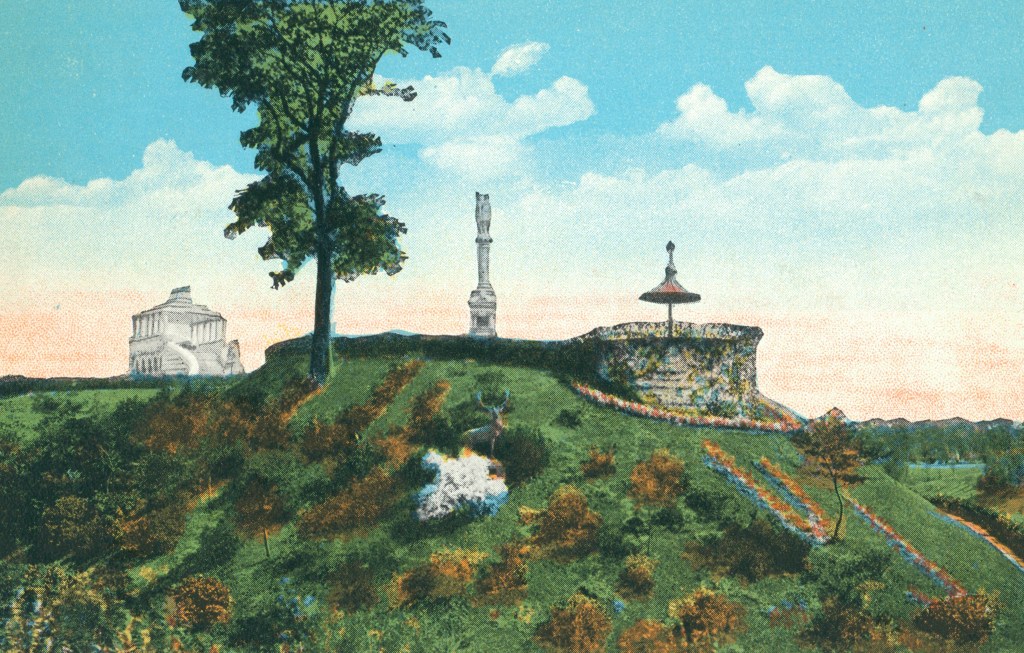
How did this smaller city in Massachusetts wind up with a park so big? Laurel Hill, Forest Park, Springfield, Massachusetts, 1925. (Photo by Smith Collection/Gado/Getty Images) Turn any article into a podcast. Upgrade now to start listening. Members can share articles with friends & family to bypass the paywall. The boys were 18, 20, maybe 22, old enough to lick beer foam from their sparse mustaches. They leaned at a hard angle against their cars, Chevy Camaro Z/28s with racing stripes along the side and spoilers popped like the polo collars on the preps they would have loved to run down. They idled these Camaros on the street circling the long, ovoid green that held three baseball diamonds: the main one with the grandstand at the northern end, for the American Legion players, and two smaller ones, for the Babe Ruth players and Little Leaguers, stretching out toward the brick snack kiosk near where the road dipped toward Porter Lake. Want to see more of The Dispatch in Google search? Add Us as a Preferred Source Mark Oppenheimer teaches at the John C. Danforth Center on Religion and Politics, at Washington University, where he edits Arc: Religion, Politics, Et Cetera. He is the author of a new biography of Judy Blume. More Where I'm From
The Mystery of Springfield’s Park
Full Article
Original Source
Read the full article at Thedispatch →KhanList aggregates and links to publicly available news content. We do not host full articles from third-party sources. Always verify important information with original sources.